Dang Gui (Angelica root)Materia Medica

Dang Gui (Angelica root)

Dang Gui
ANGELICAE SINENSIS RADIX
Nature and flavorSweet, pungent, warm. Affects the Liver, Heart, and Spleen meridians.
Meridians enteredLiver, Heart, Spleen
Dosage6–12 g
Reference market price¥33 / kgBozhou market · spec common grade · 甘肃 · snapshot 2026-11-21

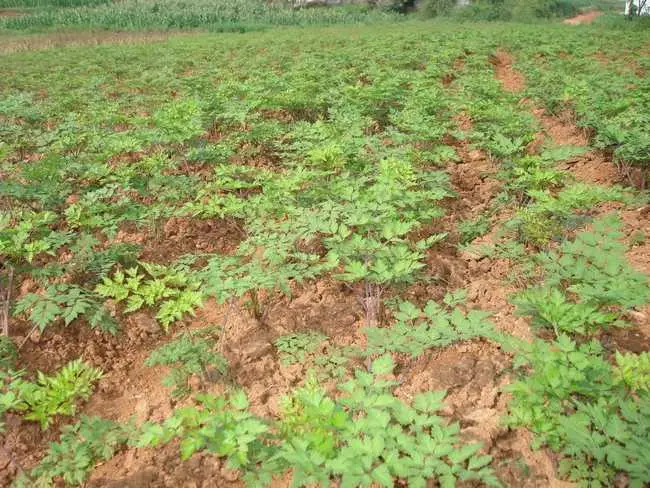
Dang Gui, the root of <i>Angelica sinensis</i>, is a premier herb for nourishing blood and regulating menstruation in traditional Chinese medicine.

Source药物来源

The dried root of Angelica sinensis (Oliv.) Diels (family Apiaceae).

Identification性状特征

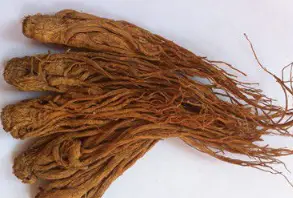
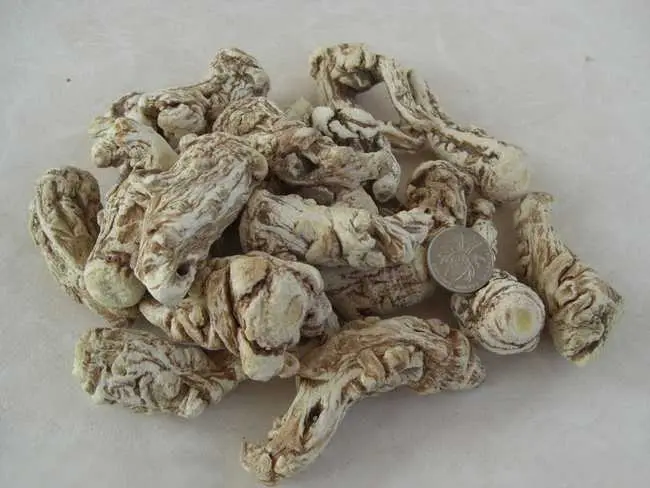
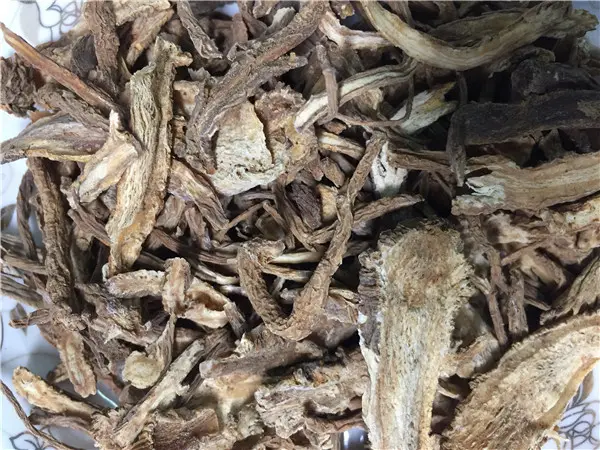
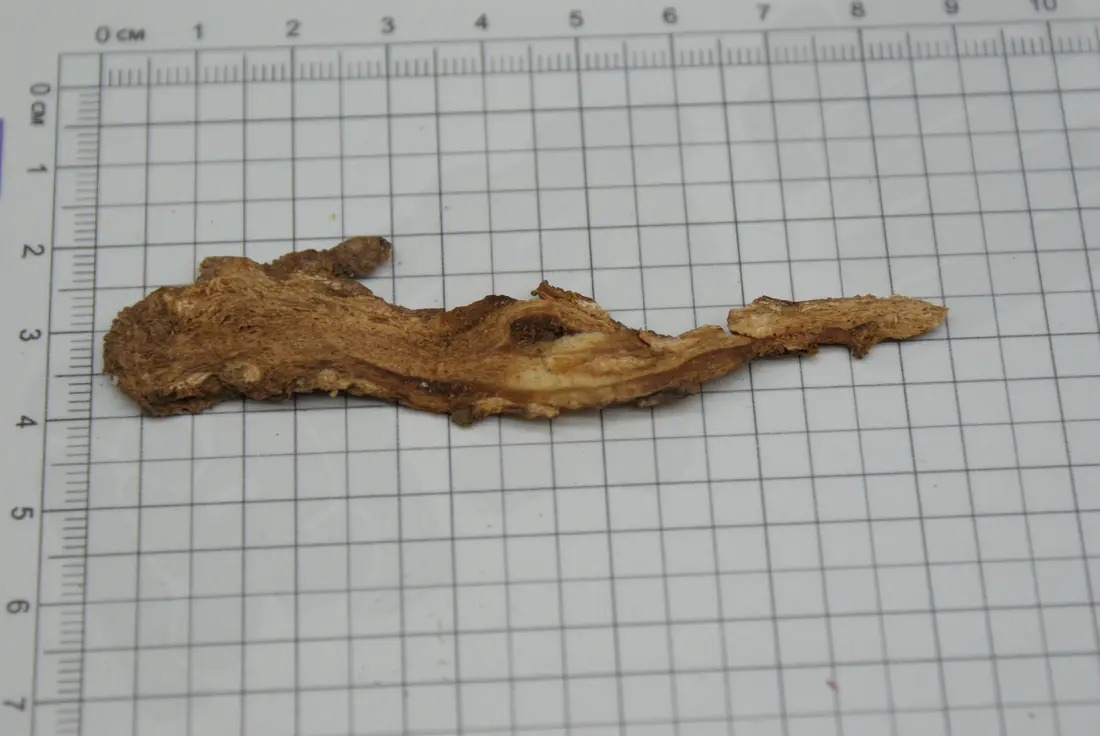
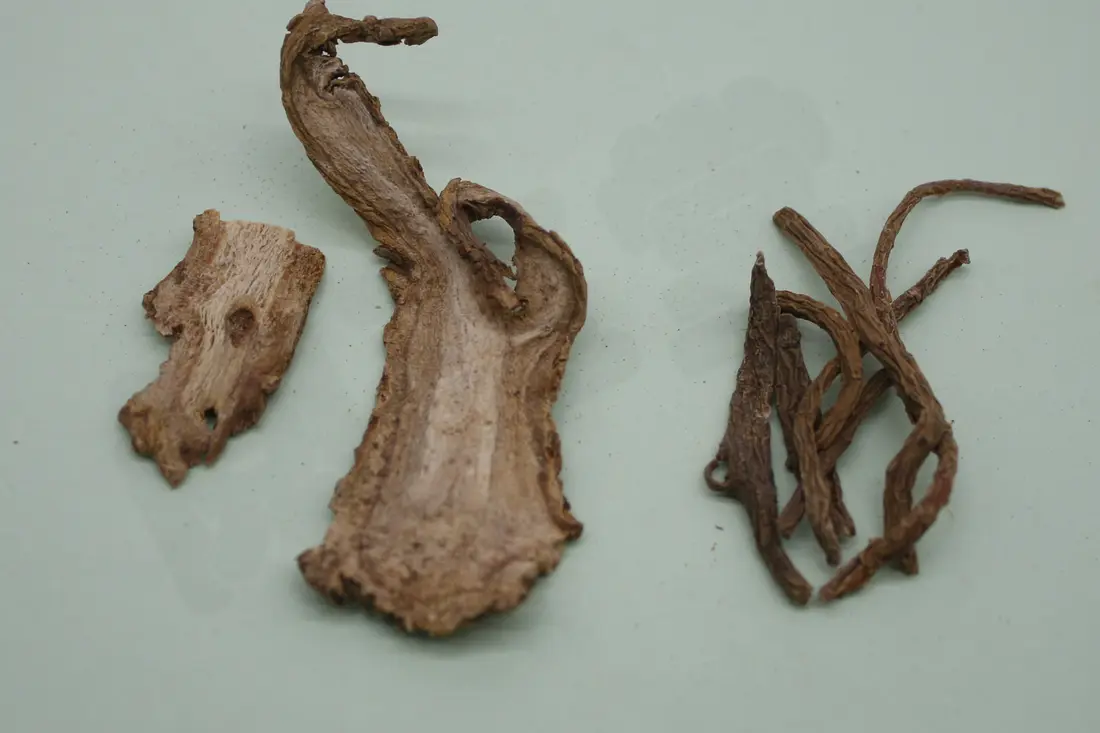
Cylindrical, with 3–5 or more rootlets, 15–25 cm long. Surface light brown to brown, with longitudinal wrinkles and transverse lenticel-like protrusions. Root head 1.5–4 cm in diameter, with annular rings, rounded at the top, or with several distinct stem scars, and remnants of purple or yellow-green stems and leaf sheaths. Main root uneven; rootlets 0.3–1 cm in diameter, thicker above and thinner below, often twisted, with a few fibrous root scars. Texture flexible; cut surface yellow-white or pale yellow-brown, cortex thick, with fissures and numerous brown dotted secretory cavities, wood lighter in color, cambium ring yellow-brown. Strong aromatic odor; taste sweet, pungent, slightly bitter. Woody, dry, oil-deficient, or greenish-brown cut surfaces are not suitable for medicinal use.

Properties and actions性味与功效
Actions
Tonify blood and invigorate blood · Regulate menstruation and relieve pain · Moisten the intestines and unblock the bowels
Indications
For blood deficiency with sallow complexion, dizziness, palpitations, irregular menstruation, amenorrhea, dysmenorrhea, abdominal pain due to deficiency-cold, wind-dampness arthralgia, traumatic injuries, carbuncles, boils and sores, and constipation due to intestinal dryness. Wine-prepared Dang Gui invigorates blood and unblocks menstruation; used for amenorrhea, dysmenorrhea, wind-dampness arthralgia, and traumatic injuries.
Dosage
6–12 g.
Caution
Contraindicated in cases of dampness or excessive fire. Use with caution in diarrhea or abdominal distention.
Processing炮制
Dang Gui (whole root)
Remove impurities, wash, soften briefly, slice thinly, and dry in the sun or at low temperature. Sift out fragments. (Knowledge extension: slices from the root head are Dang Gui Tou; from the main root, Dang Gui Shen; from the rootlets, Dang Gui Wei. Traditionally, whole Dang Gui tonifies and invigorates blood; Dang Gui Tou stops bleeding; Dang Gui Shen tonifies blood; Dang Gui Wei breaks blood stasis.)
Wine-prepared Dang Gui
Mix clean Dang Gui slices with a measured amount of yellow wine, moisten briefly, and stir-fry over gentle heat until deep yellow. Remove and cool. Use 10 kg yellow wine per 100 kg Dang Gui slices.
Earth stir-fried Dang Gui
Heat furnace earth powder in a wok until free-flowing, add clean Dang Gui slices, and stir-fry until coated with earth. Remove, sift out earth, and cool. Use 30 kg furnace earth powder per 100 kg Dang Gui slices.
Dang Gui charcoal
Place clean Dang Gui slices in a wok and stir-fry over medium heat until slightly blackened. Remove and cool.
Modern research现代药理
Cardiovascular effects
Reduces myocardial excitability, prolongs atrial refractory period; dilates coronary arteries, increases coronary blood flow; reduces myocardial oxygen consumption; lowers peripheral resistance and blood pressure; dilates blood vessels and increases organ blood flow; has anti-arrhythmic and anti-atherosclerotic effects; improves microcirculation.
Hematological effects
Inhibits platelet aggregation, promotes disaggregation of aggregated platelets, reduces platelet count, decreases blood viscosity, and inhibits thrombus formation; enhances erythrocyte oxygen-carrying capacity; promotes production of red blood cells and hemoglobin; lowers blood lipids.
Effects on smooth muscle
Shows bidirectional regulation of uterine smooth muscle: volatile oil is inhibitory, non-volatile substances are excitatory. Inhibits isolated rabbit intestine; relaxes tracheal smooth muscle.
Antioxidant and other effects
Antioxidant and free radical scavenging effects; significant anti-radiation damage effect; anti-hypoxic, anti-fatigue, and anti-tumor effects.
Central nervous system effects
Mild inhibition of the central nervous system, used for sedation and hypnosis; significant analgesic effect; hypothermic effect in mice; significant influence on learning and memory in mice; acupoint injection of Dang Gui liquid regulates sympathetic nervous system function.
Gastrointestinal effects
Inhibits intestinal muscle contraction; inhibits gastric acid secretion induced by gastric stimulation.
Hepatobiliary effects
Protects against liver damage caused by various factors; significantly promotes bile secretion and increases excretion of solids and bile acids in bile.
Renal and urinary effects
Protects the kidneys, has diuretic effect, and excites bladder smooth muscle.
Local effects
Has hemostatic effect on local tissues and strengthens peripheral circulation.
Classical records历代本草
The <i>Shennong Bencao Jing</i> records Dang Gui as sweet and warm, treating cough and upward qi, warm malaria with chills and fever, women's uterine bleeding and infertility, and various sores. The <i>Bencao Gangmu</i> notes its use for headaches, heart and abdominal pain, moistening the intestines, stomach, muscles, bones, and skin, and for carbuncles, expelling pus, relieving pain, and harmonizing and tonifying blood. The <i>Bencao Mengquan</i> explains that the head stops bleeding and moves upward, the body nourishes blood and stays in the middle, and the tail breaks blood stasis and moves downward.
《神农本草经》:味甘,温。主治咳逆上气,温疟寒热洗洗在皮肤中,妇人漏下绝子,诸恶疮疡,金创,煮饮之。 《本草纲目》:治头痛,心腹诸痛,润肠胃筋骨皮肤,治痈疽,排脓止痛,和血补血。 《本草蒙筌》:味甘、辛,气温。气味俱轻,可升可降。阳也,阳中微阴。无毒。体肥痰盛,姜汁渍宜。曝干蚥咀,治血必用。东垣云:头止血上行,身养血中守,尾破血下流,全活血不走。易老云:入手少阴,以心主血也。入足太阴,以脾裹血也。入足厥阴,以肝藏血也。若和剂在人参、黄芪皆能补血,在牵牛、大黄皆能破血。从桂附茱萸则热,从芒硝大黄则寒。《别说》又云:能使气血各有所归,故因名曰当归。逐跌打血凝,并热痢刮疼滞住肠胃内;主咳逆气上,及温疟寒热泥在皮肤中;女人胎产诸虚,男子劳伤不足;眼疾齿疾痛难忍,痈疮金疮肌不生;中风挛,中恶昏乱;崩带湛漏,燥涩焦枯;并急用之,不可缺也。又同川芎上治头痛,以其诸头痛皆属肝木,故亦血药主之。甚滑大便,泻者须忌。 谟按:《正传》云:当归能逐瘀血、生新血使血脉通畅与气并行,周流不息,因以为号。然而中半以上,气脉上行,天气主之;中半以下,气脉下行,地气主之;身则独守乎中而不行也。人身之法象亦犹是焉。故瘀血在上焦,与上焦之血少,则用上截之头;瘀血在下焦,与下焦之血少,则用下截之尾;若欲行中焦瘀血,与补中焦血虚,则用中截之身。匪独当归为然,他如黄芩、防风、桔梗、柴胡亦皆然也。观此一说,较前东垣虽殊,思亦近理不妄。采附篇末,凭人所宗。 又按:经云:主咳逆上气。议者以当归血药,如何治胸中气也?殊不知当归非独主血,味兼辛散,乃为血中气药。况咳逆上气,非止一端,亦有阴虚,阳无所附,以致然者,今用血药补阴,与阳齐等,则血和而气降矣。《本经》所谓义或由斯。 《 开宝本草》:味甘、辛,大温,无毒。温中止痛,除客血内塞,中风庢,汗不出,湿痹,中恶,客气虚冷,补五脏,生肌肉。 《名医别录》:味辛,大温,无毒。主温中,止痛,除客血内塞,中风至,汗不出,湿痹,中恶,客气虚冷,补五藏,生肌肉。
Folklore本草传说

Dang Gui is a divine herb for gynecology, symbolizing marriage, offspring, and longing for one's husband. In the Song dynasty <i>Puji Benshi Fang</i>, the 'Buddha's Hand Powder' combines Dang Gui with Chuanxiong; it was said that after taking it, a dead fetus would be expelled and a live fetus would be calmed, with effectiveness like Buddha's hand, hence the name. Among the 25 most used herbs, Dang Gui ranks 8th, hence the saying 'nine out of ten formulas contain Dang Gui.' During the Three Kingdoms period, Jiang Wei's mother, upon hearing he had defected, sent him a letter of reproach. Jiang Wei, using herbal names to express his aspirations, sent back two herbs: Yuan Zhi (Polygala) and Dang Gui. His mother understood: he had远大志向 (great aspirations) and intended to restore the Han dynasty, and that the lost territory should return to Shu Han. In Sichuan's Jian Ge, there is a couplet: 'Peony is also called Li Gu, Dang Gui is also called Wen Wu.' According to <i>Gujin Zhu</i>, in ancient times, parting gifts included peony to signify leaving, and Dang Gui to express longing; when refusing to return, one sent Yuan Zhi. The <i>Wu Zhi</i> records that Cao Cao, hearing of Tai Shi Ci's fame, sent him a sealed box containing only Dang Gui, hence the origin of 'Wen Wu.' During the An Lushan Rebellion in the Tang dynasty, Emperor Xuanzong and Yang Guifei fled Chang'an; the minister Luo Gongyuan sent a brocade box, which after the rebellion was opened to reveal several stalks of Dang Gui. The emperor was overjoyed and rewarded Luo. In ancient times, a young man Wang Fu lived with his mother. He decided to go up the mountain to collect herbs and told his wife, 'If I do not return in three years, you may remarry.' Three years passed, and his mother, believing him dead, urged the wife to remarry. Less than half a month after the remarriage, Wang returned with a load of good herbs. They wept. The wife took all the herbs hoping to die, but instead her menstruation became regular. A Tang poem says, 'Just when he should return, he does not return.' There are three theories for the name Dang Gui: first, it is a geo-authentic herb from Dangzhou, and 'Qi' rhymes with 'Gui'; second, it causes qi and blood to return to their proper places; third, it is a key herb for women's health, used to regulate blood, and symbolizes longing for one's husband.
Culinary use民间药膳
Black Bean for Darkening Hair and Prolonging Life
He Shou Wu (red and white, equal parts) and Han Lian Cao juice 90 g each, Goji berries 60 g, Chen Pi and Sheng Di 45 g each, mulberry juice 90 g, Huai Jiao 45 g, Bu Gu Zhi 30 g, Dang Gui Shen 60 g, one black-boned old hen, black beans 1 kg.
Slaughter the black-boned chicken, remove feathers and innards, wash, and cook to make 2 large bowls of soup. Put the above herbs and black beans into a clay pot with the chicken soup and old wine, and simmer over gentle heat until the liquid is absorbed. Remove the herbs and keep the beans. Eat 50–100 g of beans each morning with a cup of wine.
Darkens hair and prolongs life. Suitable for daily health preservation.
Melon Seed and Sesame Paste
Sweet melon seeds, Bai Zhi, Dang Gui, Chuanxiong, and Zhi Gan Cao 60 g each, pine nuts 30 g, glutinous rice 150 g, black sesame 500 g.
First decoct Bai Zhi, Dang Gui, Chuanxiong, and Zhi Gan Cao to obtain a liquid. Soak glutinous rice, melon seeds, and pine nuts in the liquid, dry in the sun, then soak again, repeating until the liquid is used up. Then stir-fry the rice, seeds, and sesame until fragrant, and grind into fine powder. Take 30 g each time, mix with boiling water into a paste, and eat. Twice daily.
Invigorates and tonifies blood, nourishes hair and skin. Suitable for premature graying and thinning of hair; also for anti-aging and preventing premature graying.
Boiled Medicinal Beans
Prepared He Shou Wu and Goji berries 24 g each, Sheng Di, Shu Di, Dang Gui, stir-fried Du Zhong, and Niu Xi 12 g each, Chrysanthemum, Gan Cao, Chuanxiong, Chen Pi, Bai Zhu, Bai Shao, and Dan Pi 3 g each, Huang Qi 6 g, salt 18 g, black beans 500 g.
Boil the above herbs with black beans until well cooked, then dry in the sun. Remove the herbs and eat the black beans as a snack. About 30–50 g per day.
Darkens hair, strengthens teeth, and brightens eyes. Suitable for blood-deficiency premature graying, dizziness, palpitations, and pale complexion, lips, and nails.
Seven Treasures Beauty Egg
Prepared He Shou Wu 90 g, Bai Fu Ling 60 g, Huai Niu Xi 30 g, Dang Gui 30 g, Goji berries 30 g, Tu Si Zi 30 g, Bu Gu Zhi 40 g, 10 fresh eggs, star anise 6 g, cinnamon 6 g, tea leaves 3 g, scallion, ginger, salt, sugar, and soy sauce as needed.
Place all ingredients in a clay pot with appropriate water. Bring to a boil over high heat, then simmer over low heat for 10 minutes. Remove the eggs, peel them, and return to the pot to simmer for another 20 minutes. Eat 2–3 eggs daily. After the eggs are eaten, the medicinal brine can be reused 3–4 times, adding 10 eggs each time. Store the brine in the refrigerator; add seasonings each time.
Benefits the liver and kidneys, darkens hair, and strengthens bones and muscles. Suitable for premature graying, hair loss, or dry hair due to liver-kidney deficiency; treatment should nourish liver blood and kidney essence.
Carp Soup
One carp (about 500 g), Bai Zhu 15 g, ginger, Bai Shao, and Dang Gui 9 g each, Fu Ling 12 g.
Remove scales and innards from the carp, wash, and set aside. Chop the other five herbs into soybean-sized pieces, decoct in water to obtain a liquid, strain, and cook the fish in the liquid. When the fish is cooked, add seasonings. Eat the fish and drink the soup, divided into 3–5 servings within one day.
Strengthens the spleen and nourishes blood, promotes urination, and reduces weight. Suitable for obese women with difficult urination, dizziness, and edema of the limbs.
Steamed Chicken with Dang Gui and Huang Qi
Zhi Huang Qi 100 g, Dang Gui 20 g, one young hen (1500 g), Shaoxing wine 30 g, MSG 3 g, pepper 3 g, salt 3 g, scallion and ginger as needed.
Slaughter the chicken, remove feathers, open the abdomen, remove innards, wash, and cut off the claws. Blanch in boiling water to remove blood, then rinse in clean water and drain. Wash Dang Gui and cut large pieces lengthwise; wash scallion and cut into 1-inch sections; peel and slice ginger.
Tonifies qi and generates blood.
Shi Quan Da Bu Tang
Ginseng, Huang Qi, Bai Zhu, Fu Ling, Shu Di, and Bai Shao 10 g each, Dang Gui and Rou Gui 5 g each, Chuanxiong and Gan Cao 3 g each, 12 jujubes, ginger 20 g, cuttlefish, fat hen, old duck, cleaned pork tripe, and pork knuckle 250 g each, pork ribs 500 g, winter bamboo shoots, mushrooms, peanuts, and scallion 50 g each, seasonings as needed.
Place the herbs in a gauze bag and tie tightly. Wash the duck, chicken, and pork tripe; wash ribs and chop into small pieces; wash and crush ginger; wash and cut winter bamboo shoots into pieces; wash mushrooms and remove impurities and woody parts. Put all ingredients in a pot with appropriate water. Bring to a boil over high heat, then simmer over low heat. Add yellow wine, Sichuan pepper, salt, and other seasonings. When the meats are tender, remove and cut into strips, return to the soup, and remove the herb bag. Bring to a boil and add MSG. Eat the meat and drink the soup, one small bowl each morning and evening. After finishing, prepare again after 5 days.
Warms and tonifies qi and blood.
Stewed Fresh Placenta with Ginseng and Huang Qi
One fresh placenta, Huang Qi 60 g, Lu Dang Shen 60 g, Dang Gui Shen 20 g, ginger 15 g.
Cut open the blood vessels of the fresh placenta, wash thoroughly, blanch in boiling water for 2–3 minutes, remove promptly, and place in a pot. Add washed Dang Shen, Huang Qi, and Dang Gui Shen, and appropriate water. Heat over high heat until about to boil, skim off foam, add washed and crushed ginger, then simmer over low heat until the placenta is thoroughly cooked. Eat the placenta and soup while hot. Can be divided into 2–3 servings per day.
Tonifies and benefits qi and blood.
Stewed Hen with Dang Gui and Dang Shen
Dang Gui Shen 15 g, Dang Shen 15 g, hen 1500 g, ginger, scallion, cooking wine, and salt as needed.
Slaughter the hen, remove feathers and innards, wash. Wash and slice Dang Gui and Dang Shen, and place inside the chicken. Put in a clay pot, add scallion, ginger, cooking wine, and appropriate water. Bring to a boil over high heat, then simmer over low heat until the chicken is tender. Eat the meat and soup in servings.
Tonifies blood and benefits qi, strengthens the spleen, and warms the middle.
Safflower and Dang Gui Wine
Safflower 100 g, Dang Gui 50 g, Chi Shao 50 g, cinnamon bark 50 g, 40% edible alcohol as needed.
Dry and grind the above herbs into coarse powder. Add 1000 ml of 40% edible alcohol. Take 10–20 ml 3–4 times daily. Re-soak the residue with additional solvent for 3–5 days, filter, and add wine to 10000 ml. Take 10–20 ml 3–4 times daily. Also for external application to unbroken traumatic injuries and sprains.
Invigorates blood and removes stasis, warms meridians and unblocks collaterals. Suitable for traumatic injuries, sprains, and abdominal pain due to blood stasis and amenorrhea.
Audio and video语音与视频
Narration · Chinese · 7:34
Latin name · pronunciation
Narration and video are shared by all language versions and are in Chinese; the images and footage themselves are language-independent.
Photographs药材图片
Dang Gui (Angelica root)
Cultivation and authentication栽培与鉴别

25 cultivation notes and 12 authentication articles exist for this herb. They are long-form field material and are published in Chinese only.

Read them in Chinese →

Compiled from public Chinese materia medica sources for study and reference. Not medical advice.
Chinese version · All herbs