Eupatorium fortunei (Pei Lan)
Pei Lan
EUPATORII HERBA
Nature and flavorPungent, neutral; enters the spleen, stomach, and lung meridians.
Meridians enteredSpleen, stomach, lung
Dosage3–10 g
Reference market price¥4 / kgBozhou market · spec common grade · 河北 · snapshot 2026-11-21
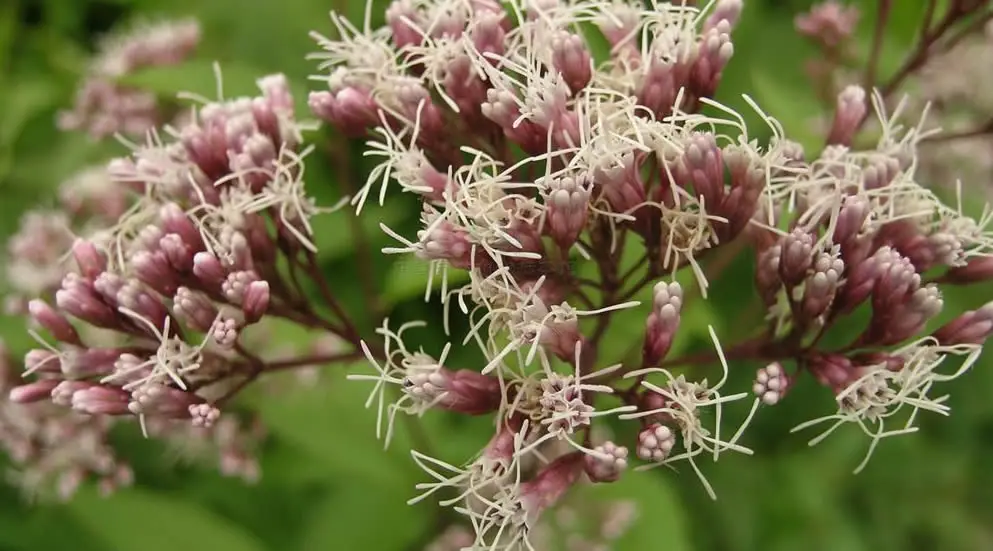
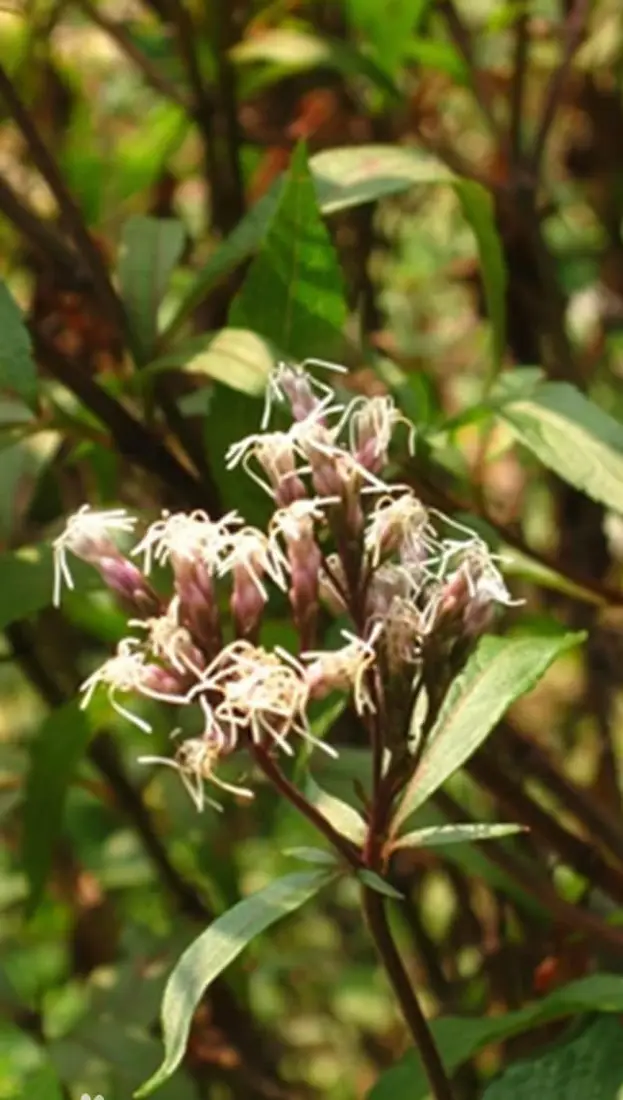
Eupatorium fortunei (Pei Lan) is an aromatic herb used in traditional medicine to resolve dampness and clear summerheat.
Source药物来源
The dried aerial parts of Eupatorium fortunei Turcz. (Asteraceae). Name origin: According to Bencao Gangmu, its leaves resemble those of chrysanthemum, and women and children like to wear it. In summer, people wear it to ward off foul qi; its fragrance resembles that of orchid (lan), hence the name. It is also called 'Xing Tou Cao' (awakening head herb) because when placed in the hair, it prevents greasiness.
Identification性状特征
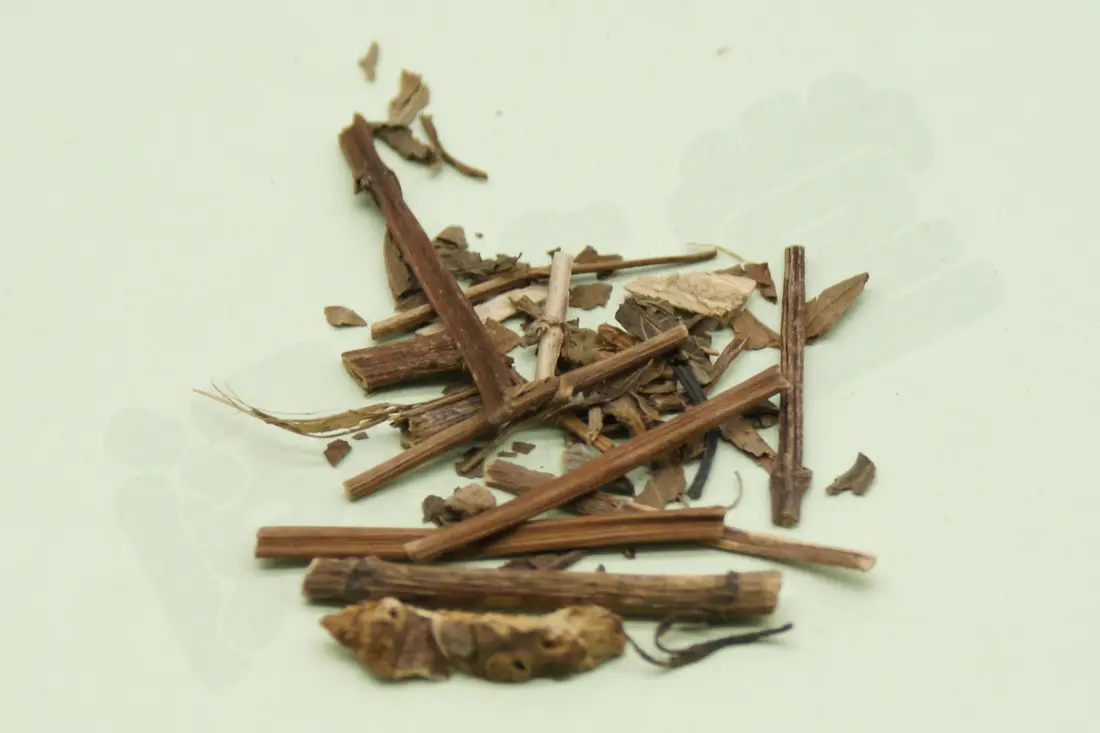
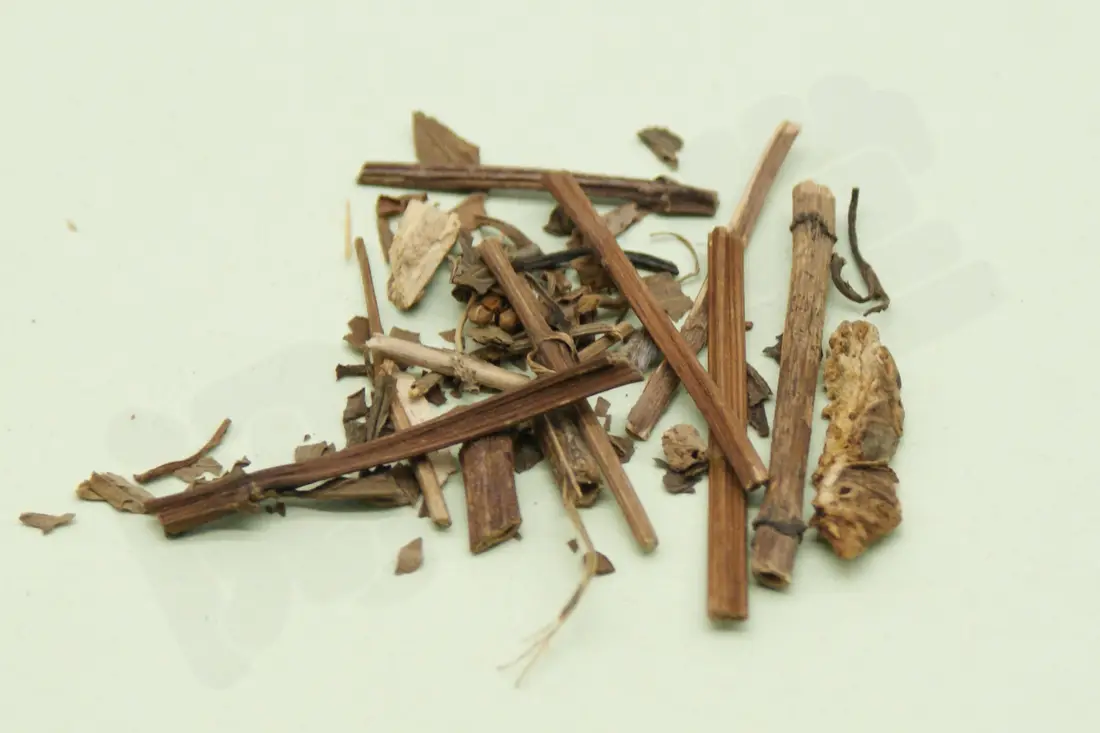
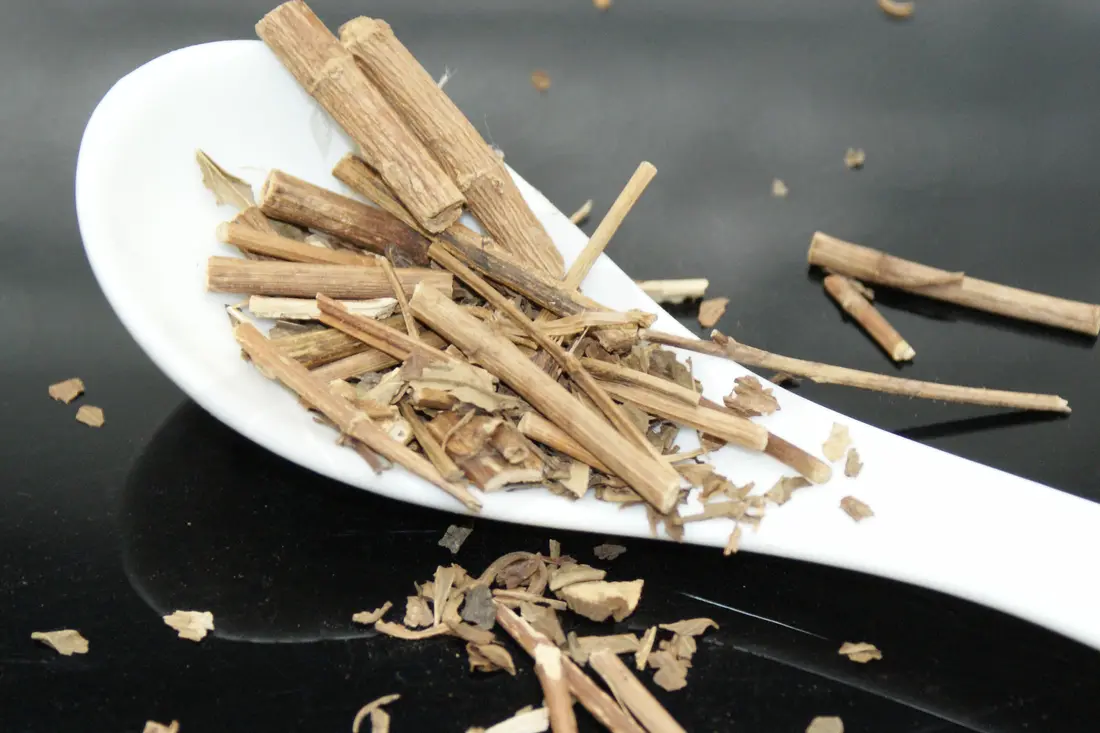
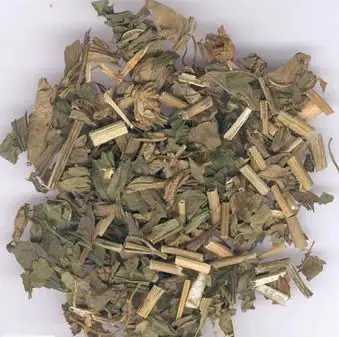
Stems cylindrical, 30–100 cm long, 0.2–0.5 cm in diameter; surface yellowish-brown or yellowish-green, sometimes purplish, with distinct nodes and longitudinal ridges; brittle, fracture with white or hollow pith. Leaves opposite, petiolate, often crumpled and broken, greenish-brown; intact leaves 3-lobed or unlobed; lobed leaves with larger central lobe, lanceolate or oblong-lanceolate when flattened, base narrow, margin serrate; unlobed leaves ovate, ovate-lanceolate, or elliptic. Odor aromatic; taste slightly bitter.
Properties and actions性味与功效
ActionsTransform dampness with aroma · Awaken the spleen and open the stomach · Release the exterior and relieve summerheat
IndicationsUsed for dampness-turbidity obstructing the middle, epigastric fullness with nausea and vomiting, sweet and greasy taste in the mouth, foul breath, excessive salivation, wind-heat type common cold with summerheat-dampness, early stage of warm disease with fever and fatigue, and chest tightness.
CautionUse with caution in cases of yin deficiency with heat or in those with dry mouth and throat; generally not for long-term use in patients with spleen and stomach deficiency-cold.
Processing炮制
RawRemove impurities, wash, moisten briefly, cut into sections, and sun-dry.
Modern research现代药理
Antimicrobial and antiviral effectsThe 100% water decoction inhibits various bacilli and bacteria in vitro; its volatile oil also inhibits influenza virus.
Antitumor activityAlkaloids from Japanese Eupatorium fortunei show antitumor activity in vitro; total alkaloids show synergistic antitumor effects with cyclophosphamide in vivo.
Classical records历代本草
The <i>Shennong Bencao Jing</i> records it as pungent and neutral, promoting water passages and eliminating parasites. The <i>Bencao Gangmu</i> notes its use for foul breath and diabetes, and for treating carbuncles and regulating menstruation.《神农本草经》:味辛,平。主利水道,杀蛊毒,辟不祥。
《本草纲目》:《素》云:五味入口,藏于脾胃,以行其精气。津液在脾,令人口甘,此肥美所发也。其气上溢,转为消渴,治之以兰,除陈气也。王冰注:辛能发散故也。东垣治消渴生津饮,用兰叶,盖本于此,详见泽兰也。又此草浸油涂发,去风垢,令香润。
消痈肿,调月经。煎水,解中牛马毒。
《名医别录》:兰草,无毒。除胸中痰癖。
《本经疏证》:素问奇病论,帝曰,有病口甘者,病名为何,何以得之?岐伯曰,此五气之溢,名曰脾瘅。夫五味入口,藏于胃,脾为之行其精气,津液在脾,故令人口甘,此肥美之所发也,此人必数食而多肥,肥者令人内热,甘者令人中满,故其气上溢,转为消渴。治之以兰,除陈气也,津液在脾,不输化而上溢,自关水道不利,积久相因,阳盛者为内热中满,阳虚者为胸中痰癖,故宜以辛平气味不燥复不滋者引而利之,除而去之,水道既通,肥甘自化,本经素问原默相印合,无二致也。畜兰家论溉灌之法曰,凡水须用雨水、河水、皮屑水、鱼腥水、鸡毛水、浴汤,尤善积久陈水上生缘苔者,大忌井水雪霜,尤忌春雪,一滴著叶,则一叶焦枯,观此则病之受清洌者,与此不相宜矣。其论位置之法曰,不宜太高,高则卫阳,亦不可太低,低则隐风,地不必旷,旷则有日,亦不可太狭,狭则蔽气,观此则著于四畔之病,亦与此不宜矣。其论超向之法曰,前宜面南,后宜背北,盖欲通南薰而障北吹也,右宜近林,左宜近野,欲延东日而避西阳也,观此则病之偏寒偏热者,又与此不宜矣。惟其独标清化,不厌肥甘,饱饫肥甘,偏培清化,可谓钟清化于肥甘,引肥甘从清化者非耶,此素问之旨也。惟其爱超阳和,乃嫌烈日,最喜疏荡,复恶寒风,可谓延温煦以化阴,引阴凝使随阳者非耶,此本经之旨也。蒋汉房曰,他草他花,芳者皆得收藏以为香,独兰陈则绝无香味,故取其新鲜以化陈腐,有贵者喜兰畜百千本,命僮司之,其僮窃取花瓣露珠积成盈瓯,一夕嗓之,觉沁入偏体皆为爽然,而口气清芳者经时历月,因致多寿,是其化陈为新之功固何如乎?李濒湖等毒口诋兰以盗窃兰名,而以系儿菊为真兰,不知所谓真兰者,其功能果得与素问本经切合如此否也。
Cultivation and authentication栽培与鉴别
2 cultivation notes and 6 authentication articles exist for this herb. They are long-form field material and are published in Chinese only.
Read them in Chinese →