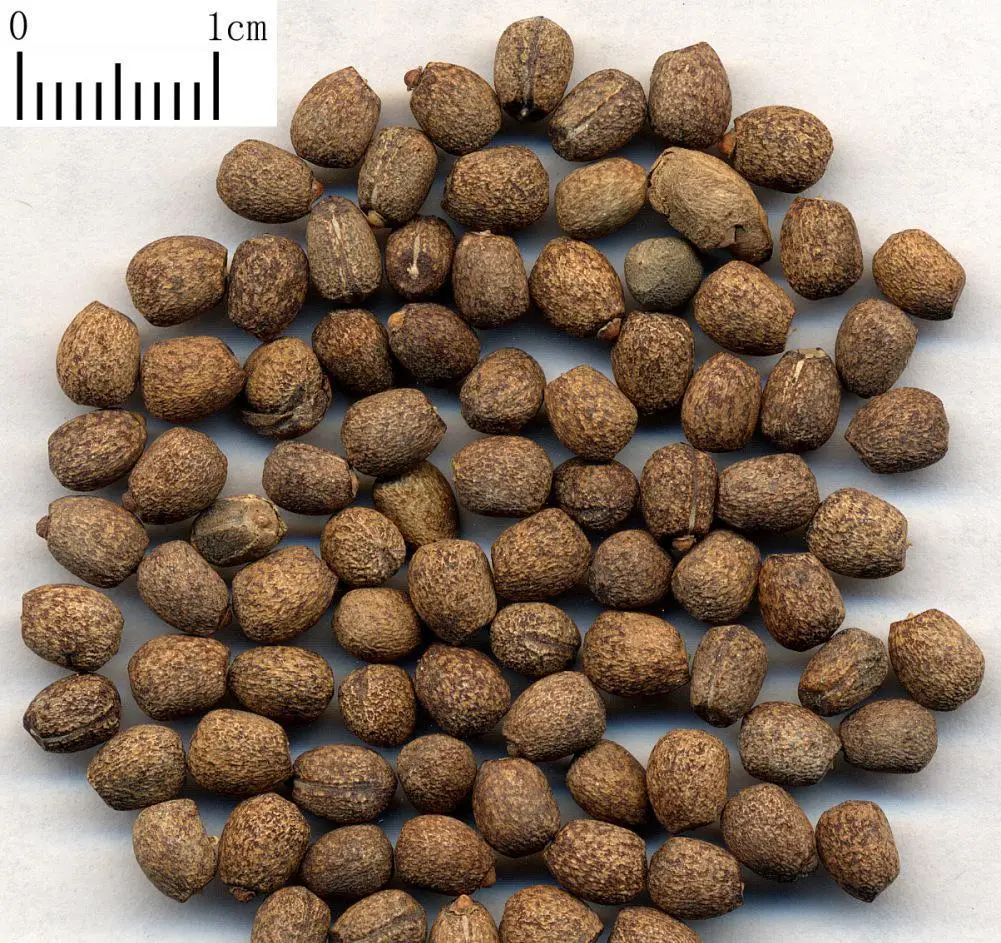
Qian Jin Zi (Euphorbia seed)
Qian Jin Zi is the dried ripe seed of Euphorbia lathyris, used in traditional medicine as a potent purgative and blood-breaking agent.
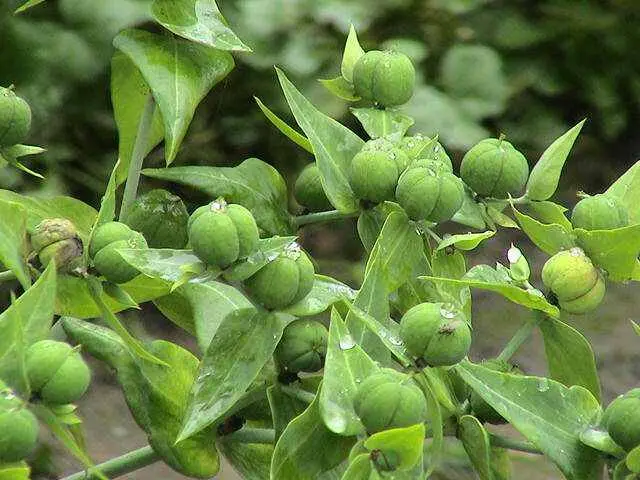
The dried ripe seed of Euphorbia lathyris L. (Euphorbiaceae).
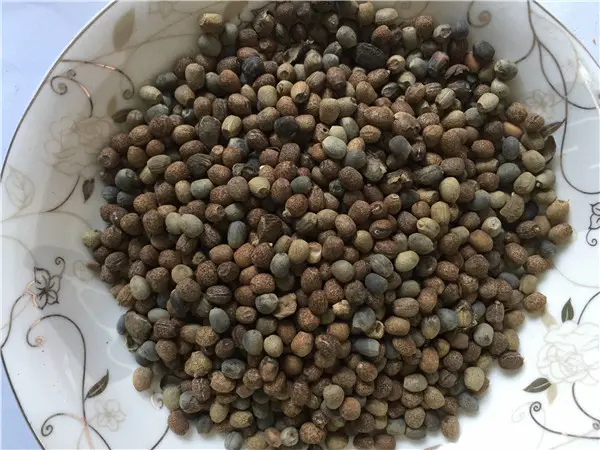
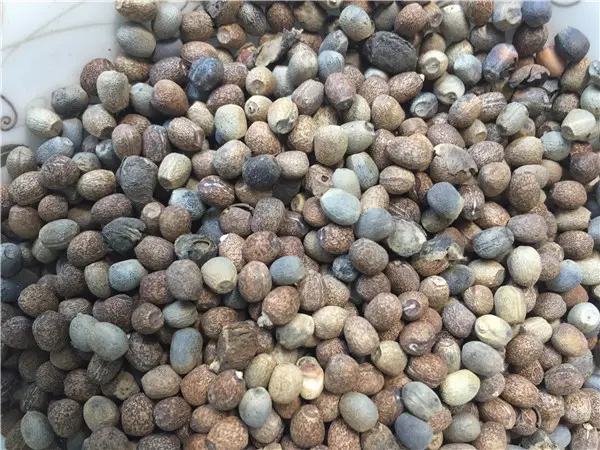
Ellipsoidal or obovate, about 5 mm long and 4 mm in diameter. Surface grayish-brown or grayish-dark brown, with irregular reticulate wrinkles; the depressed areas of the reticulum are grayish-black, forming fine spots. One side has a longitudinal groove-like raphe, with a raised chalaza at the apex and a linear hilum at the lower end; at the base there is a whitish raised caruncle or a scar left after its detachment. Seed coat thin and brittle; kernel white or yellowish-white, rich in oil. Odor slight; taste pungent.
Long ago, a greedy landlord surnamed Qian in a fishing village secretly stole fish from the villagers' ponds at night and sold them in the market. He became the richest man, while the fishermen starved. Retribution came: Qian developed a strange disease with nosebleeds, blood in stool and urine, restlessness, a swollen abdomen with a painful mass, and weight loss despite a distended belly. No doctor could cure him. A wandering nun arrived and said he had been poisoned by water and insects from stealing fish, and only one medicine could save him—but he must promise to stop stealing and help the villagers prosper. Desperate, Qian agreed. The nun gave him several oval, grayish-brown seeds about 5 mm long and told him to shell them, remove the oil, mash them, and take 2–3 qian (about 6–9 g) each time on an empty stomach every five days. Within a month, his abdomen shrank and his health returned. He planted the remaining seeds and used them to help the fishermen, who also fell ill with the same disease. When asked the name of the medicine, since his surname was Qian and the nun had refused even a thousand taels of gold for it, he called it Qian Jin Zi (Thousand Gold Seed). The grateful fishermen also called it 'Bodhisattva Bean'.
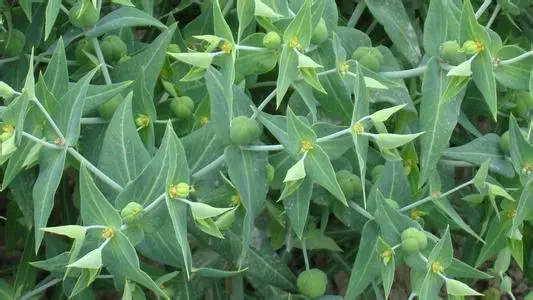
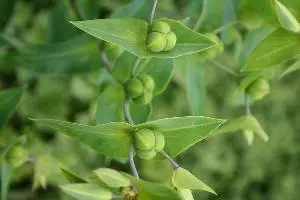
3 cultivation notes and 1 authentication articles exist for this herb. They are long-form field material and are published in Chinese only.
Chinese version · All herbs