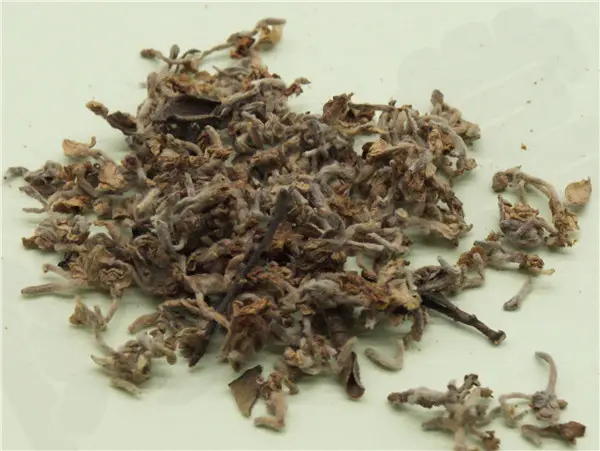
Genkwa flower (Yuan Hua)
Yuan Hua
GENKWA FLOS
Nature and flavorBitter, pungent, warm; toxic.
Meridians enteredLung, Spleen, Kidney
Dosage1.5–3 g; vinegar-processed powder 0.6–0.9 g once daily; external use appropriate amount.
Reference market price¥50 / kgBozhou market · spec common grade · 福建 · snapshot 2026-11-21
Genkwa flower is a toxic purgative herb used to drive out water and resolve phlegm-fluid, and externally to treat skin lesions.
Source药物来源
The dried flower buds of Daphne genkwa Sieb. et Zucc. (family Thymelaeaceae).
Identification性状特征
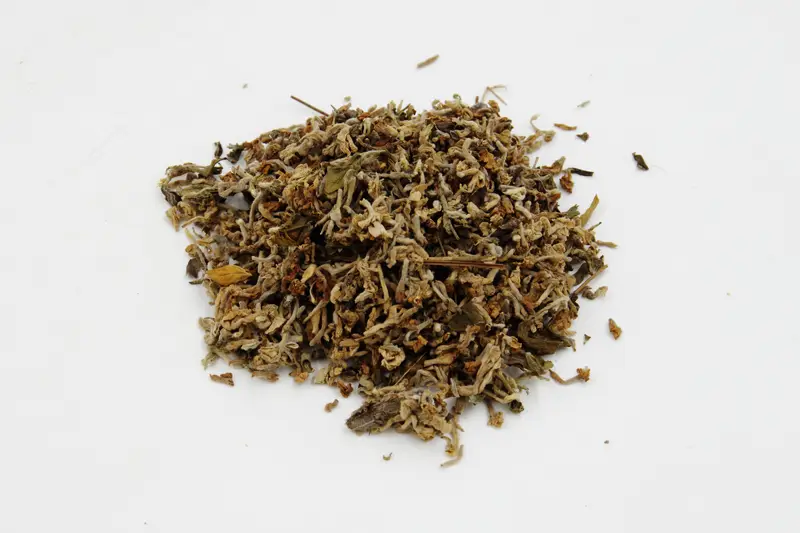
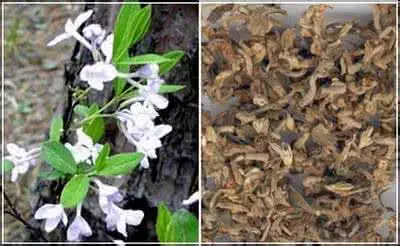
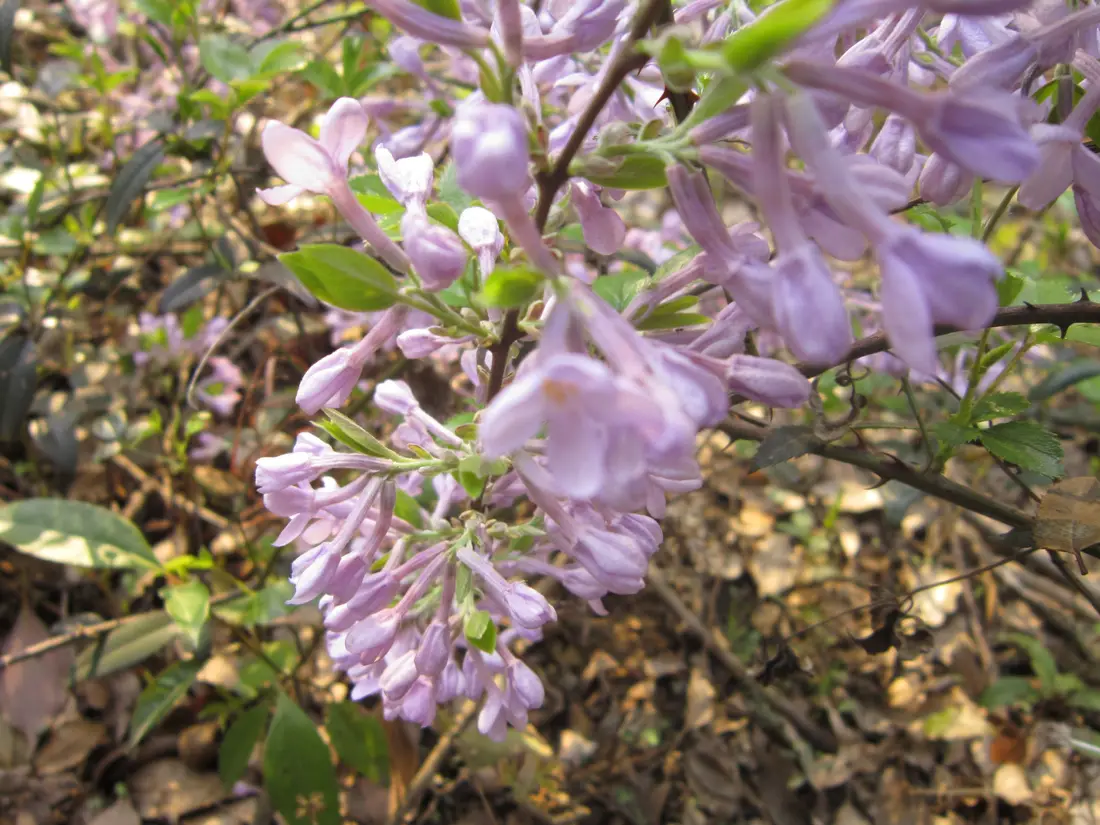
Flowers usually in clusters of 3–7 on a short rachis, with 1–2 bracts at the base, often detached as single flowers. Single flower club-shaped, often curved, 1–1.7 cm long, about 1.5 mm in diameter; perianth tube surface pale purple or grayish-green, densely pubescent, apex 4-lobed, lobes pale purple or yellowish-brown. Texture soft. Odor slight; taste sweet and slightly pungent.
Properties and actions性味与功效
Actions
Drain water and expel fluid · Externally: kill parasites and treat sores
Indications
Used for edema and fullness, fluid accumulation in the chest and abdomen, phlegm-fluid accumulation, cough and dyspnea due to qi counterflow, and difficult urination and defecation; externally for scabies, tinea, bald sores, carbuncles, swellings, and frostbite.
Dosage
1.5–3 g. Vinegar-processed Genkwa powder taken orally, 0.6–0.9 g once daily. Appropriate amount for external use.
Caution
Toxic. Contraindicated in deficiency-cold of the spleen and stomach and in pregnancy. Do not overdose; use with caution in the weak.
Processing炮制
Raw Genkwa
Remove impurities, stems, and leaves; sift out dust.
Vinegar-processed Genkwa
Mix clean Genkwa with a measured amount of rice vinegar, moisten until absorbed, then stir-fry over gentle heat until slightly dry; remove and dry. Use 30 kg rice vinegar per 100 kg Genkwa.
Modern research现代药理
Uterine and antifertility effects
Genkwa stimulates the uterus and has antifertility effects. Sodium carbonate extract of Genkwa root excites isolated mouse uterus and can induce abortion in pregnant mice. Genkwa esters A and B have prostaglandin-like effects, directly exciting uterine smooth muscle. Genkwa terpene may inhibit DNA synthesis in mouse embryos.
Gastrointestinal effects
Processed Genkwa at high concentration excites isolated rabbit intestine. Water decoction, water infusion, and alcohol infusion of raw and vinegar-processed Genkwa excite isolated rabbit ileum, increasing peristalsis and tension, but large doses inhibit. Alcohol infusion of raw and vinegar-processed Genkwa mildly causes diarrhea; in dogs, besides mild diarrhea, it also causes vomiting.
Anti-leukemia effects
Genkwa daphnetin and Genkwa ester A inhibit nucleic acid and protein synthesis in P-388 cancer cells.
Xanthine oxidase inhibition
Flavonoids such as genkwanin, apigenin, and luteolin inhibit xanthine oxidase (XO).
Cardiovascular effects
Leaf extract given intravenously to anesthetized cats produces transient but marked hypotension. Total flavonoids intravenously significantly antagonize aconitine-induced arrhythmia in rats and prevent barium chloride-induced arrhythmia.
Antimicrobial effects
In vitro, 50% decoction of whole plant and alcohol/water extracts of vinegar- or benzene-processed Genkwa inhibit Pneumococcus and Haemophilus influenzae. 1:4 water infusion inhibits skin fungi such as Trichophyton schoenleinii.
Classical records历代本草
The Shennong Bencao Jing records it as pungent and warm, treating cough, dyspnea, throat swelling, and masses. The Bencao Gangmu cites Zhang Zhongjing's formulas (Xiao Qinglong Tang, Shizao Tang) for water-fluid retention, and notes that although Genkwa acts quickly, it should not be overused as it depletes vital qi.
《神农本草经》:味辛,温。主治咳逆上气,喉鸣喘,咽肿,短气,蛊毒,鬼疟,疝瘕,痈肿,杀虫鱼。
《本草纲目》:仲景治太阳证,表不解,心下有水气,干呕发热而咳或喘或利者,小青龙主之。若表已解,时头痛汗出恶寒,心下有水气,干呕,痛引两胁,或喘或咳者,十枣汤主之。盖小青龙治未发散表邪,使水气自毛窍而出,乃《内经》开鬼门法也。十枣汤驱逐里邪,使水气自大小便而泄,乃《内经》洁净府,去陈莝法也。
夫饮有五,皆由内啜水浆,外受湿气,郁蓄而为留饮。流于肺则为支饮,令人喘咳寒热,吐沫背寒。流于肝则为悬饮,令人咳唾,痛引缺盆两胁。流于心下则为伏饮,令人胸满呕吐、寒热眩运。流于肠胃,则为痰饮,令人腹鸣吐水,胸胁支满,或作泄泻,忽肥忽瘦。流于经络,则为溢饮,令人沉重注痛,或作水气胕肿。甘遂、大戟、芫花之性,取效甚捷。不可过剂,泄人真元也。《三因方》以十枣汤药为末,用枣内和丸,以治水气喘急浮肿之证,盖善变通者也。《直指方》云:破癖须用芫花,行水后便养胃可也。
治水饮痰澼,胁下痛。
《本草蒙筌》:味辛、苦,气温。有小毒。反甘草,使决明。散皮肤水肿发浮,消胸膈痰沫善唾。咳逆上气能止,咽肿短气可安。驱疝瘕痈疽,除蛊毒鬼疟。令人虚损,久服不宜。汁渍线丝,系痔易落。
谟按:芫花泻湿利水为要。夫水者,脾、胃、肾三经所主,有五脏六腑十二经之部分。上而头目,中而四肢,下而腰膝。外而皮毛,中而肌肉,内而筋骨。脉有寸、关、尺之殊,诊有浮、中、沉之异。必当审其病在何经何脏,乃可用之。倘若误投,为害非浅。
《开宝本草》:味辛、苦,微温,有小毒。消胸中痰水,喜唾,水肿,五水在五脏皮肤,及腰痛,下寒毒、肉毒。久服令人虚。
《名医别录》:味苦,微温,有小毒。消胸中痰水,喜唾,水肿,五水在五藏皮肤,及腰痛,下寒毒肉毒。久服令人虚。
Audio and video语音与视频
Narration · Chinese · 7:34
Latin name · pronunciation
Photographs药材图片
Cultivation and authentication栽培与鉴别
0 cultivation notes and 3 authentication articles exist for this herb. They are long-form field material and are published in Chinese only.
Compiled from public Chinese materia medica sources for study and reference. Not medical advice.
Chinese version · All herbs
Chinese version · All herbs