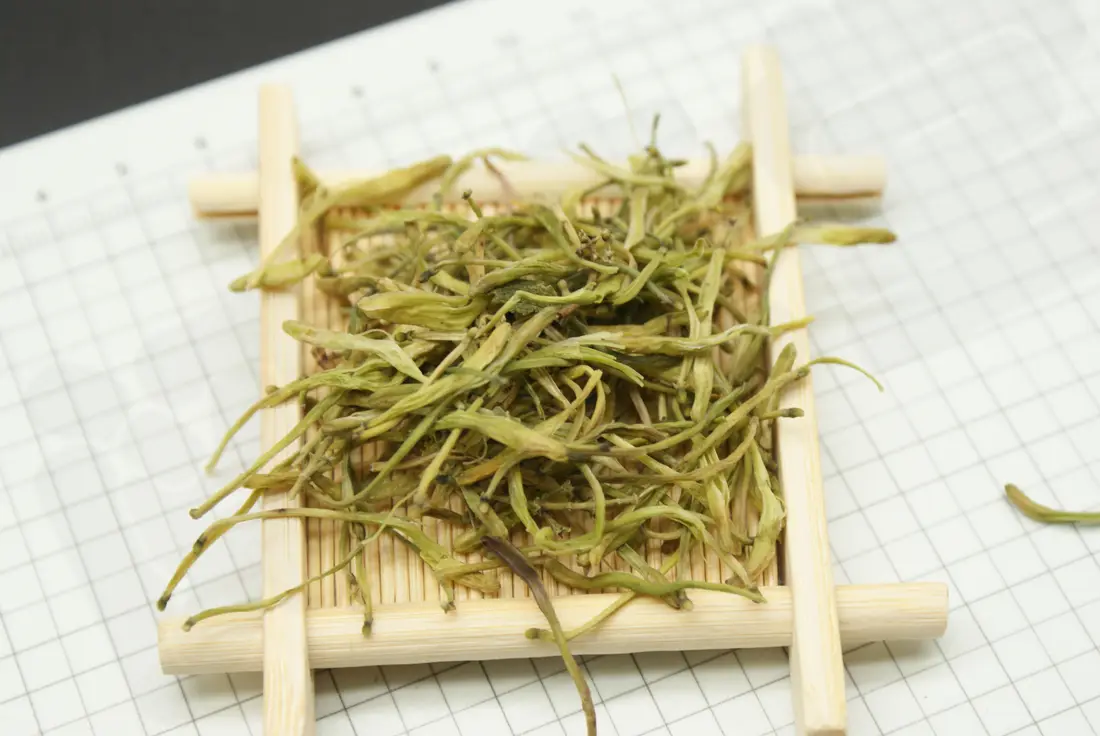
Japanese honeysuckle flower (Jin Yin Hua)
Japanese honeysuckle flower is a key herb for clearing heat and resolving toxicity, widely used in wind-heat colds and skin infections.
The dried flower buds or flowers just opening of Lonicera japonica Thunb. (family Caprifoliaceae).
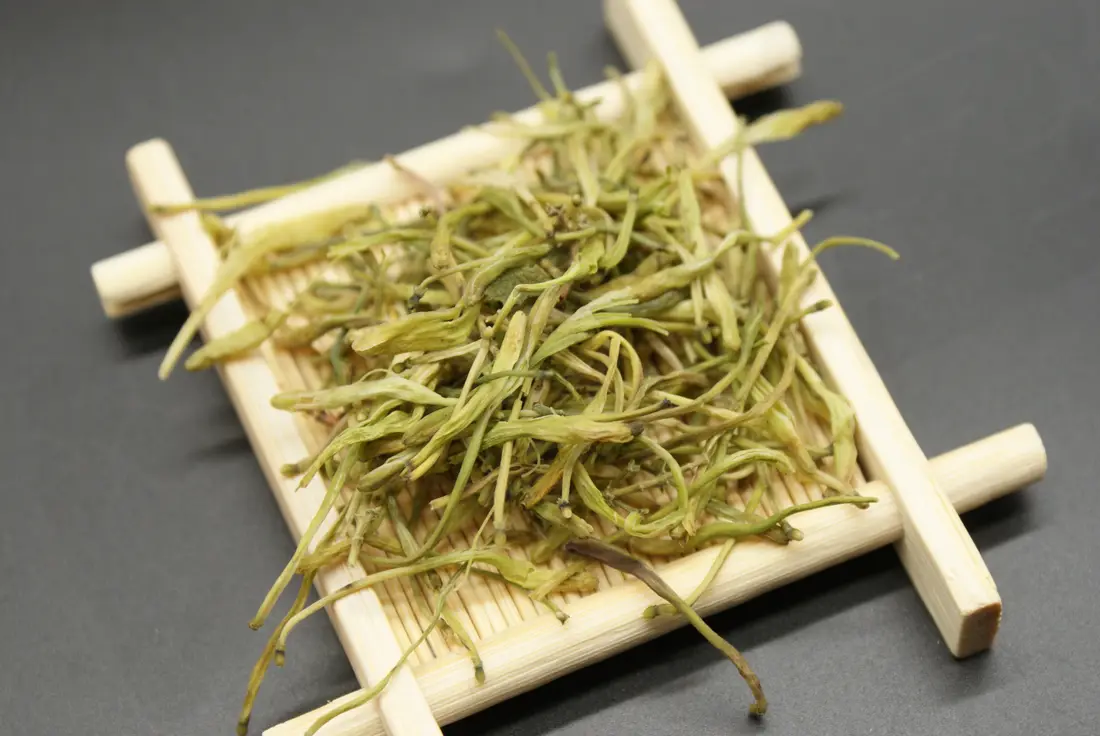
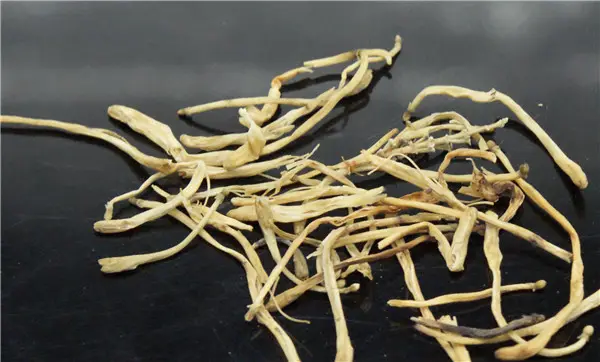
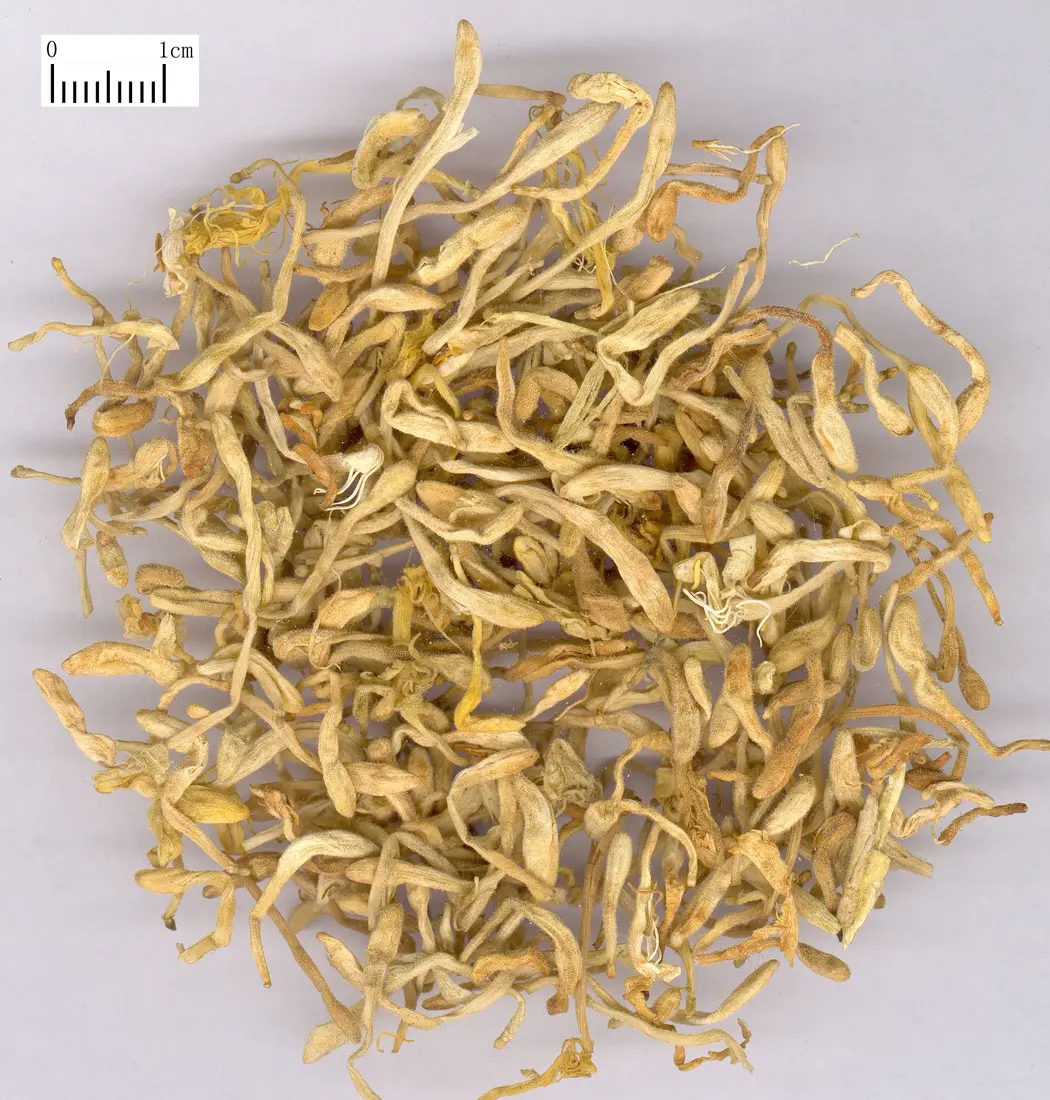
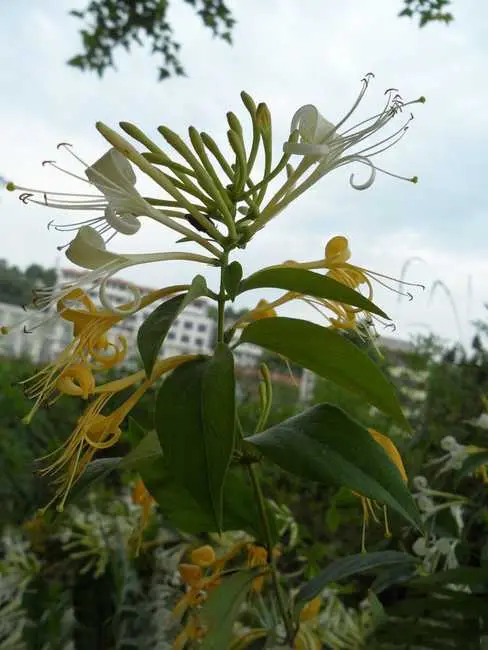
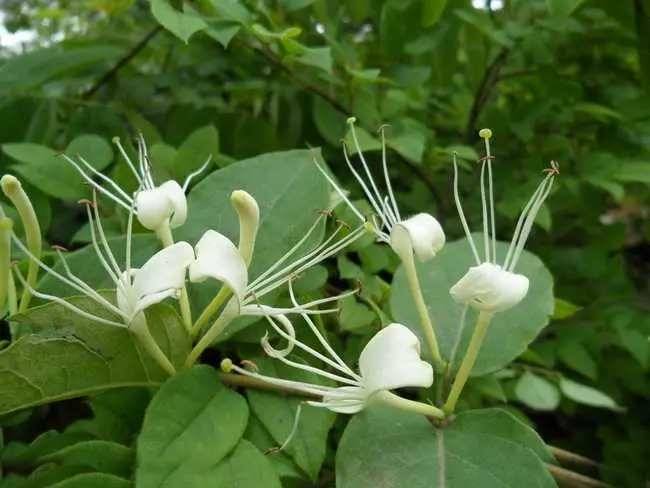
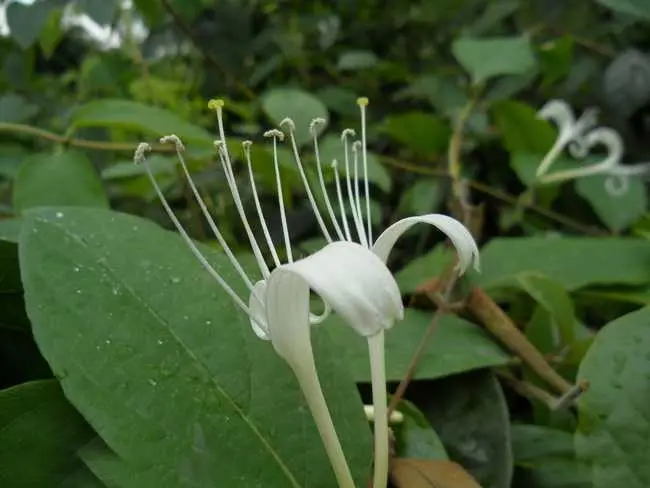
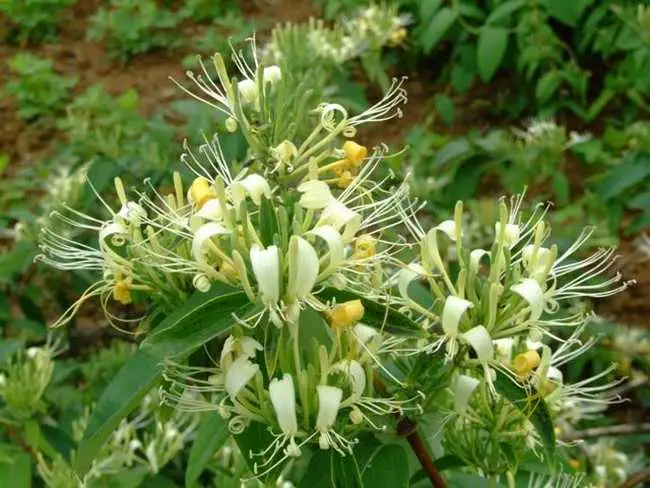
The drug is rod-shaped, thick at the upper end and thin at the lower end, slightly curved, 2–3 cm long, about 3 mm in diameter at the upper part and about 1.5 mm at the lower part. The surface is yellow-white or green-white (darkening with prolonged storage), densely covered with short pubescence. Occasionally leaf-like bracts are present. The calyx is green, with 5 lobes at the apex, the lobes hairy, about 2 mm long. In open flowers, the corolla is tubular with two lips at the apex; stamens 5, attached to the tube wall, yellow; pistil 1, ovary glabrous. Odor fragrant, taste weak and slightly bitter.
Legend tells of twin sisters, Jin Hua and Yin Hua, by the Dingxiang River, who saved a woman covered in wounds. The woman later planted a vine on their graves, which bloomed white then yellow—hence the name Jin Yin Hua (gold and silver flower). Because both gold and silver are treasures, it is also called Er Bao Hua. In winter the old leaves fall but new leaves sprout, so it is called Ren Dong (winter-resistant).
66 cultivation notes and 14 authentication articles exist for this herb. They are long-form field material and are published in Chinese only.
Chinese version · All herbs