Baikal skullcap root (Huang Qin)
Huang Qin
SCUTELLARIAE RADIX
Nature and flavorBitter, cold. Meridian tropism: lung, gallbladder, spleen, large intestine, small intestine.
Meridians enteredLung, gallbladder, spleen, large intestine, small intestine
Dosage3–10 g
Reference market price¥13 / kgBozhou market · spec common grade · 山西 · snapshot 2026-11-21
Baikal skullcap root (Huang Qin) is a bitter, cold herb that clears heat and dries dampness, resolves toxicity, stops bleeding, and calms the fetus.
Source药物来源
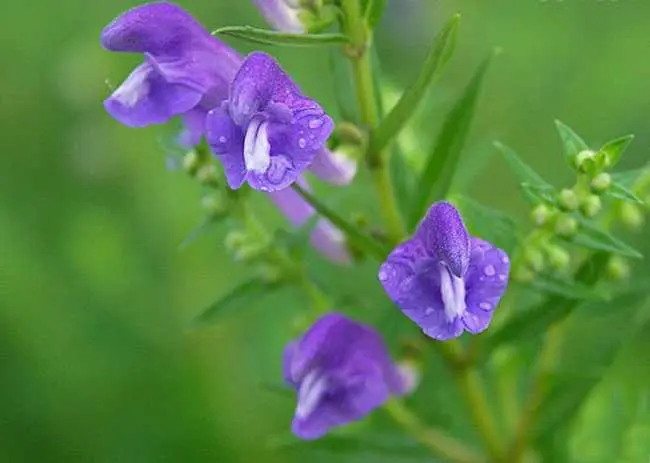
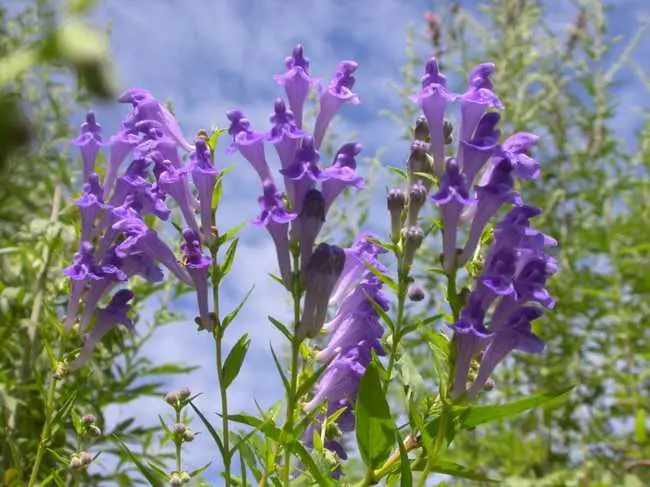
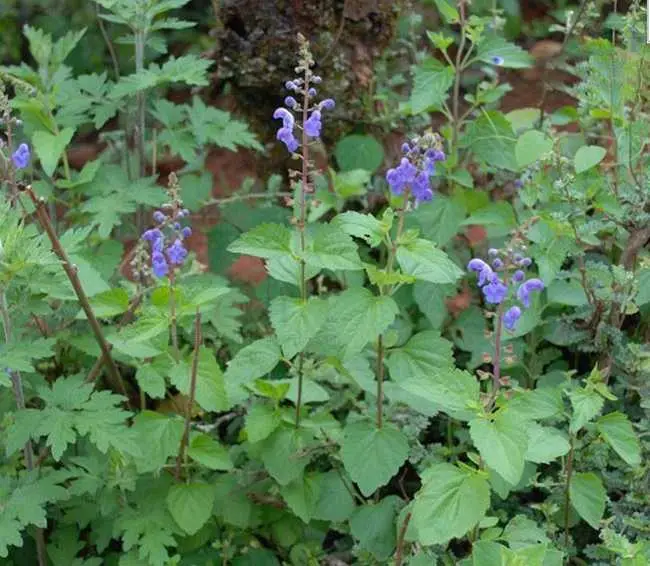
The dried root of Scutellaria baicalensis Georgi (family Lamiaceae).
Name origin: "Qin, in the Shuowen, is written as quan, referring to its yellow color. Some say qin is qian, and qian is the color of yellow-black" (Bencao Gangmu). The name comes from its yellow color.
Identification性状特征
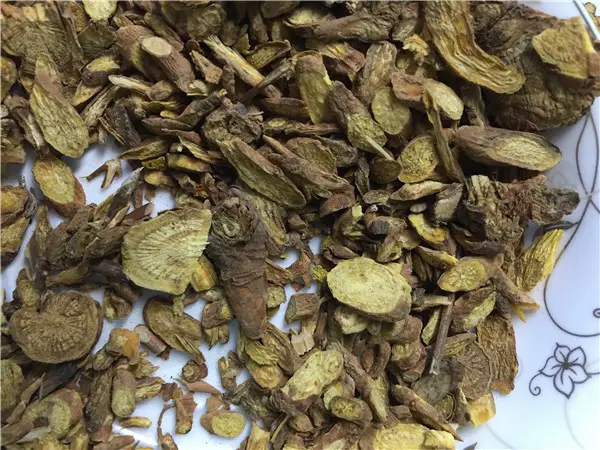
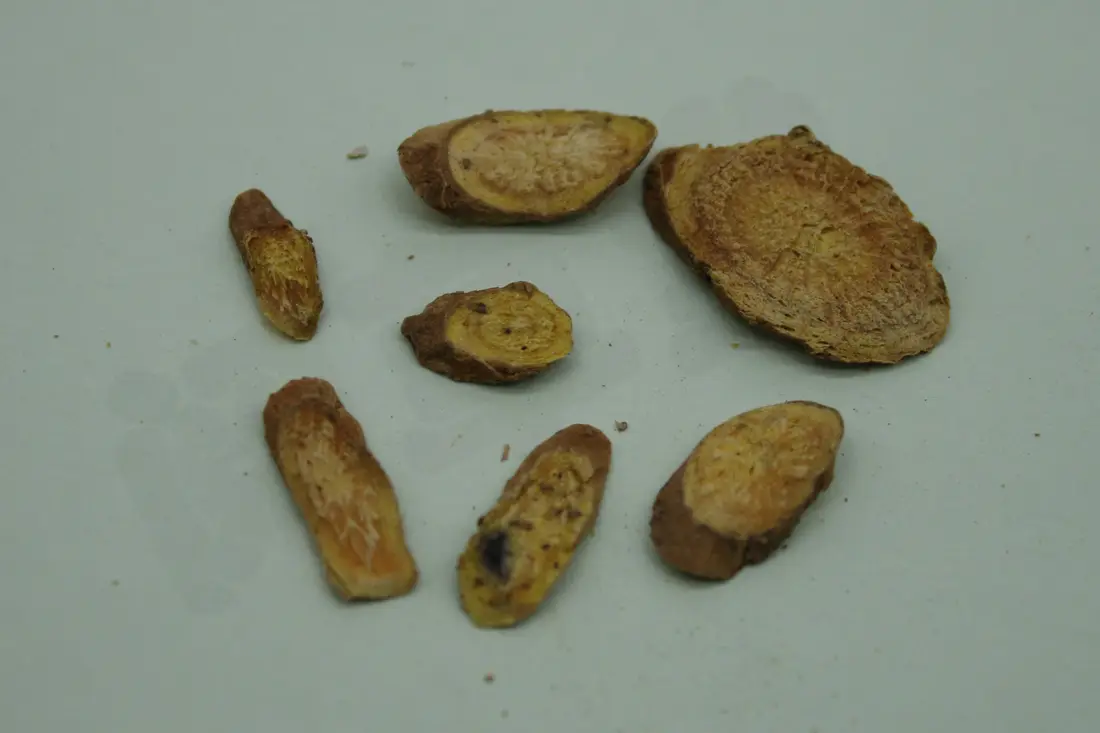
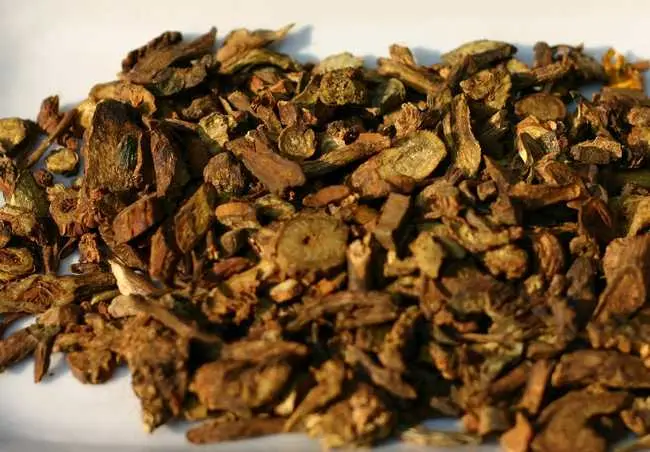
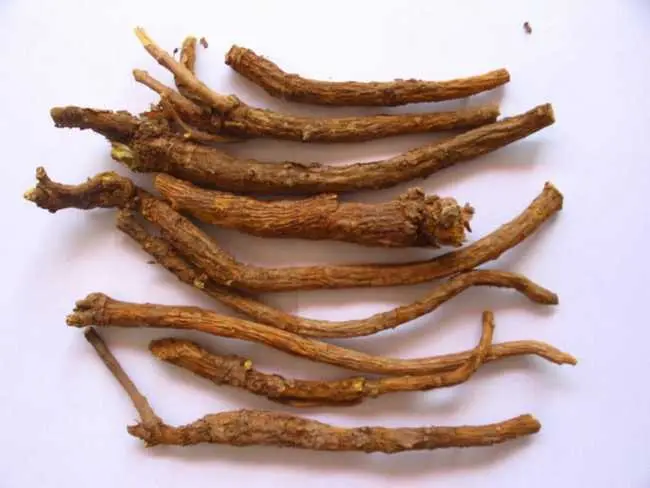
The drug is conical, twisted, 8–25 cm long, 1–3 cm in diameter. The surface is brownish-yellow or dark yellow, with sparse warty fine rootlet scars; the upper part is rougher, with twisted longitudinal wrinkles or irregular reticulate veins; the lower part has straight and fine wrinkles.
It is hard and brittle, easily broken; the fracture is yellow, with a reddish-brown center; the center of old roots is decayed or hollow, dark brown or brownish-black. Odor slight; taste bitter.
Cultivated products are slender and often branched. The surface is light yellowish-brown, the outer bark closely adherent, with finer longitudinal wrinkles. The fracture is yellow or light yellow, slightly horny. Taste slightly bitter.
Properties and actions性味与功效
ActionsClear heat and dry dampness · Drain fire and resolve toxicity · Stop bleeding · Calm the fetus
IndicationsUsed for damp-warmth and summer-heat dampness with chest oppression, nausea and vomiting; damp-heat distention and fullness; diarrhea and dysentery; jaundice; cough due to lung heat; high fever with irritability and thirst; hematemesis and epistaxis due to blood heat; carbuncles, swellings, sores and toxic swellings; and restless fetus.
CautionContraindicated in deficiency-cold of the spleen and stomach; caution in yin deficiency with dryness-heat.
Processing炮制
Huang Qin (raw)Take the crude drug, remove impurities, wash off soil, and sort by size. Steam in a steamer over water until softened (about 30 minutes after full steam), remove, and cut into thin slices while hot. Dry and sift out fragments. Alternatively, boil the clean Huang Qin in water for 10 minutes,闷润 until moisture is uniform inside and out, cut into thin slices, and dry. Sift out fragments.
Wine-prepared Huang QinTake clean Huang Qin slices, mix with yellow wine, stir-fry over gentle heat until dark yellow, remove, and cool. Sift out fragments. Use 10 kg of yellow wine per 100 kg of Huang Qin slices.
Huang Qin charcoalTake clean Huang Qin slices, place in a preheated frying container, stir-fry over strong heat until the outside is blackish-brown and the inside is dark yellow, spray a small amount of water, extinguish sparks, remove, and spread to cool.
Modern research现代药理
Anti-pathogenic microorganism effectHuang Qin has broad-spectrum antibacterial action against various Gram-positive and Gram-negative bacteria, especially Staphylococcus aureus and Pseudomonas aeruginosa, and inhibits some pathogenic fungi. Its antibacterial component is baicalin. The decoction inhibits influenza virus PR6 and Asian influenza virus in vitro and treats mice infected with influenza virus. It also inhibits amoeba growth and kills Leptospira.
Anti-inflammatory and anti-allergic effectsBaicalin and baicalein inhibit passive cutaneous anaphylaxis, experimental asthma, and have antihistamine, anticholinergic, and papaverine-like effects. They also inhibit acetic acid-induced peritoneal exudation in mice, 48/80-induced rat paw edema, and adjuvant arthritis.
Hepatoprotective and choleretic effectsHuang Qin extract prevents and treats liver damage induced by ethanol, carbon tetrachloride, galactosamine, and lipid peroxides, increases liver glycogen, and lowers transaminases. Baicalin has detoxifying effects. The decoction and ethanol extract promote bile excretion in rabbits and dogs, with baicalein being the most choleretic.
Antipyretic effectThe decoction and baicalin reduce fever in rabbits injected with typhoid mixed vaccine and in yeast-induced fever. However, intravenous or intramuscular baicalin lowers body temperature in normal rabbits.
Sedative and antispasmodic effectsThe tincture of Huang Qin rhizome injected intravenously relieves strychnine-induced tonic convulsions. Wogonin relieves acetylcholine-induced intestinal spasms in isolated mouse intestine, but baicalein is ineffective.
Classical records历代本草
The Shennong Bencao Jing records Huang Qin as bitter and balanced, treating various heat patterns, jaundice, dysentery, and ulcers. The Bencao Gangmu cites Zhang Jiegu, Li Dongyuan, and Zhu Danxi on its action on lung fire, large intestine fire, and upper/middle burner fire, and discusses its use in Zhang Zhongjing's formulas such as Xiaochaihu Tang and Huangqin Tang.《神农本草经》:味苦,平。主治诸热,黄疸,肠辟泄痢,逐水,下血闭,恶疮,疽蚀,火疡。
《本草纲目》:洁古张氏言黄芩泻肺火,治脾湿。东垣李氏言片芩治肺火,条芩治大肠火。丹溪朱氏言黄芩治上、中焦火。而仲景治少阳证小柴胡汤,太阳少阳合病下利黄芩汤,少阳证下后心下满而不痛泻心汤,并用之。成无己言黄芩苦而入心,泄痞热。是黄芩独入手少阴阳明,手足太阴少阳六经矣。
盖黄芩气寒味苦,色黄带绿,苦入心寒胜热,泻心火,治脾之湿热,一则金不受刑,一则胃火不流入肺,即所以救肺也。肺虚不宜者,苦寒伤脾胃,损其母也。少阳证,寒热胸胁痞满,默默不欲饮食,心烦喜呕,或渴或痞、或小便不利。虽曰病在半表半里,而胸胁痞满,实兼心肺上焦之邪。心烦喜呕,默默不欲饮食,又兼中焦脾胃之证。故用黄芩治手足少阳相火,黄芩亦少阳本经药也。成无己《注解》但云柴胡、黄芩之苦,以发结邪之热。芍药、黄芩之苦,以坚敛肠胃之气,殊昧其治火之妙。杨士瀛《直指方》云:柴胡退热,不及黄芩。盖亦不知柴胡之退热,乃苦以发之,散火之标也。黄芩之退热,乃寒能胜热,折火之本也。仲景又云:少阳证腹中痛者,去黄芩加芍药。心下悸,小便不利者,去黄芩,加茯苓。似于《别录》治少腹绞,利小肠之文不合。成氏言黄芩寒中,苦能坚肾,故去之,盖亦不然。至此当发意逆之,辨以脉证可也。若因饮寒受寒,腹中痛,及饮水心下悸,小便不利,而脉不数者,是里无热证,则黄芩不可用也。若热厥腹痛,肺热而小便不利者,黄芩其可不用乎?故善观书者,先求之理,毋徒泥其文。昔有人素多酒欲,病少腹绞痛又可忍,小便如淋,诸药不效。偶用黄芩、木通、甘草三味煎服,遂止。王海藏言有人因虚服附子药多,病从便闭,服芩,连而愈。此皆热厥之痛也,学者其可拘乎?予年二十时,因感冒咳嗽既久,且犯戒,遂病骨蒸发热,肤如火燎,每日吐痰碗许,皆以为必死也。先君偶思东垣治肺热如火燎,烦躁引饮而昼盛者,气分热也。宜一味黄芩汤,以泻肺经气分上火。遂按方顿服,次日身热尽退,而痰嗽皆愈。药中肯启,如鼓应桴,医中之妙,有如此哉。
治风热湿热头痛,奔豚热痛,火咳肺痿喉腥,诸失血。
得酒,上行。得猪胆汁,除肝胆火。得柴胡、退寒热。得芍药,治下痢。得桑白皮,泻肺火。得白术安胎。
《本草蒙筌》:味苦,气平、大寒。味薄气厚,可升可降,阴也,阴中微阳。无毒。单恶葱实,勿令同煎。畏丹砂牡丹藜芦,用山茱龙骨引使。枯飘者名宿芩,入手太阴,上膈酒炒为宜;坚实者名子芩,入手阳明,下焦生用最妙。宿芩泻肺火,消痰利气,更除湿热,不留积于肌表间;子芩泻大肠火,养阴退阳,又滋化源,常充溢于膀胱内。赤痢频并可止,赤眼胀痛能消。得五味蒙蛎五味子、牡蒙、牡蛎。育妊娠,得白术砂仁安胎孕。疗鼠痿同芪蔹赤豆,黄芪、白蔹、赤小豆。治腹疼同厚朴黄连。又煎小清空膏,载丹溪方。单味而清头脑。总除诸热,收尽全功。
《开宝本草》:味苦,平、大寒,无毒。疗痰热,胃中热,小腹绞痛,
Folklore本草传说
Li Shizhen (Ming dynasty) recorded in Bencao Gangmu that at age 26 he had a persistent cough with fever, skin burning, and copious phlegm. His father, the famous physician Li Yanwen, tried many herbs without success. He then recalled Li Dongyuan's teaching that high fever with irritability and thirst belongs to qi-level heat and should be treated with a single Huang Qin decoction. He gave Li Shizhen one ounce of Huang Qin boiled in water. The next day the fever subsided and the cough resolved. Li Shizhen exclaimed: "When medicine hits the key, it is like a drum responding to a mallet; such is the wonder of medicine!" It is thought he may have had lobar pneumonia or lung abscess, which Huang Qin's bitter-cold nature resolved.
Cultivation and authentication栽培与鉴别
14 cultivation notes and 5 authentication articles exist for this herb. They are long-form field material and are published in Chinese only.
Read them in Chinese →