Sargassum (Hai Zao)Materia Medica

Sargassum (Hai Zao)

Hai Zao
SARGASSUM
Nature and flavorBitter, salty, cold. Enters the Liver, Stomach and Kidney meridians.
Meridians enteredLiver, Stomach, Kidney
Dosage6–12 g
Reference market price¥15 / kgBozhou market · spec 清水 · 海南 · snapshot 2026-11-21

Sargassum is a cold, bitter and salty seaweed used in traditional medicine to resolve phlegm, soften hardness and reduce swelling.

Source药物来源

The dried algal body of Sargassum pallidum (Turn.) C.Ag. or Sargassum fusiforme (Harv.) Setch. (family Sargassaceae).

Identification性状特征

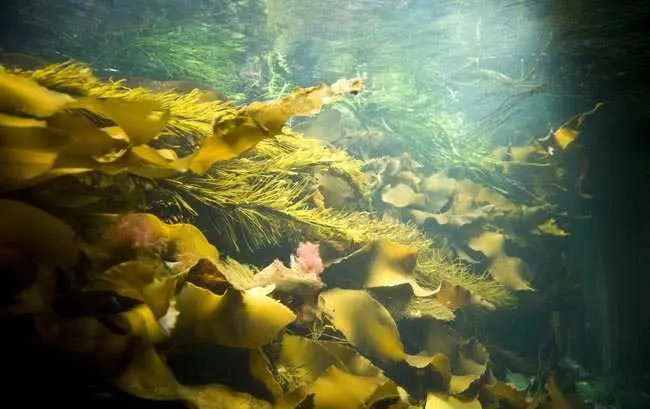
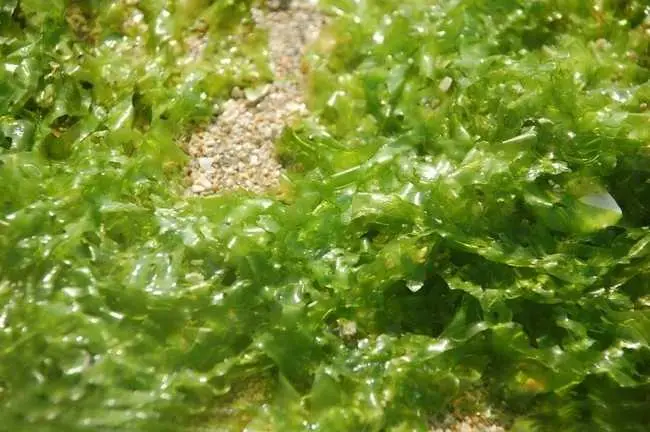
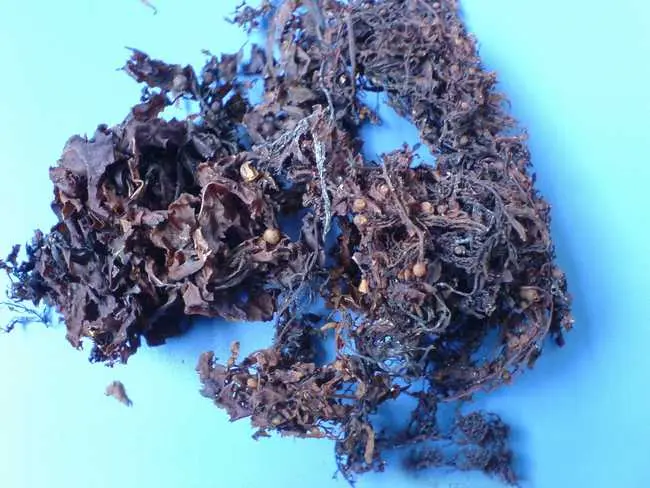
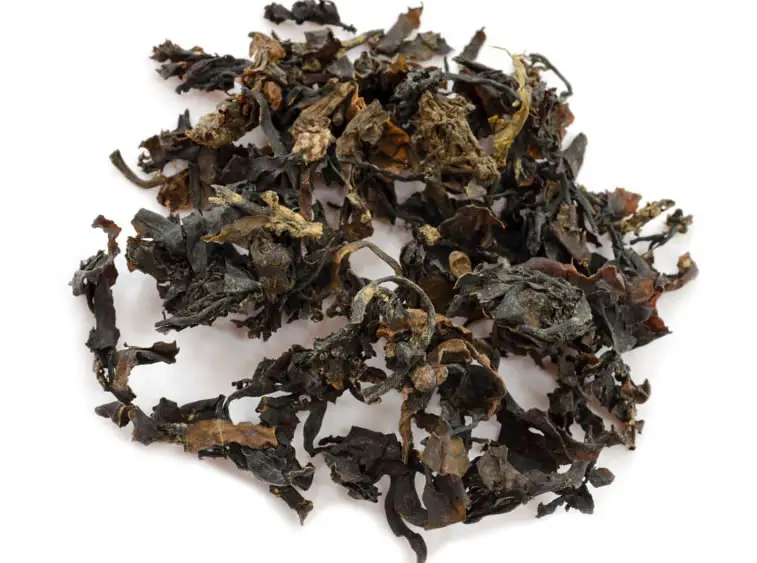
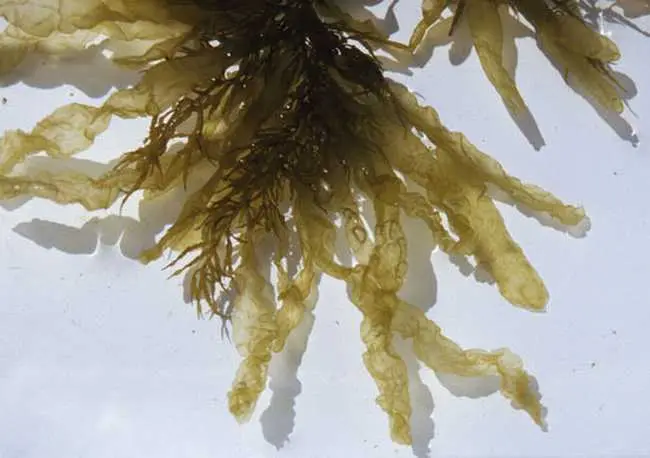
Large-leaf Sargassum: wrinkled and curled, dark brown, sometimes covered with a white bloom, 30–60 cm long. The main axis is cylindrical with conical projections; main branches arise from both sides of the main axis, lateral branches from the axils of main branches, with short spine-like projections. Primary leaves lanceolate or obovate, 5–7 cm long, about 1 cm wide, entire or coarsely serrate; secondary leaves linear or lanceolate, with small branches bearing linear leaves in the axils. Air bladders dark brown, spherical or ovoid, sometimes stalked, apex obtuse-rounded, sometimes with a fine short point. Texture brittle, soft when moist; swells after soaking in water, fleshy and sticky. Odor fishy, taste slightly salty. Small-leaf Sargassum: smaller, 15–40 cm long. Branches alternate, without spine-like projections. Leaves linear or narrowly spoon-shaped, apex slightly swollen, hollow. Air bladders axillary, spindle-shaped or spherical, with longer stalks. Texture relatively hard.

Properties and actions性味与功效
Actions
Resolve phlegm · Soften hardness · Reduce swelling
Indications
Resolve phlegm, soften hardness and disperse nodules, promote urination and reduce swelling. Used for goiter and tumor, scrofula, testicular swelling and pain, phlegm-fluid retention and edema.
Dosage
6–12 g.
Caution
Contraindicated in deficiency-cold of the spleen and stomach; use with caution in yin deficiency.
Processing炮制
Raw Sargassum
Remove impurities, wash, dry slightly, cut into sections, and sun-dry.
Modern research现代药理
Anti-goiter effect
Sargassum has an anti-goiter effect. The iodide it contains can prevent and correct endemic thyroid hypofunction caused by iodine deficiency, and can temporarily inhibit hyperthyroidism and elevated basal metabolic rate, thereby relieving symptoms and causing pathological tissue to break down and dissolve.
Immune enhancement
Sargassum can enhance immune function. Sodium alginate from brown algae significantly enhances the phagocytic function of mouse peritoneal macrophages and enhances humoral immunity.
Blood viscosity reduction
Sargassum can reduce blood viscosity. Propylene glycol alginate sodium sulfate (PSS), an extract of Sargassum, is a new heparin-like drug with heparin-like physiological activity but without heparin-like toxic side effects; it has strong dispersing and emulsifying properties, reduces blood viscosity, and dilutes or disaggregates red blood cells.
Antibacterial and antipathogenic effects
Sargassum has antibacterial and antipathogenic effects. Its water infusion and alcohol extract show antibacterial activity against human-type Mycobacterium tuberculosis and some fungi in vitro, and inhibit influenza virus. Sargassum ointment at 2 g/kg protects rabbits infected with Schistosoma cercariae. Hot water extract of Sargassum has some therapeutic effect on mice poisoned by type A botulinum toxin.
Anticoagulant and hemostatic effects
Sargassum has anticoagulant and hemostatic effects. Sulfonated alginic acid has anticoagulant action; alginic acid itself can prevent blood coagulation disorders; calcium alginate made into surgical dressings has hemostatic action.
Blood pressure regulation
Sargassum regulates blood pressure. At larger doses it has a relatively obvious and lasting hypotensive effect on anesthetized dogs and rabbits, with the aqueous preparation stronger than the tincture. Large doses of sodium alginate can also cause a brief fall in blood pressure in animals, while medium doses cause a brief rise.
Classical records历代本草
The Shennong Bencao Jing records Sargassum as bitter and cold, treating goiter, neck nodules, and edema. The Bencao Gangmu notes its use with Licorice for scrofula and hard swellings, and the Bencao Mengquan states it is salty and can soften hardness, treating scrofula and goiter and promoting urination.
《神农本草经》:味苦,寒。主治瘿瘤气,颈下核,破散结气,痈肿,癥瘕,坚气,腹中上下鸣,下十二水肿。 《本草纲目》:东恒治瘰疬马刀、散肿溃坚汤,与甘草同用之,盖以坚积之病,非平和之药所能取捷,必令反夺以成其功也。 《本草蒙筌》:味苦、咸,气寒。无毒。一云:有小毒。性反甘草。治项间瘰疬,消颈下瘿囊。利水道通癃闭成淋,泻水气除胀满作肿。辟百邪鬼魅,止偏坠疝疼。又种粗长,乃名海带。柔软堪以系物,入药多用催生。亦疗风淫,兼下水湿。昆布亦系海菜,治与海藻同功。散结溃坚,并著奇效。 谟按:荣气不从,外为痈肿。坚硬不溃,仗此可消。盖三药味俱咸,经云:咸能软坚。随各引经药治之,则坚无不溃,肿无不消也。 《开宝本草》:味苦、咸,寒,无毒。疗皮间积聚暴,留气热结,利小便。 《名医别录》:味咸,无毒。主治皮间积聚暴贵,留气热结,利小便。 《海药本草》:主宿食不消,五鬲,痰壅,水气浮肿,脚气,贲豚气,并良。
Folklore本草传说

Sargassum, bitter and cold, is used for goiter, neck nodules, and edema. Ancient texts record it as growing in ponds and marshes, and in the eastern sea, harvested on the seventh day of the seventh month and sun-dried. It is also called sea moss or sea vegetable, resembling tangled hair and growing in the sea.
Audio and video语音与视频
Narration · Chinese · 7:34
Latin name · pronunciation
Narration and video are shared by all language versions and are in Chinese; the images and footage themselves are language-independent.
Photographs药材图片
Sargassum (Hai Zao)
Sargassum (Hai Zao)
Sargassum (Hai Zao)
Sargassum (Hai Zao)
Sargassum (Hai Zao)
Cultivation and authentication栽培与鉴别

0 cultivation notes and 2 authentication articles exist for this herb. They are long-form field material and are published in Chinese only.

Read them in Chinese →

Compiled from public Chinese materia medica sources for study and reference. Not medical advice.
Chinese version · All herbs