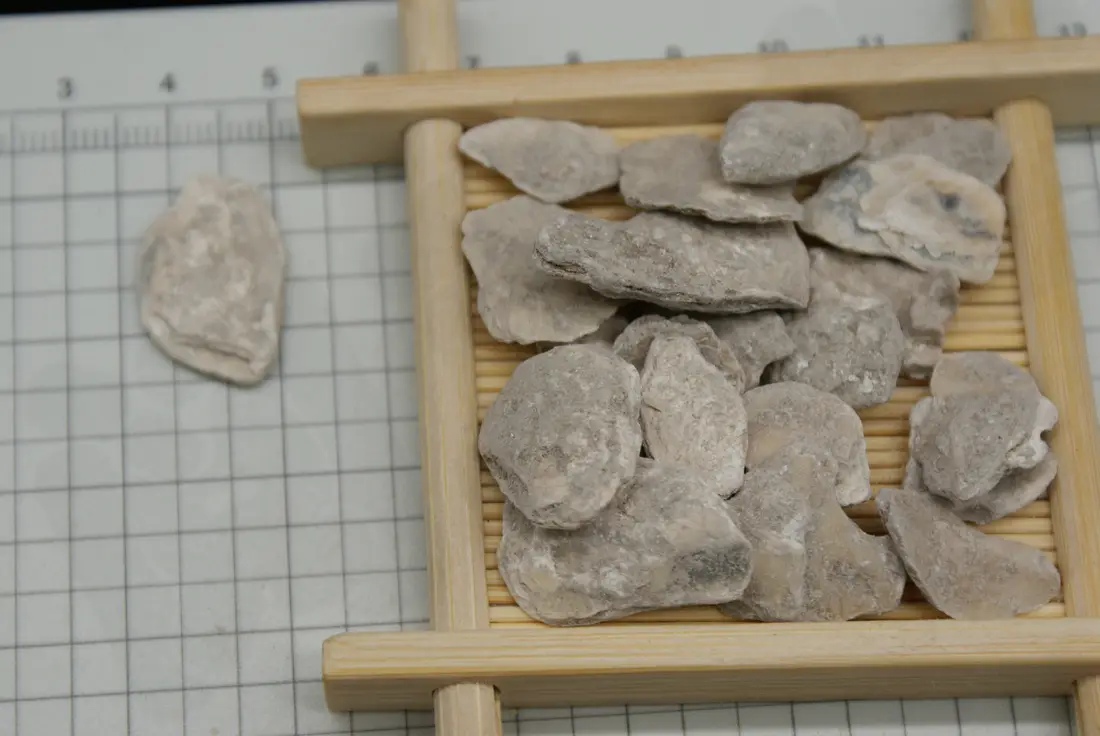
Oyster shell (Mu Li)
Oyster shell is a classic mineral-based herb used to calm the spirit, anchor yang, and soften hardness in traditional Chinese medicine.
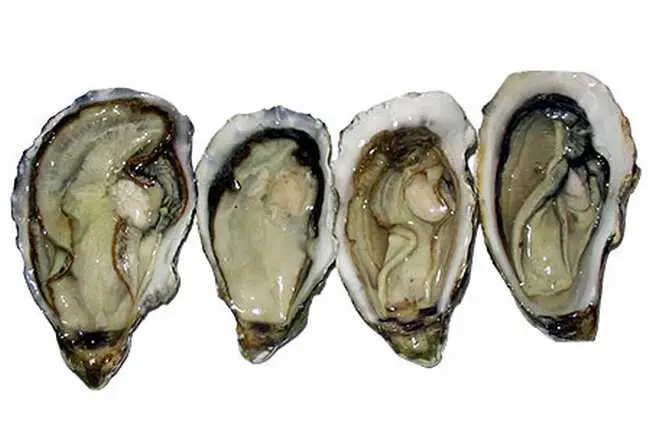
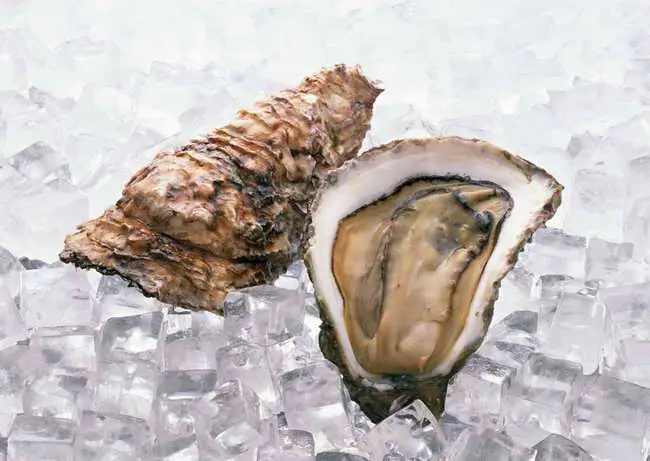
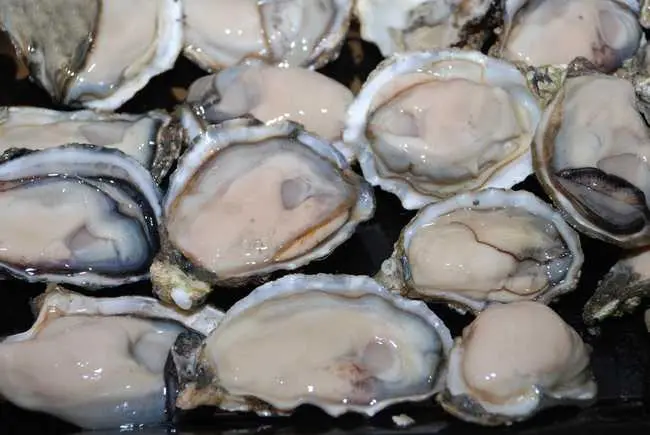
The shell of the oyster species Ostrea gigas Thimberg, Ostrea talienwhanensis Crosse, or Ostrea rivularis Gould (family Ostreidae).
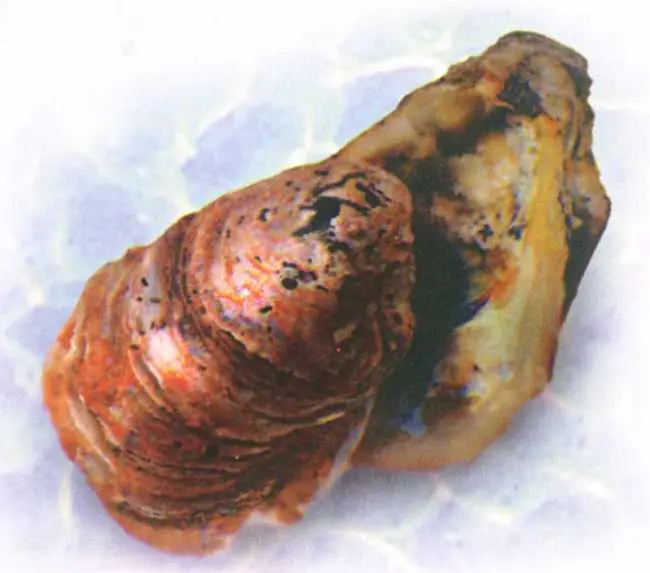
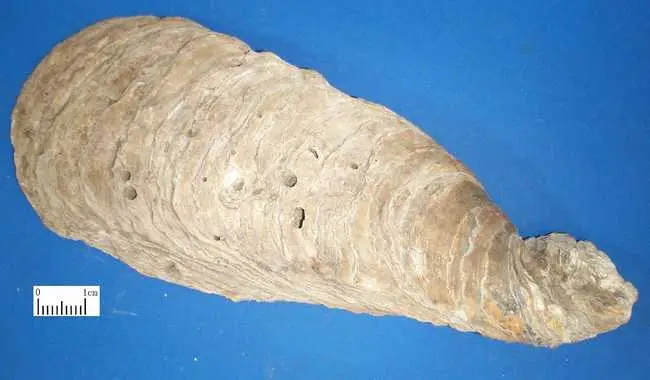
Long oyster: elongated片状, dorsal and ventral margins nearly parallel, 10–50 cm long, 4–15 cm high. Right valve smaller, scales firm and thick, arranged in layers or concentric lines. Outer surface flat or with several depressions, pale purple, grayish-white or yellowish-brown; inner surface porcelain white, no small teeth on either side of the umbo. Left valve deeply concave, scales coarser than right valve, attachment area small. Hard, fracture layered, white. Slight odor, slightly salty taste. Dalian Bay oyster: roughly triangular, dorsal and ventral margins splayed. Right valve outer surface pale yellow with loose concentric scales, scales undulating; inner surface white. Left valve scales firm and thick, several radial ribs from umbo, distinct; inner surface concave box-like, hinge area small. Rivularis oyster: round, oval or triangular. Right valve outer surface slightly uneven, gray, purple, brown or yellow, concentric scales; young scales thin and brittle, older scales layered; inner surface white, margin sometimes pale purple.
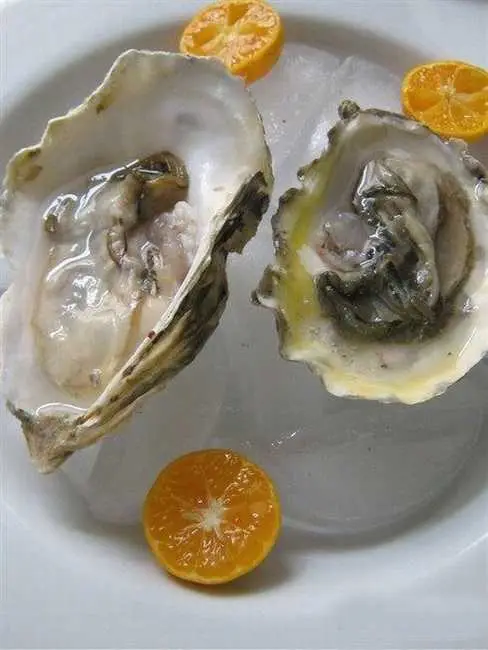
Oyster shells can withstand immense pressure—1.2 square millimeters can bear 100 kilograms, and opening a closed shell requires thousands of grams of force. The famous Luoyang Bridge in Quanzhou (Song Dynasty) used oysters grown on the embankments for years to solidify the foundation before building the piers. In history, the Roman mathematician Hypatia was killed with sharp oyster shells in 415 AD. The Russian writer Chekhov died in Germany in 1904; his coffin was temporarily lost and later found in a freight car carrying seafood oysters. This shows the widespread consumption of oysters worldwide. French writer Maupassant described tourists eating oysters at sea in his story. Shakespeare once said, 'He who owns the oyster owns the world,' highlighting the long history and adaptability of this global marine shellfish.
1 cultivation notes and 7 authentication articles exist for this herb. They are long-form field material and are published in Chinese only.
Chinese version · All herbs