Kun Bu (Ecklonia)
Kun Bu
LAMINARIAE THALLUS ECKLONIAE THALLUS
Nature and flavorSalty, cold; enters the Liver, Stomach, and Kidney meridians.
Meridians enteredLiver, Stomach, Kidney
Dosage6–12 g
Reference market price¥7.8 / kgBozhou market · spec common grade · Shandong · snapshot 2026-11-21
Kun Bu is a marine herb used in traditional medicine to transform phlegm, soften nodules, and promote urination.
Source药物来源
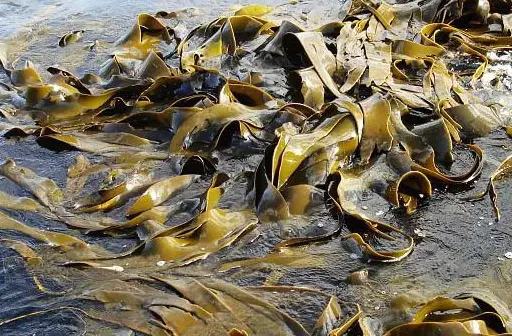
The dried thallus of Laminaria japonica Aresch. (family Laminariaceae) or Ecklonia kurome Okam. (family Alariaceae).
Identification性状特征
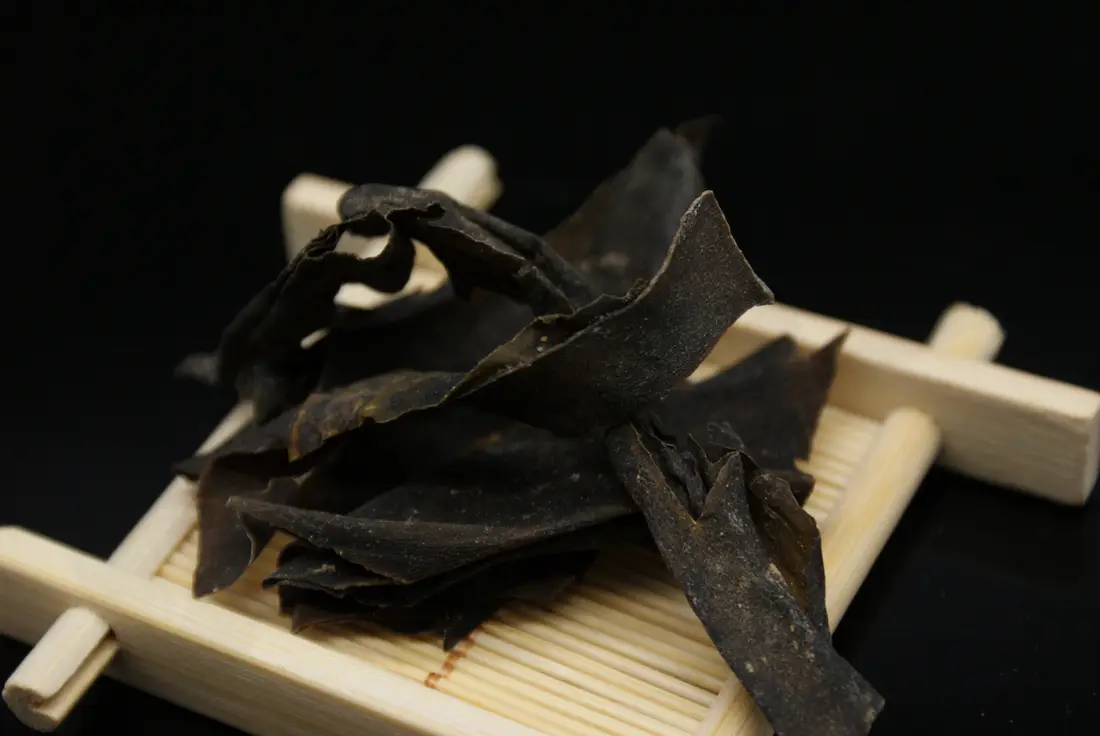
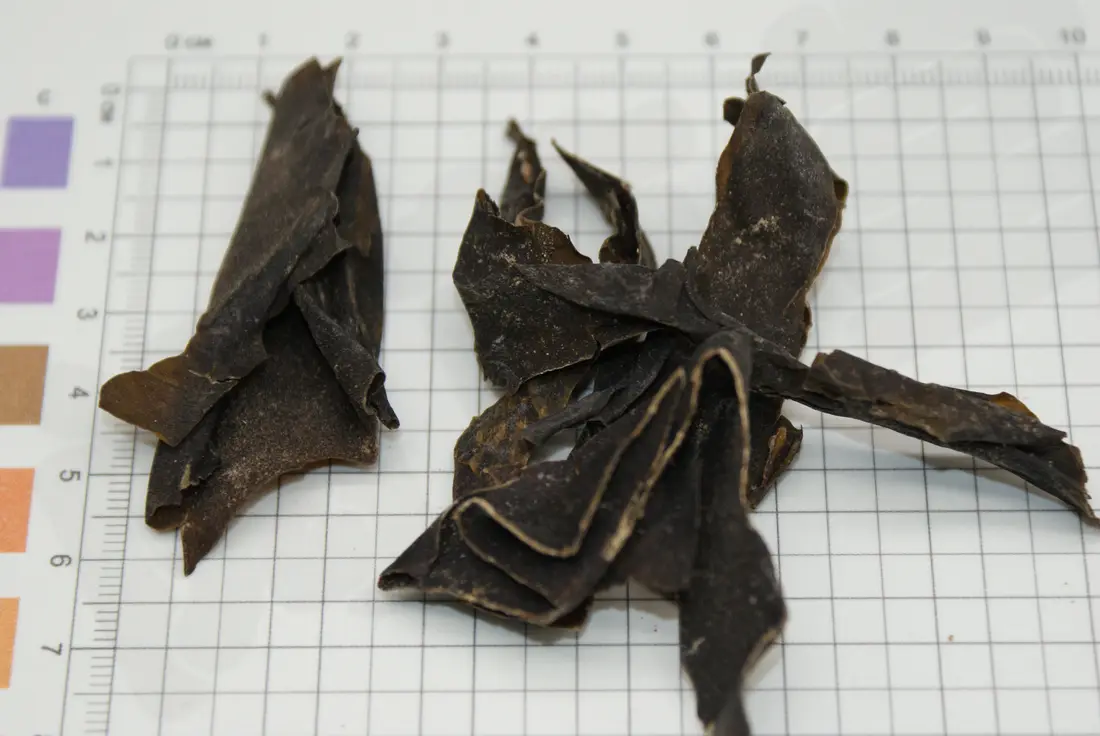
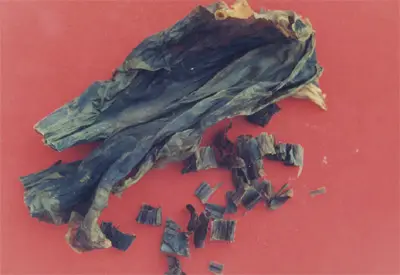
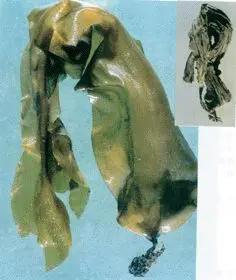
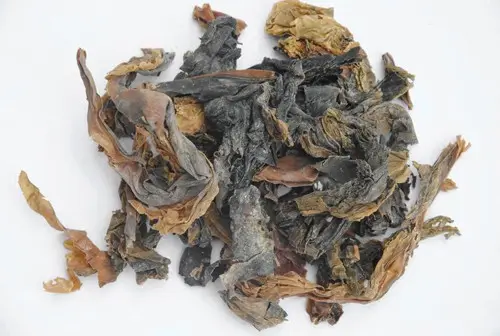
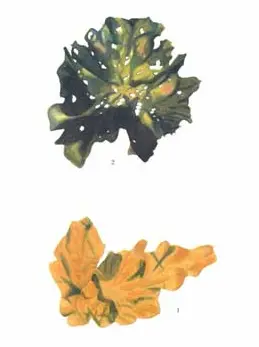
Laminaria: Thallus curled and folded into masses or tied in bundles. Entirely dark brown or greenish-brown, with a white frost on the surface. When soaked in water, it expands into flat, long bands, 50–150 cm long, 10–40 cm wide; thicker in the middle, thinner and wavy at the margins. Leathery, with a remnant flattened cylindrical stipe. Fishy odor, salty taste. Ecklonia: Thallus curled and wrinkled into irregular masses. Entirely black, relatively thin. When soaked in water, it expands into flat, leaf-like pieces, about 16–26 cm long and wide, about 1.6 mm thick; deeply pinnatifid on both sides, lobes long-tongue-shaped, margins denticulate or entire. Texture soft and slippery.
Properties and actions性味与功效
ActionsResolve phlegm and soften hardness to dissipate nodules · Promote urination and reduce swelling
IndicationsUsed for goiter, scrofula, swelling and pain of the testes, phlegm-fluid retention and edema.
CautionContraindicated in deficiency-cold of the spleen and stomach. Use with caution in individuals with cold and dampness.
Processing炮制
RawRemove impurities, rinse clean, air-dry briefly, cut into wide shreds, and sun-dry.
Modern research现代药理
Effects on thyroid functionKun Bu affects thyroid function; it has preventive and therapeutic effects on iodine-deficiency goiter and temporarily inhibits basal metabolism in patients with hyperthyroidism and elevated basal metabolic rate.
Effects on the cardiovascular systemKun Bu affects the cardiovascular system. Laminine has a hypotensive effect; intravenous injection of laminine monocitrate in anesthetized rabbits causes a transient fall in blood pressure and inhibits cardiac amplitude without affecting heart rate, and has a mild excitatory effect on isolated rabbit heart. Sodium laminarin sulfate can clear blood lipids and increase lipoprotein capacity, similar to heparin, improving lipoprotein distribution, but without significant anticoagulant effect.
Hypolipidemic effectKun Bu has a lipid-lowering effect; its active component is sodium laminarin sulfate made from laminarin.
Antispasmodic effectKun Bu has an antispasmodic effect; its active component is alginine monocitrate.
Immunomodulatory effectKun Bu can enhance immune function; its active components are laminarin polysaccharide and fucoidan sulfate.
Classical records历代本草
Classical texts record Kun Bu as salty and cold, used to cool the blood, reduce fire, resolve goiter, and resolve toxicity. The Bencao Gangmu notes its ability to cool the blood and reduce fire, resolve goiter and toxicity; the Kaibao Bencao describes it as salty, cold, and non-toxic, indicated for various types of edema, goiter, and scrofula.《本草纲目》:凉血降火,消瘿解毒。
《开宝本草》:味咸,寒,无毒。主十二种水肿,瘿瘤聚结气,瘘疮。
《名医别录》:味咸,寒。无毒。主治十二种水肿,瘿瘤聚结气,瘘疮。
《海药本草》:性温,主大腹水肿,诸浮气,并瘿瘤气结等,良。
《本草拾遗》:主阴溃肿,煮汁咽之,如瘿气,取末蜜丸含化,自消也。
Folklore本草传说
Botanically, kelp (Laminaria) and Kun Bu (Ecklonia) are distinct: kelp belongs to the family Laminariaceae, while Kun Bu belongs to the family Alariaceae, both within the order Laminariales. In Chinese, 'hai dai' (kelp) generally refers to the genus Laminaria, while 'kun bu' refers to Ecklonia. They are not the same species but are closely related, like cousins. In Japanese, kelp is called 'kombu', and in English 'kelp' can refer to both, leading to common confusion. However, both are used medicinally and share similar properties.
Cultivation and authentication栽培与鉴别
1 cultivation notes and 2 authentication articles exist for this herb. They are long-form field material and are published in Chinese only.
Read them in Chinese →