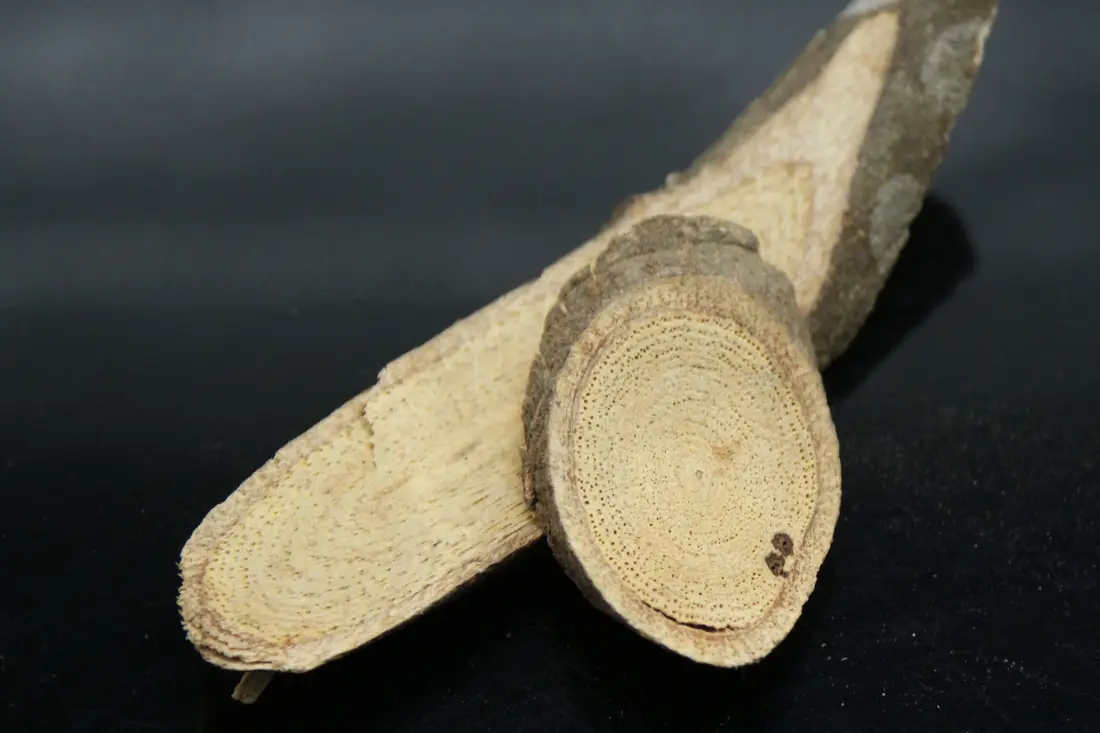
Sargentodoxa stem (Da Xue Teng)
Sargentodoxa stem is a traditional herb used to clear heat, resolve toxicity, and invigorate blood.
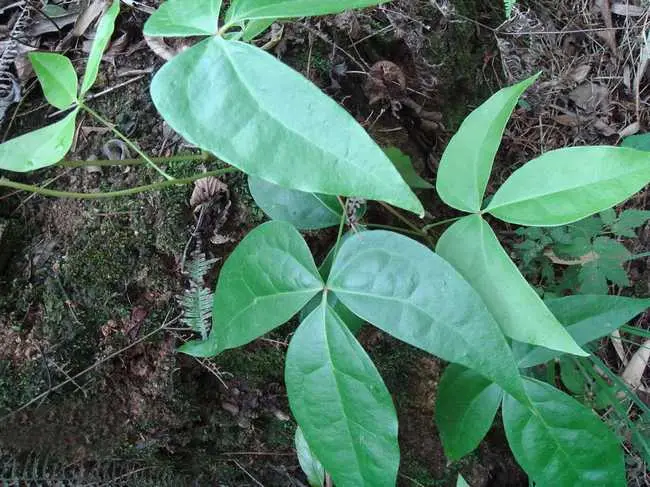
The dried vine stem of Sargentodoxa cuneata (Oliv.) Rehd. et Wils. (family Lardizabalaceae).
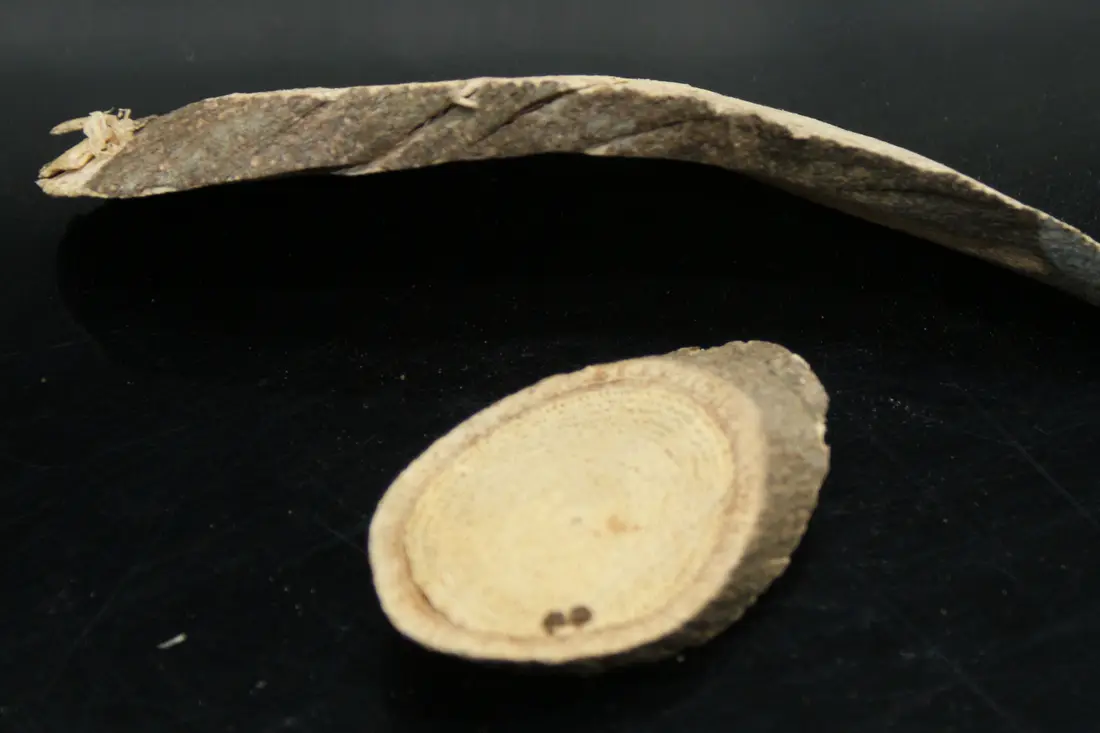
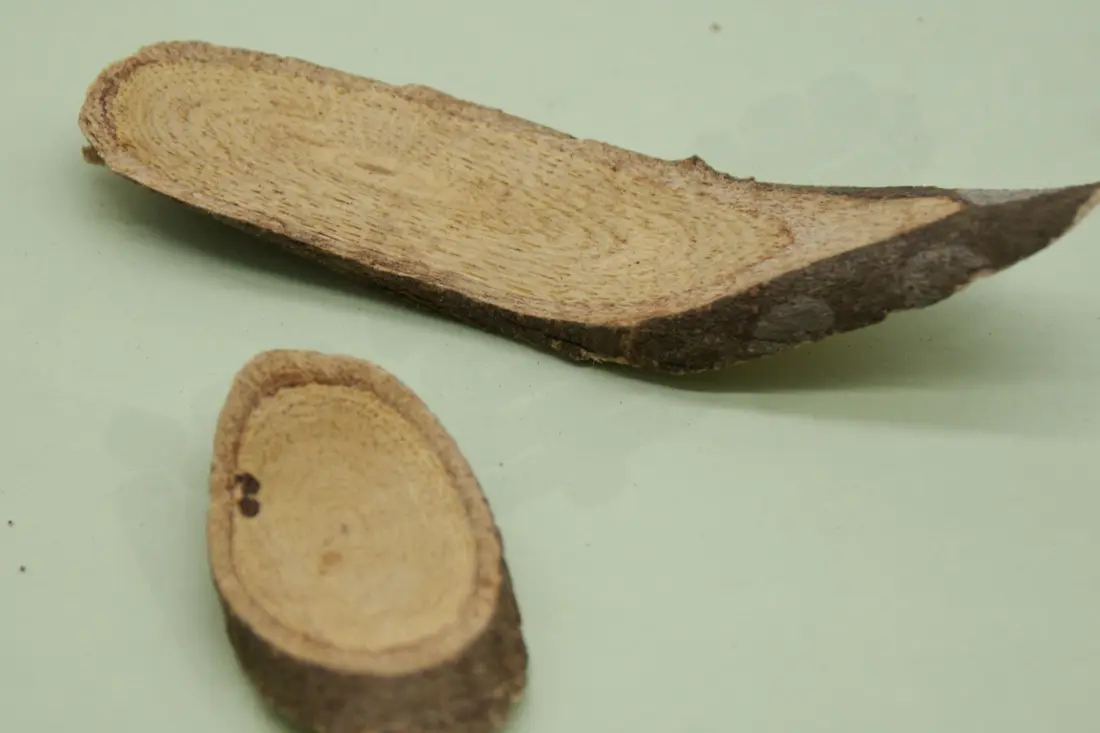
Cylindrical, slightly curved, 30-60 cm long, 1-3 cm in diameter. Surface grayish-brown, rough; outer bark often scaly and peeling, revealing dark reddish-brown; some nodes swollen, with slightly depressed branch or leaf scars. Hard texture; fracture shows reddish-brown phloem with several inward intrusions into the yellowish-white xylem; numerous fine pore-like vessels; rays radially arranged. Slight odor; slightly astringent taste.
In deep mountains, a vine with reddish-brown bark, anciently called 'Chi Teng' (red vine) and now 'Hong Teng', exudes a blood-like red sap when cut, hence the folk name 'Da Xue Teng' (great blood vine). In the Ming Dynasty, a villager named Zhao Zishan loved hunting and was addicted to alcohol, often eating raw meat and drinking, which led to tapeworm infection with abdominal pain and passage of proglottids. He was advised to abstain from alcohol and meat but could not commit. One day, while hunting, he drank and fell asleep in a ruined temple. At night, thirsty, he found a water vat in a stable and drank deeply; the water tasted sweet and refreshing. The next morning, he passed many dead tapeworms and felt much relieved. He discovered the water was dark red because the temple servants soaked red vine (Hong Teng) in it for weaving straw sandals. After returning home, his symptoms disappeared. The doctor told him: 'Red vine is recorded for expelling worms; your illness was cured by drinking water soaked with red vine. You should completely abstain from alcohol and raw meat, or it will recur. You can't stay in the temple forever.'
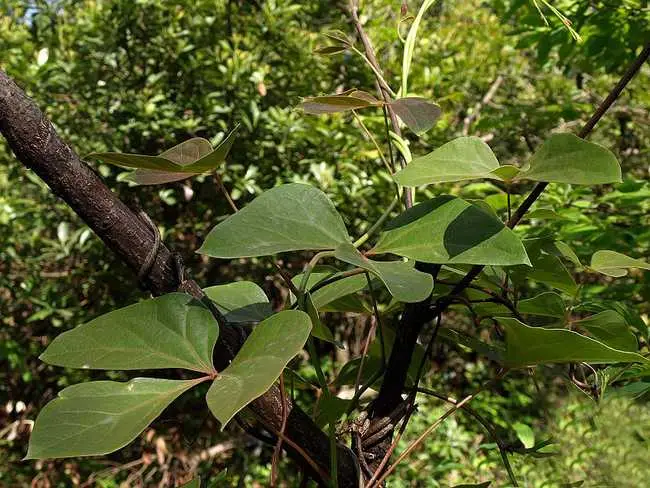
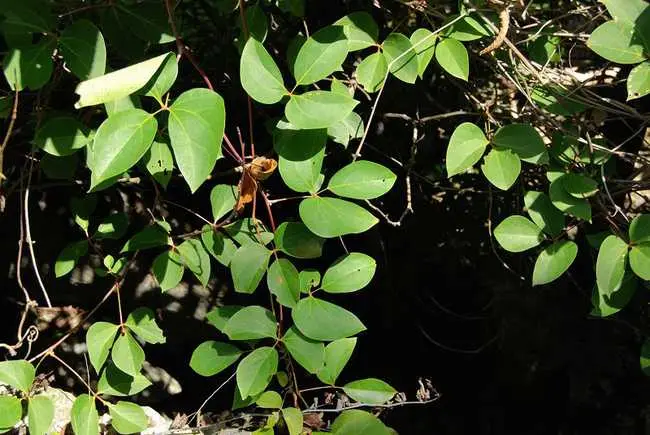
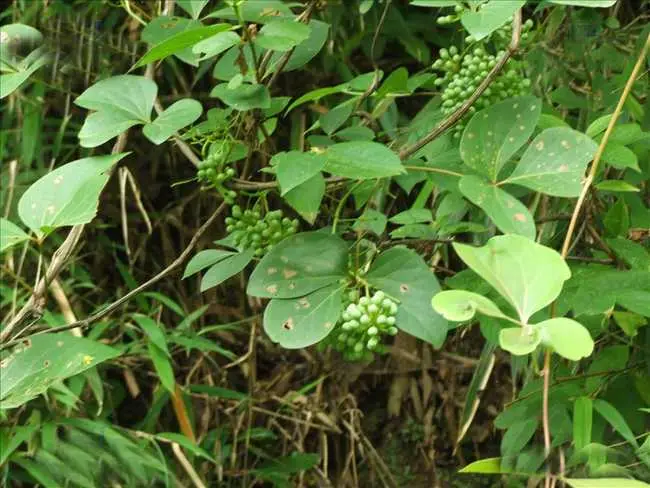
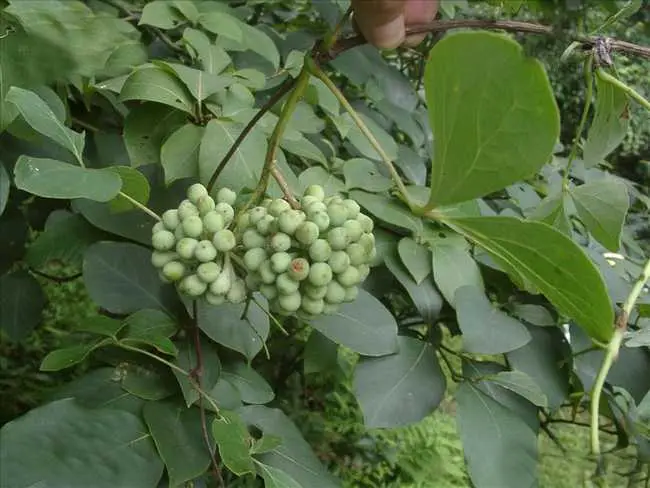
0 cultivation notes and 4 authentication articles exist for this herb. They are long-form field material and are published in Chinese only.
Chinese version · All herbs