Hawthorn fruit (Shan Zha)
Hawthorn fruit is a traditional Chinese medicine used to promote digestion, regulate qi, resolve blood stasis, and reduce blood lipids.
The dried ripe fruit of Crataegus pinnatifida Bge. var. major N.E.Br. or Crataegus pinnatifida Bge. (Rosaceae).
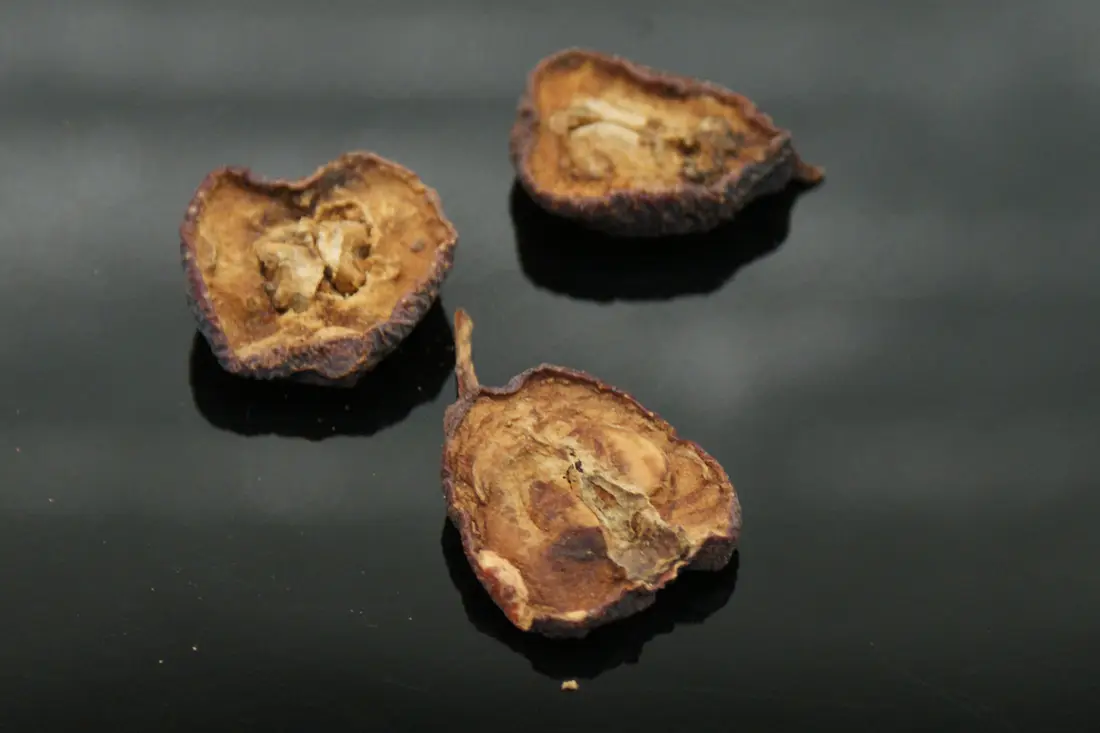
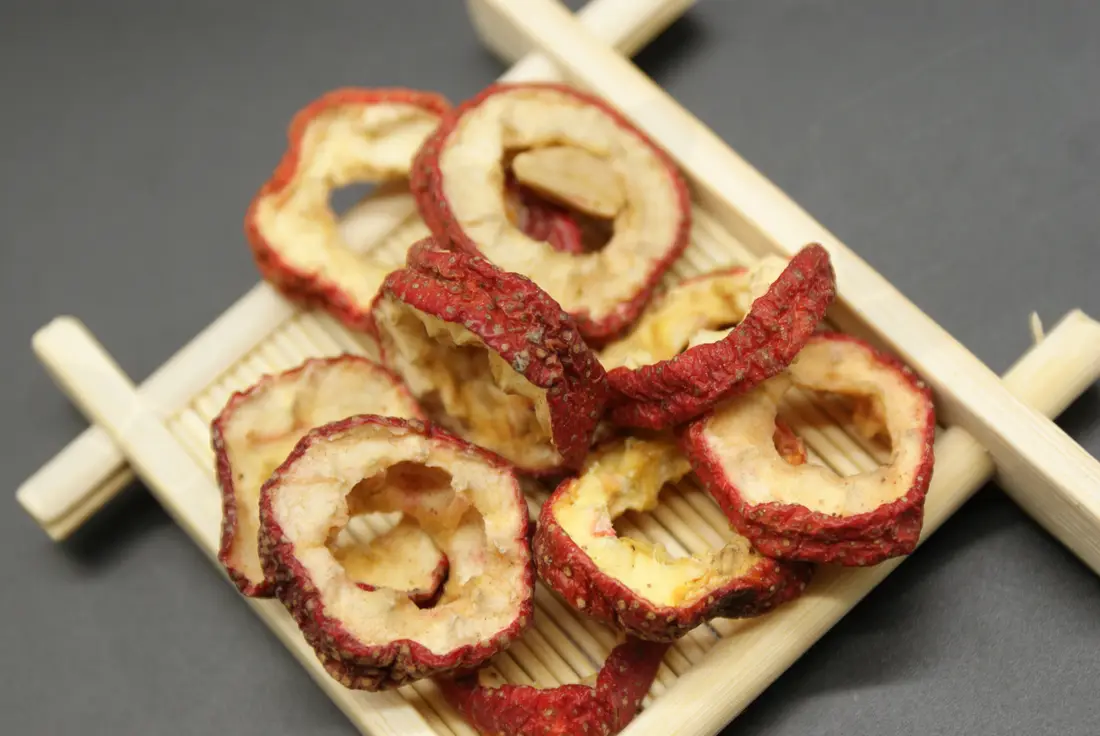
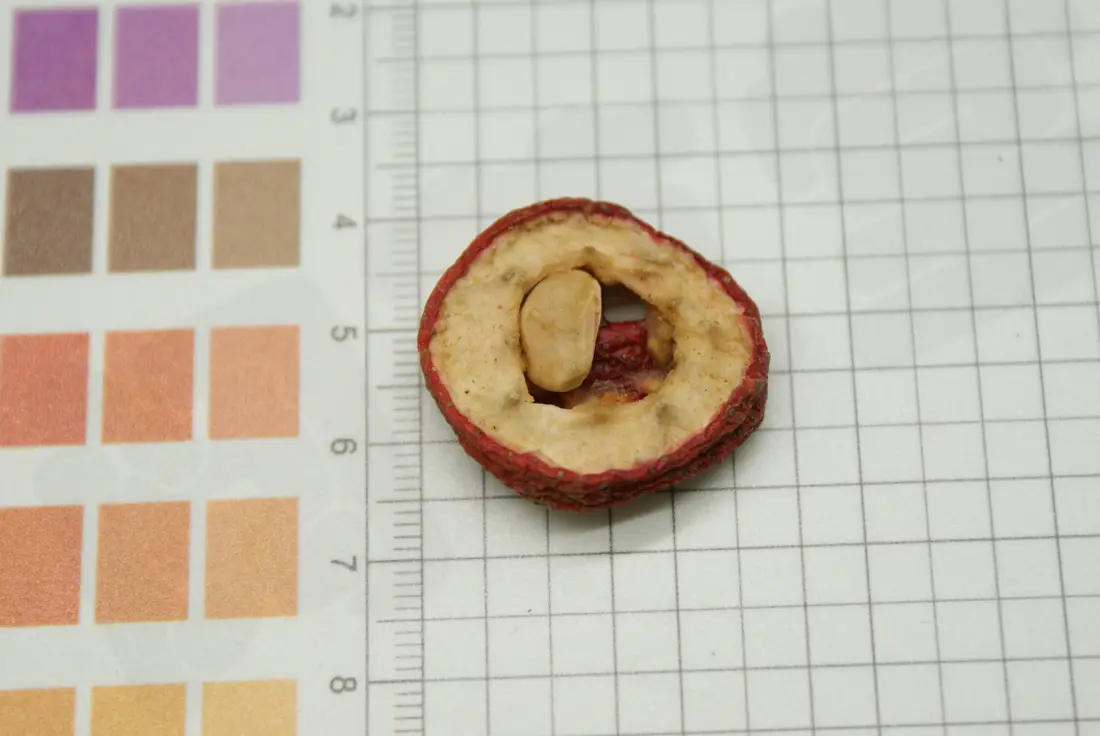
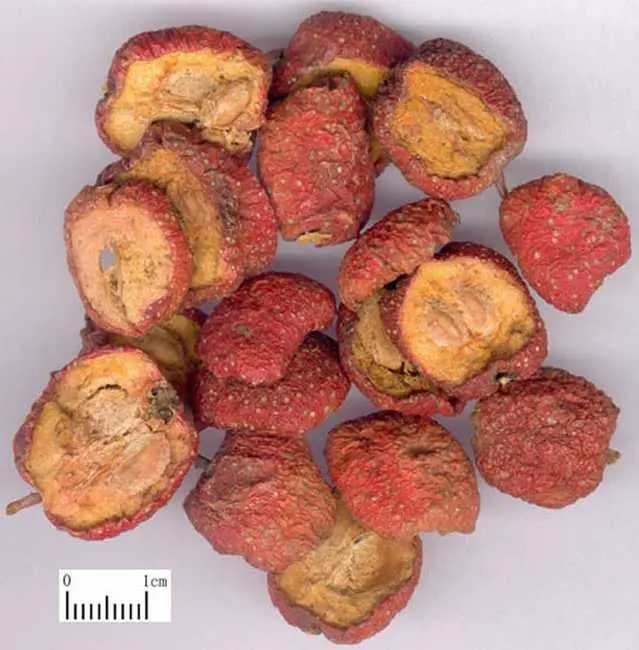
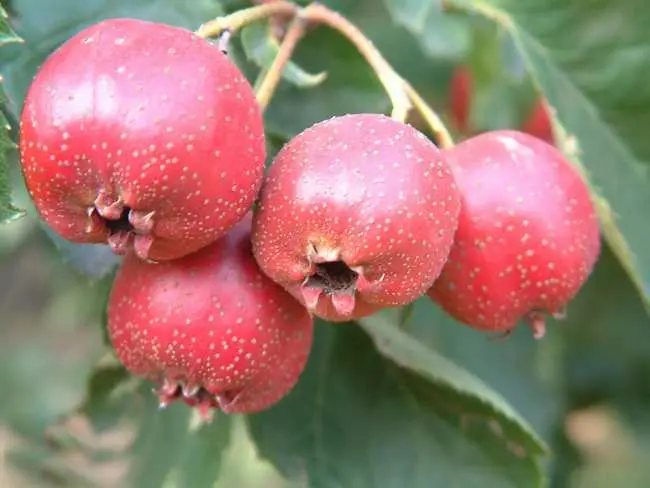
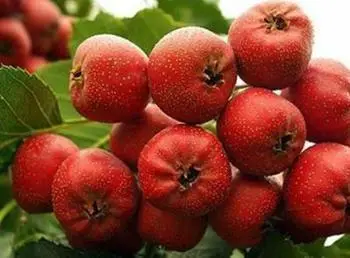
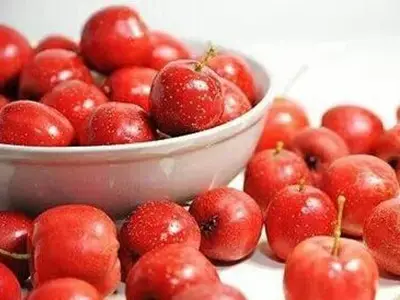
Round slices, wrinkled and uneven, 1–2.5 cm in diameter, 0.2–0.4 cm thick. Outer skin red, wrinkled, with small grayish-white spots. Flesh deep yellow to light brown. Cross-section shows 5 pale yellow seeds, often fallen leaving a hollow center. Some slices show short, thin fruit stalks or calyx remnants. Slight fresh aroma; taste sour, slightly sweet.
A Qing dynasty poem describes the sweet and sour hawthorn treats of Beijing. In the Song dynasty, Su Song's Bencao Tujing recorded its effectiveness for low back pain and noted that the seed also has medicinal power. During the Southern Song, a physician prescribed hawthorn decocted with brown sugar for a favored concubine's illness; the remedy later spread to the people and became the candied hawthorn skewer.
20 cultivation notes and 7 authentication articles exist for this herb. They are long-form field material and are published in Chinese only.
Chinese version · All herbs