Cyperus rhizome (Xiang Fu)
Xiang Fu
CYPERI RHIZOMA
Nature and flavorPungent, slightly bitter and slightly sweet, neutral.
Meridians enteredLiver, spleen, Sanjiao.
Dosage6–10 g.
Reference market price¥6.2 / kgBozhou market · spec 光统 · 海南 · snapshot 2026-11-21
Cyperus rhizome (Xiang Fu) is an aromatic qi-moving herb used for liver qi stagnation, menstrual irregularities and pain.
Source药物来源
The dried rhizome of Cyperus rotundus L. (Cyperaceae). The name derives from its rhizomes, which grow attached in a continuous chain and can be used for incense (Bencao Gangmu).
Identification性状特征
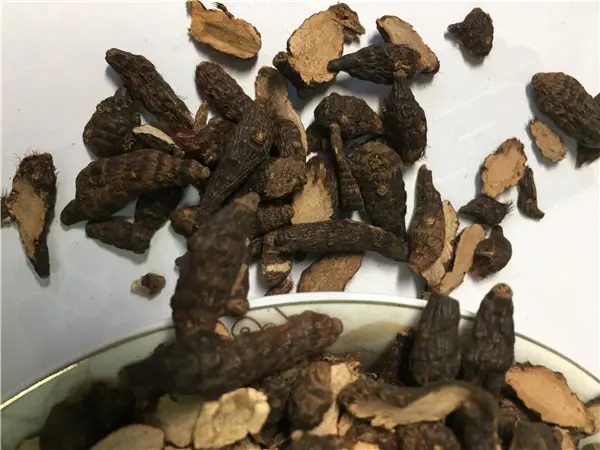
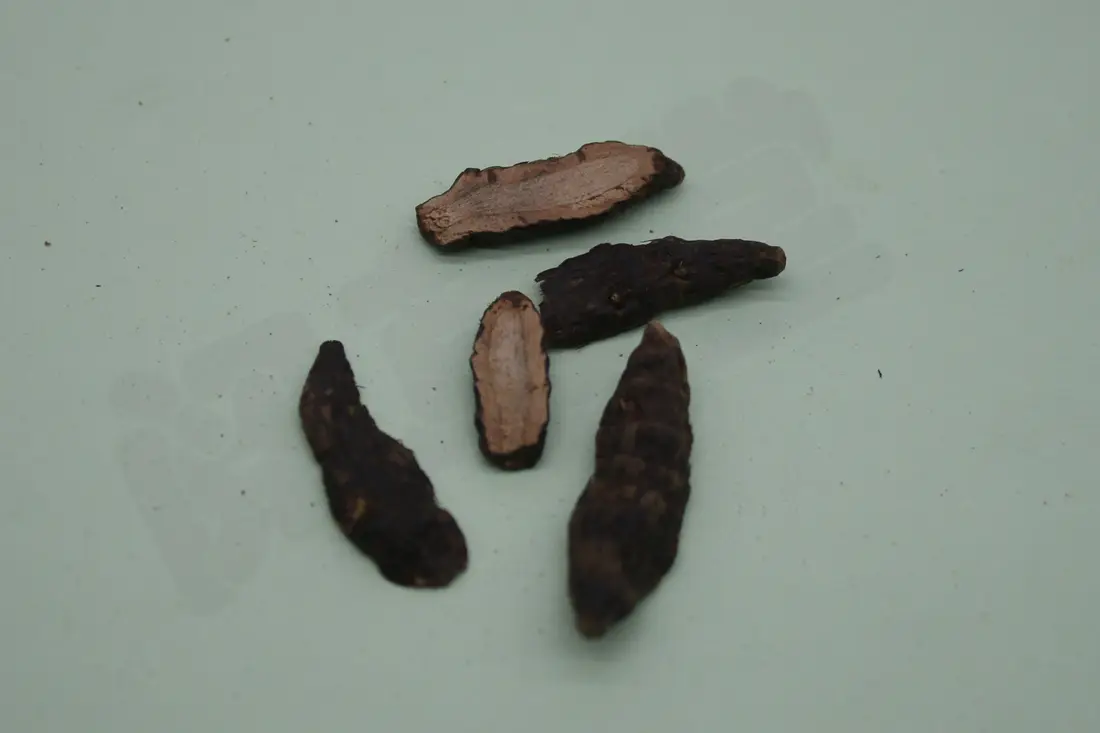
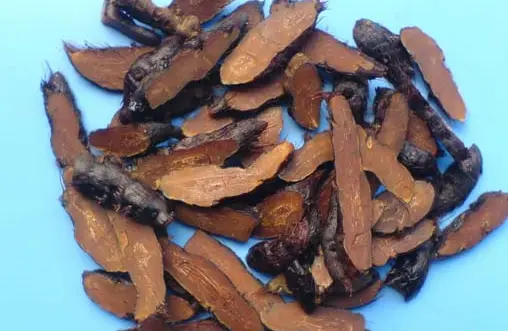
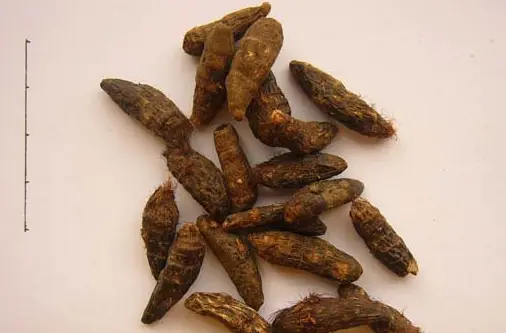
Mostly spindle-shaped, sometimes slightly curved, 2–3.5 cm long, 0.5–1 cm in diameter. Surface brownish or blackish-brown, with longitudinal wrinkles and 6–10 slightly raised rings bearing residual brown hairs and rootlet scars; when hairs are removed the surface is smoother and rings less obvious. Hard; steamed or boiled pieces show a yellowish-brown or reddish-brown, horny fracture; sun-dried pieces are whitish and starchy, with a distinct endodermal ring and darker stele, dotted vascular bundles scattered. Aromatic odor, slightly bitter taste.
Properties and actions性味与功效
ActionsPromote qi movement and relieve depression · Regulate qi and relax the middle · Regulate menstruation and relieve pain
IndicationsFor liver depression with qi stagnation, distending pain in the chest and hypochondria, hernia pain, breast distension and pain, qi stagnation of the spleen and stomach with epigastric and abdominal fullness, distension and pain, irregular menstruation, amenorrhea and dysmenorrhea.
CautionUse with caution in cases of yin deficiency with blood heat; prolonged or excessive use may consume qi and damage blood.
Processing炮制
Xiang Fu (raw)Remove hairs and impurities, crush or moisten thoroughly, slice thin and dry; sift out fragments.
Vinegar-processed Xiang Fu(1) Mix clean Xiang Fu granules or slices with a fixed amount of rice vinegar, moisten until absorbed, stir-fry over gentle heat until dry, cool and sift. Use 20 kg rice vinegar per 100 kg Xiang Fu. (2) Add rice vinegar and an equal volume of water, boil until nearly absorbed, steam for 5 hours, cool briefly, slice thin and dry, or dry and crush into mung-bean-sized granules. Use 20 kg rice vinegar per 100 kg granules or slices.
Wine-processed Xiang FuMix clean Xiang Fu granules or slices with a fixed amount of yellow rice wine, moisten until absorbed, stir-fry over gentle heat until dry, cool and sift. Use 20 kg yellow rice wine per 100 kg granules or slices.
Xiang Fu charcoalSort clean Xiang Fu by size, stir-fry over medium heat until the surface is charred black and the interior dark brown, spray with a little water to extinguish sparks, cool and sift.
Four-times processed Xiang FuMix clean Xiang Fu granules or slices with ginger juice, rice vinegar, yellow rice wine and salt water, moisten until absorbed, stir-fry over gentle heat until dry, cool and sift. Use 5 kg ginger (juice), 10 kg each of rice vinegar and yellow rice wine, and 2 kg salt (dissolved in water) per 100 kg granules or slices.
Modern research现代药理
Uterine effects5% Xiang Fu fluid extract relaxes uterine smooth muscle and weakens contractions; it also has a therapeutic effect on irregular menstruation.
Estrogen-like effectThe volatile oil of Xiang Fu has estrogen-like activity.
Analgesic, sedative and antipyretic effectsEthanol extract and triterpenoids from Xiang Fu have analgesic effects; the ethanol extract also has sedative and antipyretic effects.
Antimicrobial and anti-inflammatory effectsCyperene I and II have antimicrobial activity, while triterpenoids from Xiang Fu have anti-inflammatory effects.
Classical records历代本草
Bencao Gangmu calls Xiang Fu the commander of qi disorders and the leading herb in gynecology, describing how processing (stir-frying, vinegar, wine, salt, ginger) directs its action. Later authors debate whether it tonifies or consumes qi, noting it is most suitable for women with stagnation and should be avoided in yin deficiency with blood heat.《本草纲目》:香附之气平而不寒,香而能窜,其味多辛能散,微苦能降,微甘能和,乃足厥阴肝、手少阳三焦气分主药,而兼通十二经气分。生,则上行胸膈,外达皮肤;熟,则下走肝肾,外彻腰足。炒黑,则止血;得童溲浸炒,则入血分而补虚;盐水浸炒,则入血分而润燥;青盐炒,则补肾气;酒浸炒,则行经络;醋浸炒,则消积聚;姜汁炒,则化痰饮。得参术,则补气;得归药,则利血;得木香,则疏滞和中;得檀香,则理气醒脾;得沉香,则开降诸气;得芳香、苍术,则总解诸郁;得栀子、黄连,则能降火热;得茯神,则交济心肾;得茴香破故纸,则引气归元;得厚朴、半夏,则决壅消胀;得紫苏、葱白,则解散邪气;得三棱、莪术,则消痞枳块;得艾叶,则治血气暖子宫,乃气病之总司,女科之主帅也。韩愗云:香附能推陈致新,故诸书皆云益气。而俗有耗气之说,宜女不宜男者,非也。盖妇人以血用事,气行则无疾。老人精枯血闭,惟气是资。小儿气日充,则形乃日固。大凡病则气滞而馁,故香附于气分为君药,世所罕知。臣以参、芪,佐以甘草,治虚怯甚速也。懋游方外时,悬壶轻斋,治百病黄鹤丹,治妇人青囊丸,随宜用引,辄有小敏。人索不已,用者当思法外意可也。黄鹤丹乃铢衣翁在黄鹤楼所授之方,故名。其方用香附一斤,黄连半斤,洗晒为末,水糊丸梧子大。如外感,葱姜汤下;内伤,米饮下;气病,香汤下;血病,酒下;痰病,姜汤下;火病,白汤下,余可类推。青囊丸乃邵应节真人祷母病,感方士所授者。其方用(略炒)香附一斤,乌药(略炮)五两三钱,为末,水醋煮面糊为丸,随证用引,如头痛,茶下;痰气,姜汤下;血病,酒下。为妙。
辛微苦甘,手足厥,手少阳药也。能兼行十二经,入脉气分。得童子小便、醋、川芎、苍术良。
散时气寒疫,利三焦,解六郁,消饮食积聚,痰饮痞满,腑肿腹胀,脚气,止心腹、肢体、头目、齿耳诸痛,痈疽疱疡,吐血下血尿血,妇人崩漏带下,月候不调,胎前产后百病。
《本草蒙筌》:味苦、甘,气微寒。气厚于味,阳中阴也。无毒。若理气疼,醋炒尤妙。乃血中气药。凡诸血气方中所必用者也。快气开郁,逐瘀调经。除皮肤瘙痒外邪,止霍乱吐逆内证。炒黑色禁崩漏下血,调醋末敷乳肿成痈。宿食可消,泄泻能固。驱热长毛发,益气充皮毛。久服利人,疏利之剂。亦当解悟,又引血药至气分而生血,故因而称曰妇人要药也。
谟按:《本经》诸方用逐瘀血调经,是下气而推陈也。用治崩漏不止,是益气而止血也。又云:引血药至气分而生血,是又能补,何如言相背戾,用相矛盾耶?虽然是亦阴生阳长之义尔,但《本经》未尝言补,惟不老汤用之,言于老人有益,意有存焉。盖于行中兼有补,补中有行。正如天之所以为天者,健而有常也,健运不息,所以生生无穷,即此理也。
《名医别录》:味甘,微寒,无毒。主除胸中热,充皮毛,久服利人,益气,长须眉。
《本草经疏》:香附禀地温燥之气,而兼得乎土金之味,故其味甘,应有苦辛微寒,亦应微温无毒。入足厥阴气分,亦入手太阴经
Folklore本草传说
Legend tells of a kind girl named Suosuo who married into a village stricken by plague. Her husband noticed a fragrance about her that seemed to protect others, and she went from house to house treating the sick. Jealous rumors led her husband to kill her, but grasses with narrow leaves and upright stems grew from her grave, attracting bees and butterflies. Even when the grave was dug up, the grass spread, and people regretted her death, believing the plant could ease heart and chest pain. Locals still call it Suosuo grass, though its herbal name is Xiang Fu.
Culinary use民间药膳
Lychee seed and Xiang Fu lean pork soupLychee seed and Xiang Fu 30 g each, lean pork 100 g, yellow rice wine about 30 ml, 2 slices ginger.
Soak and wash the herbs; wash the pork. Place all with ginger in a clay pot, add 1250 ml water, bring to a boil over high heat, then simmer for about 1.5 hours; add wine and salt. This amount is for one person over two doses in a day.
Promotes qi movement, invigorates blood, dissipates nodules and relieves pain; an auxiliary medicinal diet for uterine fibroids of the qi stagnation and blood stasis type.
Cultivation and authentication栽培与鉴别
1 cultivation notes and 4 authentication articles exist for this herb. They are long-form field material and are published in Chinese only.
Read them in Chinese →