Guan Mu Tong (Aristolochia manshuriensis stem)
Guan Mu Tong
Akebiae Caulis
Nature and flavorBitter, cold. Enters the Heart, Small Intestine, and Bladder meridians.
Meridians enteredHeart, Small Intestine, Bladder
Dosage3–6 g
Reference market price¥3.5 / kgBozhou market · spec common grade · 湖北 · snapshot 2026-11-21
Guan Mu Tong is a bitter-cold vine stem used in traditional medicine to clear heart fire and promote urination, with important safety considerations.
Source药物来源
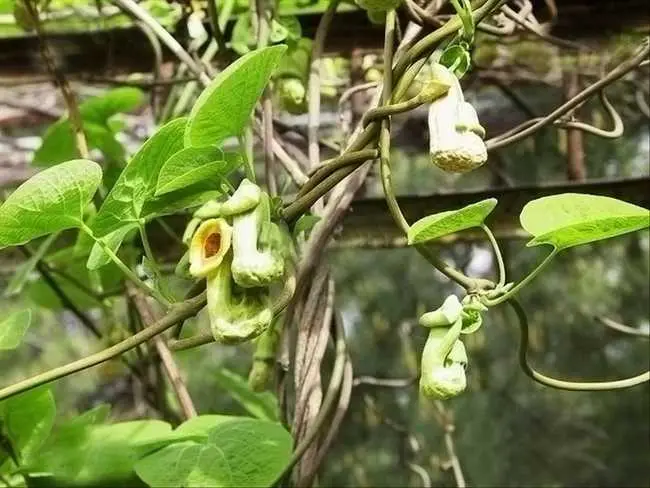
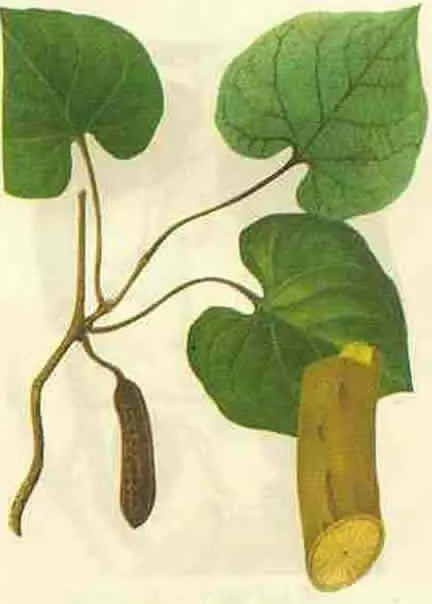
The dried vine stem of Aristolochia manshuriensis Kom. (family Aristolochiaceae).
Identification性状特征
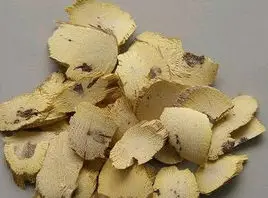
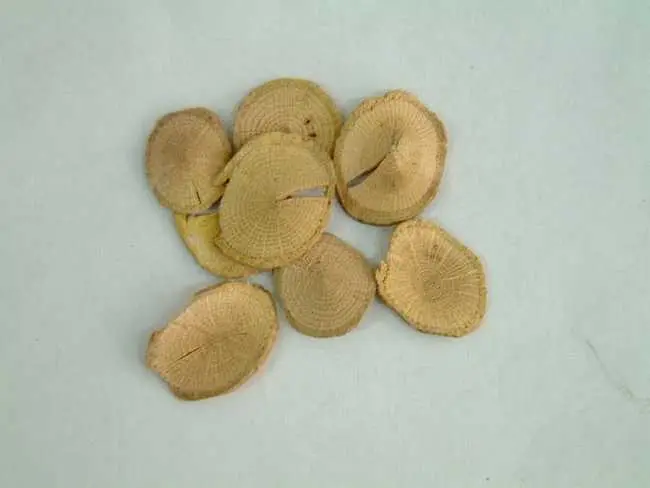
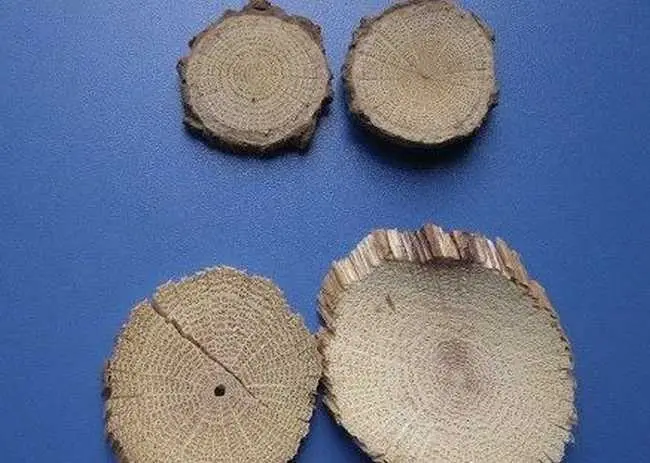
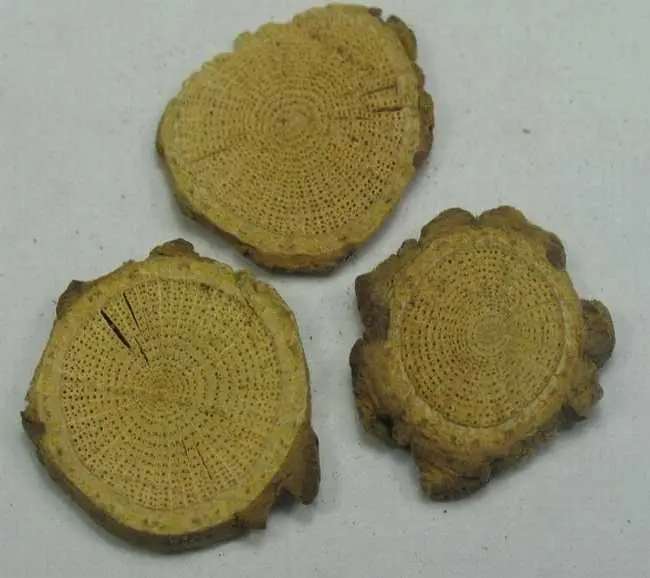
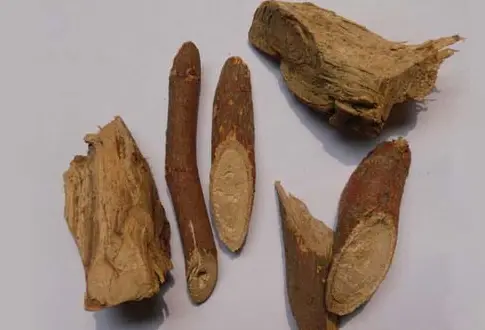
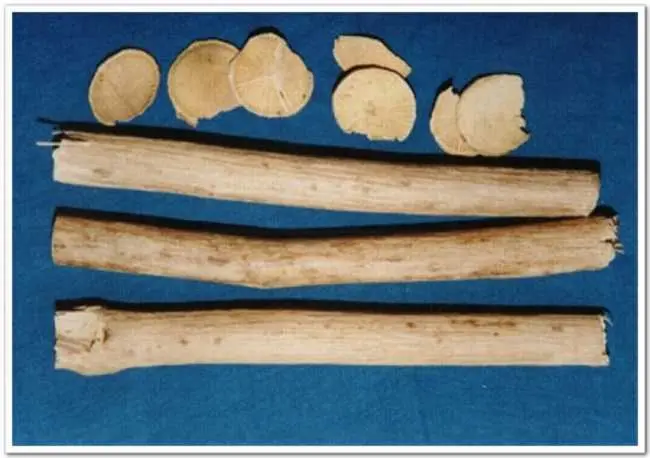
Long cylindrical, slightly twisted, 1–2 m long, 1–6 cm in diameter. Surface grayish-yellow or brownish-yellow, with shallow longitudinal grooves and spots of residual brownish coarse bark. Nodes slightly swollen, with one branch scar. Light in weight, hard, difficult to break; fracture yellow or pale yellow, bark thin, wood broad, with multiple layers of neatly ring-arranged vessels, rays radiate, pith indistinct. Rubbing residual coarse bark gives a camphor-like odor. Slight odor, bitter taste.
Properties and actions性味与功效
ActionsClear heart fire · Promote urination · Unblock menstruation and promote lactation
IndicationsUsed for mouth and tongue sores, irritability with dark urine, edema, painful urinary strangury due to heat, leukorrhea, amenorrhea with scanty lactation, and arthralgia due to damp-heat.
CautionBitter and cold; use with caution in deficiency-cold of the spleen and stomach. Contains aristolochic acid; follow professional guidance and avoid prolonged or excessive use.
Processing炮制
ProcessingRemove impurities, wash, soak briefly, soften thoroughly, slice thinly, and dry.
Modern research现代药理
Aristolochic acidAristolochic acid is a characteristic constituent with known nephrotoxicity and carcinogenicity; this herb is restricted in many regions.
Beta-sitosterolBeta-sitosterol is a phytosterol present in the herb.
Classical records历代本草
Classical formulas such as Bazheng San (from Taiping Huimin Heji Jufang) and Daochi San (from Xiao'er Yao Zheng Zhi Jue) include Guan Mu Tong for damp-heat strangury and heart fire, but modern safety concerns limit its use.1、用于治疗膀胱湿热,小便短赤,淋沥涩痛:与车前子、滑石等配伍,如八正散。(《和剂局方》)
2、用于治疗心火上炎,口舌生疮,或心火下移于小肠而致的心烦尿赤:与生地黄、甘草、竹叶等配伍,如导赤散。(《小儿药证直诀》)
Cultivation and authentication栽培与鉴别
0 cultivation notes and 1 authentication articles exist for this herb. They are long-form field material and are published in Chinese only.
Read them in Chinese →