Chaenomeles fruit (Mu Gua)
Mu Gua
CHAENOMELIS FRUCTUS
Nature and flavorSour, warm. Enters the Liver and Spleen meridians.
Meridians enteredLiver, Spleen
Dosage6–9 g
Reference market price¥9 / kgBozhou market · spec 皱 · 四川 · snapshot 2026-11-21
Chaenomeles fruit, known as Mu Gua in Chinese medicine, is a wind-dampness dispelling herb used to relieve joint pain, muscle cramps, and edema.
Source药物来源
This product is the dried nearly ripe fruit of Chaenomeles speciosa (Sweet) Nakai (Rosaceae).
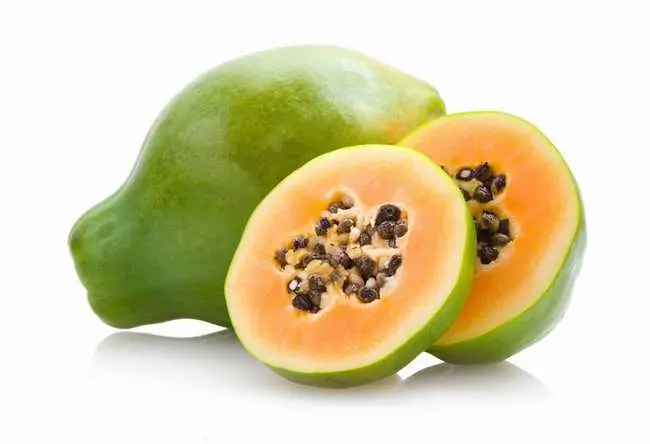
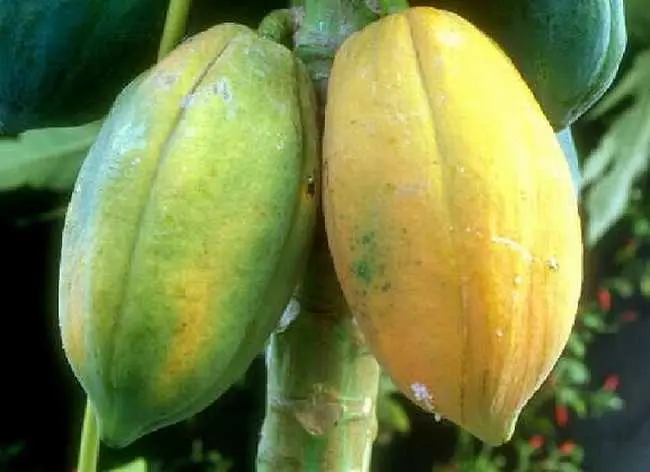
Name origin: The medicinal part is the fruit. "The wood fruit is like a melon, sour and edible, hence the name Mu Gua" (Bencao Gangmu). This product is different from the fruit papaya.
Identification性状特征
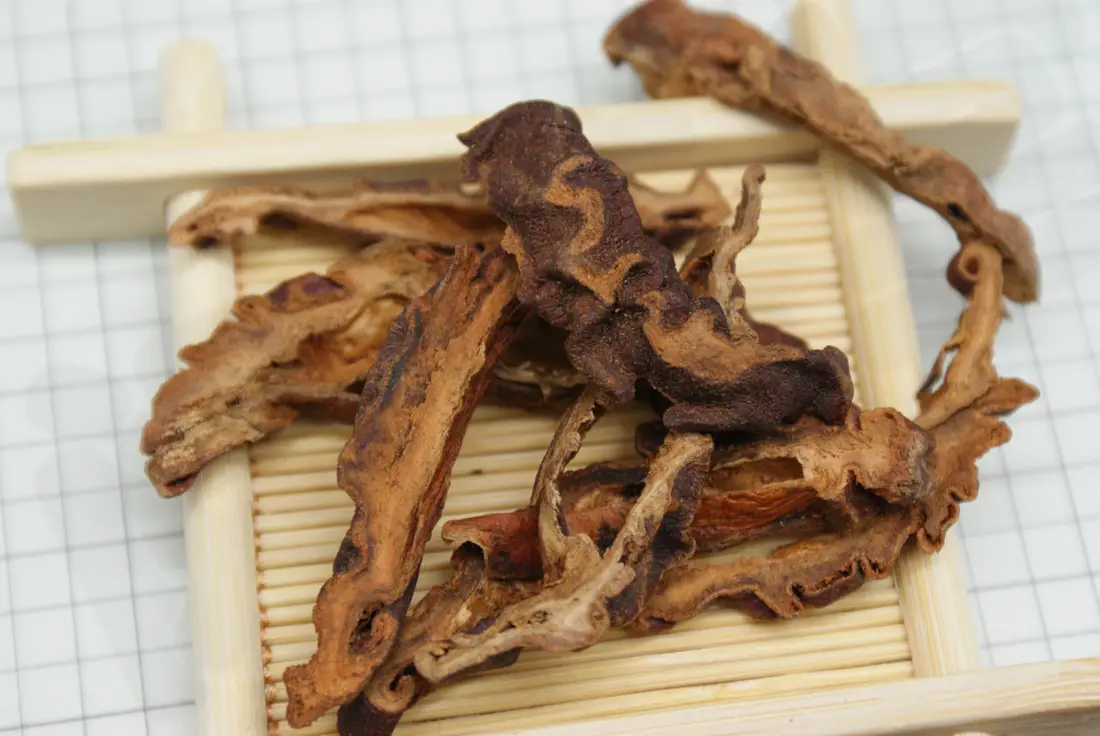
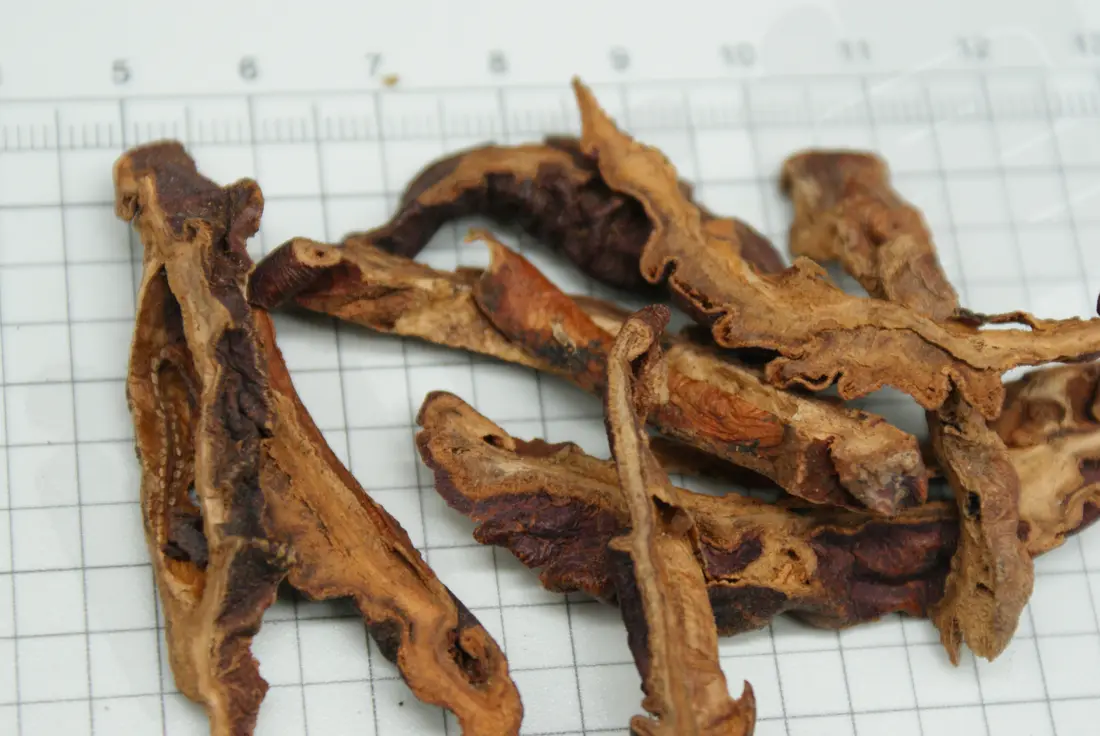
The product is oblong, mostly longitudinally split into two halves, 4–9 cm long, 2–5 cm wide, 1–2.5 cm thick.
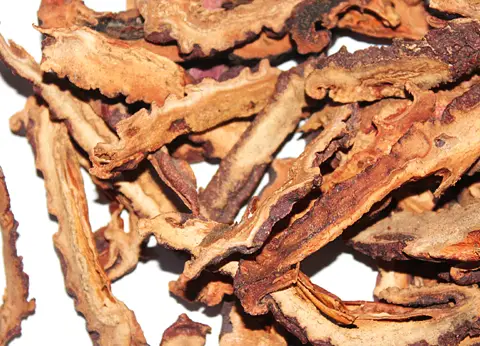
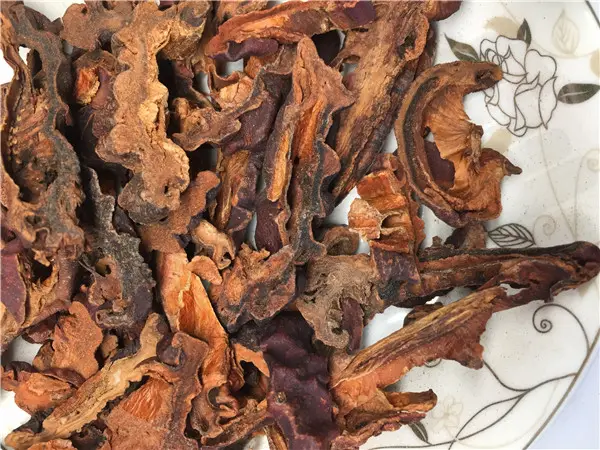
The outer surface is purplish-red or reddish-brown, with irregular deep wrinkles; the cut surface edges curl inward, the flesh is reddish-brown, the central part is depressed and brownish-yellow; seeds are flat and elongated-triangular, mostly fallen off.
Texture hard. Odor slight and fragrant; taste sour.
Properties and actions性味与功效
ActionsRelieve muscle tension and invigorate collaterals · Harmonize the stomach and transform dampness
IndicationsUsed for dampness impediment with contracture, aching and heavy pain in the waist, knees, and joints; summerheat-dampness with vomiting and diarrhea, cramps and spasms; beriberi edema.
CautionSour and warm, it should be used with caution in cases of yin deficiency with excessive fire or stomach heat. General reminder: follow the recommended dosage and consult a qualified practitioner.
Processing炮制
Raw Chaenomeles fruitWash, soften thoroughly or steam thoroughly, slice thinly, and dry in the sun.
Modern research现代药理
Immunomodulatory effectChaenomeles extract can significantly reduce the phagocytic index of macrophages and enhance immune function.
Antitumor effectThe aqueous extract of Chaenomeles shows significant inhibitory effects on various tumors. Its crystals and organic acids significantly inhibit Ehrlich ascites carcinoma in mice.
Hepatoprotective effectChaenomeles can significantly reduce serum alanine aminotransferase, alleviate liver cell swelling, degeneration, and necrosis, promote liver cell repair, and have a good liver-protective effect.
Anti-inflammatory and antibacterial effectsChaenomeles also has anti-inflammatory and antibacterial effects; it significantly prolongs the coagulation time of human fibrin induced by bovine thrombin.
Classical records历代本草
Bencao Gangmu notes that Mu Gua treats cholera, vomiting, diarrhea, cramps, and beriberi, which are spleen-stomach disorders. It acts by regulating the spleen and subduing the liver, not by directly tonifying the tendons. Bencao Mengquan states it enters the hand and foot taiyin meridians and should not be prepared in iron vessels; it can consolidate qi that has escaped and harmonize stagnant qi. Bencao Kaibao and Mingyi Bielu both record its use for dampness impediment, cholera, and cramps.《本草纲目》:木瓜所主霍乱、吐利、转筋、脚气,皆脾胃病,非肝病也。肝虽主筋而转筋则由湿热、寒湿之邪袭伤脾胃所致,故筋转必起于足腓。腓及宗筋皆属阳明,木瓜治转筋,非益筋也,理脾而伐肝也。土病则金衰而木盛,故用酸温以收脾肺之耗散,而籍其走筋以平肝邪,乃土中泻木以助金也,木平则土得令而金受萌矣。《素》云:酸走筋,筋病无多食酸。孟洗云:多食木瓜,损齿及骨。皆伐肝之明验,而木瓜入手、足太阴,为脾肺药,非肝药,益手枢矣。又《针验》云:多食酸,令人癃。酸入于胃,其气涩以收,两焦之气不能出入,流入胃中,下去膀胱,胞薄以软,得酸则卷缩,约而不通,故水道不利而癃涩也。罗天益《宝鉴》云:太保刘仲海日食蜜煎木瓜三、五枚,同伴数人皆病淋疾,问天益,天益曰:此食酸所致也,但夺食则已。阴之所生,本在五味,阴之所营,伤在五味。五味太过,皆能伤人,不独酸也。
《本草蒙筌》:味酸,气温。无毒。经入手足太阴,用之勿犯铁器。气脱能固,气滞能和。平胃以滋脾,益肺而去湿。助谷气,调荣卫,除霍乱,止转筋。凡转筋时,但呼其名及书木瓜字于病处皆愈,莫晓其义。脚气能驱,水痢可禁。《衍义》云:木瓜得木之正,故入肝益筋与血。腰背脚膝无力,不可缺也。以铅霜涂之,则失酸味,受金之制故尔。
《开宝本草》:味酸,温,无毒。主湿痹邪气,霍乱,大吐下转筋不止。其枝亦可煮用。
《名医别录》:味酸,温,无毒。主治湿痹邪气,霍乱,大吐下,转筋不止。
《本草拾遗》:本功外,下冷气,强筋骨,消食,止水痢后渴不止,作饮服之。又脚气冲心,取一颗去子,煎服之,嫩者更佳。又止呕逆心膈痰唾。
Folklore本草传说
The Book of Songs says: "She threw me a quince, I gave her a jade pendant in return." This describes the friendship between the states of Qi and Wei. Mu Gua has been used as a gift symbolizing friendship since ancient times. Many poets praised its beauty and fragrance, such as Liu Yanshi of the Tang Dynasty and Yang Wanli and Lu You of the Song Dynasty. Historical records also mention its medicinal use for beriberi and edema, and caution against excessive consumption, which can cause urinary difficulties.
Culinary use民间药膳
Green papaya fish head soup1 green papaya (about 450 g), half a fish head (about 450 g), 2 teaspoons salt
1. Wash the fish head and chop into small pieces; remove seeds from papaya and cut into pieces. 2. Heat oil in a pan, dry the fish pieces and fry until golden brown, then remove and drain. 3. In another pot, add fish head and papaya, cover with water, bring to a boil over high heat, then simmer until papaya is tender. Add salt to taste.
Promotes breast development and has a breast-enhancing effect.
Cultivation and authentication栽培与鉴别
14 cultivation notes and 7 authentication articles exist for this herb. They are long-form field material and are published in Chinese only.
Read them in Chinese →