Kansui Root (Gan Sui)
Gan Sui
KANSUI RADIX
Nature and flavorBitter, cold; toxic. Enters the Lung, Kidney, and Large Intestine meridians.
Meridians enteredLung, Kidney, Large Intestine
Dosage0.5–1.5 g, processed and mostly used in pills and powders; appropriate amount for external use, raw.
Reference market price¥65 / kgBozhou market · spec common grade · 山西 · snapshot 2026-11-21
Gan Sui is a potent, toxic purgative used in traditional Chinese medicine to drive out water and resolve swelling.
Source药物来源
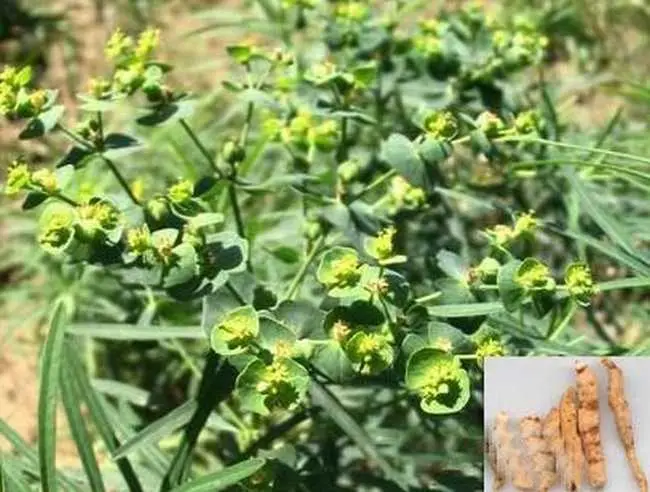
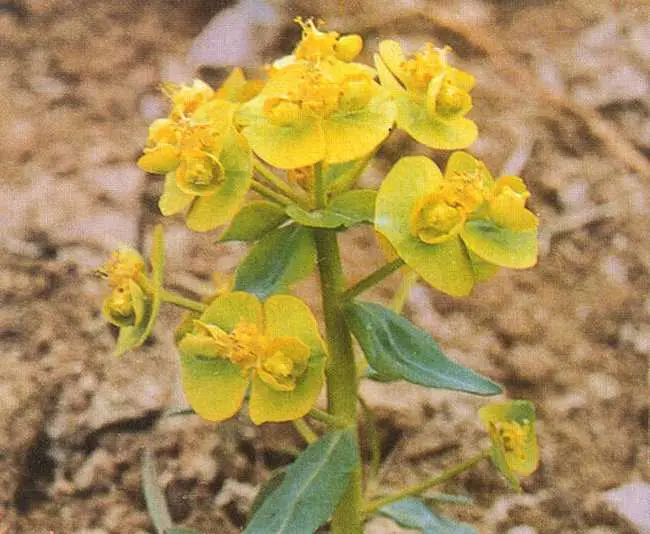
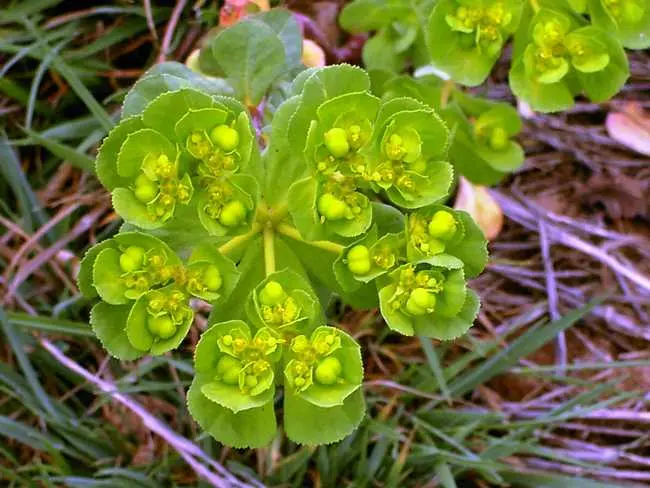
The dried tuberous root of Euphorbia kansui T.N. Liou ex T.P. Wang (Euphorbiaceae).
Identification性状特征
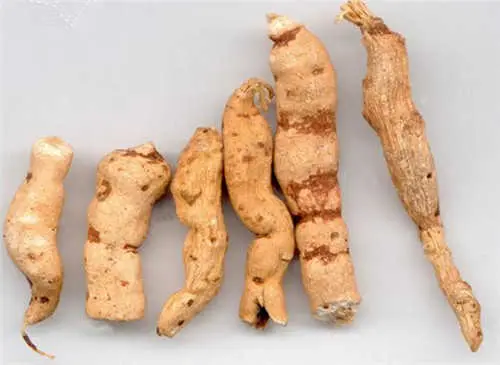
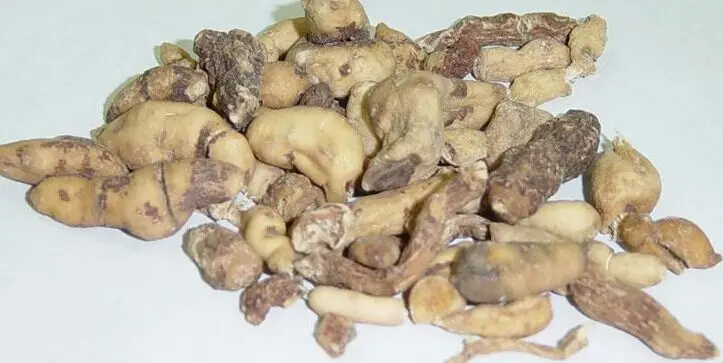
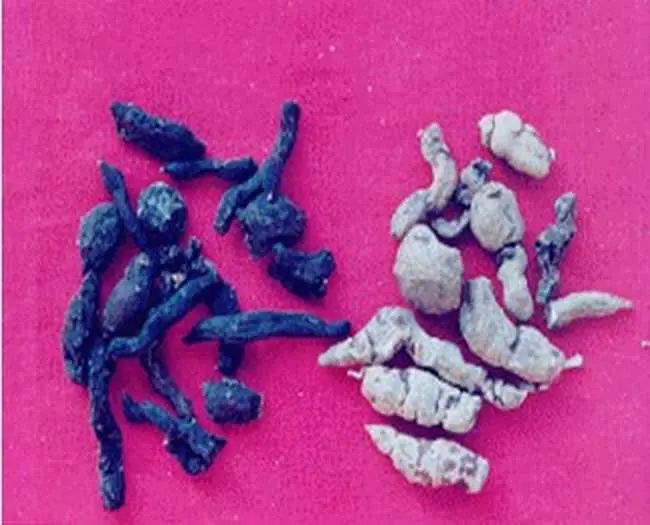
Ellipsoidal, long cylindrical, or bead-like, 1–5 cm long, 0.5–2.5 cm in diameter. Surface off-white or yellowish-white, with brown outer bark remnants in depressions. Brittle, easily broken; fracture powdery, white, wood part slightly showing radial striations; long cylindrical pieces more fibrous. Odor slight; taste slightly sweet and pungent.
Properties and actions性味与功效
ActionsDrive out water and expel retained fluids · Reduce swelling and dissipate nodules
IndicationsEdema and distention, pleural and abdominal effusion, phlegm-fluid accumulation, qi counterflow with cough and dyspnea, difficult urination and defecation, wind-phlegm epilepsy, carbuncles, swellings, sores, and toxic swellings.
Dosage0.5–1.5 g, processed and mostly used in pills and powders; appropriate amount for external use, raw.
CautionToxic; contraindicated in deficiency-cold of the spleen and stomach, and in pregnancy. Use only under professional supervision and do not overdose.
Processing炮制
Gan Sui (raw)Remove impurities, wash, sun-dry, and sort by size.
Vinegar-processed Gan SuiMix clean Gan Sui with a fixed amount of rice vinegar (30 kg per 100 kg), moisten until absorbed, then stir-fry over gentle heat until slightly dry; cool and dry. Crush before use.
Modern research现代药理
Purgative effectOral administration causes violent gastrointestinal contraction and irritation, leading to drastic purgation; active constituents may be resins in the ethanol extract.
Diuretic effectNo diuretic effect in rats with water decoction, but clinical observation shows increased urination in patients with renal edema; no obvious effect in healthy individuals.
Anti-fertility effectEuphol and euphorbol isolated from Gan Sui have abortifacient effects; intrauterine administration terminates mid-term pregnancy in mice and rabbits.
Anti-leukemic effectKansuiporin A and B are new diterpene esters with anti-leukemic activity.
Analgesic effectKansuiporin A and B have analgesic and anti-writhing effects.
Cardiac effectLow doses enhance contractility of isolated frog heart without changing rate; high doses inhibit.
Classical records历代本草
The Shennong Bencao Jing records Gan Sui as bitter and cold, used for abdominal masses, edema, and retained fluids. The Bencao Gangmu notes it drains kidney dampness and treats phlegm, but warns against overdose. It is incompatible with Gan Cao (licorice), yet classical formulas sometimes combine them for synergistic effects.《神农本草经》:味苦,寒。主治大腹疝瘕,腹满,面目浮肿,留饮宿食,破癥坚积聚,利水谷道。
《本草纲目》:肾主水,凝则为痰饮,溢则为肿胀。甘遂能泄肾经湿气,治痰之本也。不可过服,但中病则止可也。仲景治心下留饮,与甘草同用,取其相反而立功也。河间《保命集》云:凡水肿服药未全消者,以甘遂末涂腹,绕脐令满,内服甘草水,其肿便去。《百一选方》云:脚气上攻,结成肿核,及一切肿毒。用甘遂未,水调傅肿处,即浓煎甘草汁服,其肿即散。二物相反,感应如此。清流韩咏病脚疾,用此一服,病去七八,再服而愈也。
泻肾经及隧道水湿,脚气,阴囊肿坠,痰迷癫痫,噎膈痞塞。
《本草蒙筌》:味苦、甘,气大寒。有毒。使宜瓜蒂。反甘草,恶远志。破癥坚积聚如神,退面目浮肿立效。食停胃内,有之即驱。水结胸中,非此不解。盖气直透所结之处,专于行水攻决,利从谷道出也。凡用斟酌,切勿妄投。
《开宝本草》:味苦、甘,大寒,有毒。下五水,散膀胱留热,皮中痞,热气肿满。
《名医别录》:味甘,大寒,有毒。主下五水,散膀胱留热,皮中痞,热气肿满。《药性论》:味苦。能泻十二种水疾,能治心腹坚满,下水去痰水,主皮肌浮肿。
Folklore本草传说
A 64-year-old woman with chronic leg itching was diagnosed with psoriasis. A doctor prescribed a topical powder of Mylabris and Gan Sui mixed with white vinegar. After a few days, blisters formed, then crusts, and the lesions healed within half a month, leaving smooth skin.
Cultivation and authentication栽培与鉴别
1 cultivation notes and 2 authentication articles exist for this herb. They are long-form field material and are published in Chinese only.
Read them in Chinese →