Yuli Ren (Prunus seed)
Yuli Ren
PRUNI SEMEN
Nature and flavorPungent, bitter and sweet, neutral; enters the spleen, large intestine and small intestine meridians.
Meridians enteredSpleen, large intestine, small intestine
Dosage6–10 g
Reference market price¥35 / kgBozhou market · spec common grade · 甘肃 · snapshot 2026-11-21
Yuli Ren is the dried ripe seed of Prunus species, used to moisten the intestines, unblock the bowels and promote urination.
Source药物来源
The dried ripe seed of Prunus humilis Bge., Prunus japonica Thunb. or Prunus pedunculata Maxim. (family Rosaceae).
Identification性状特征
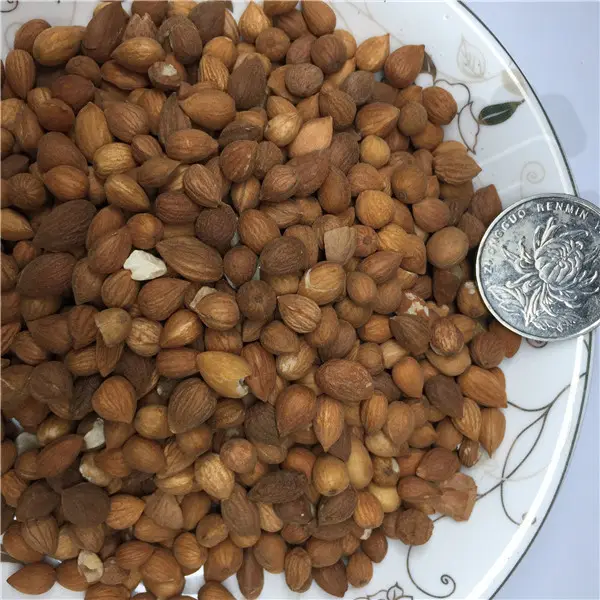
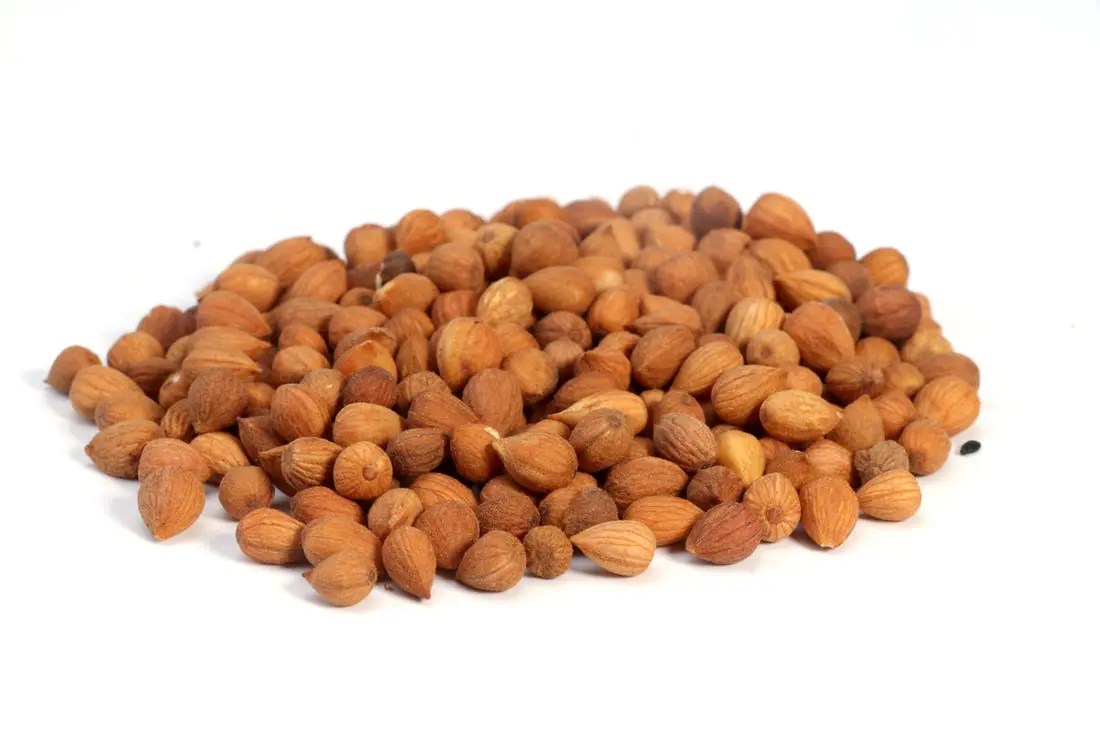
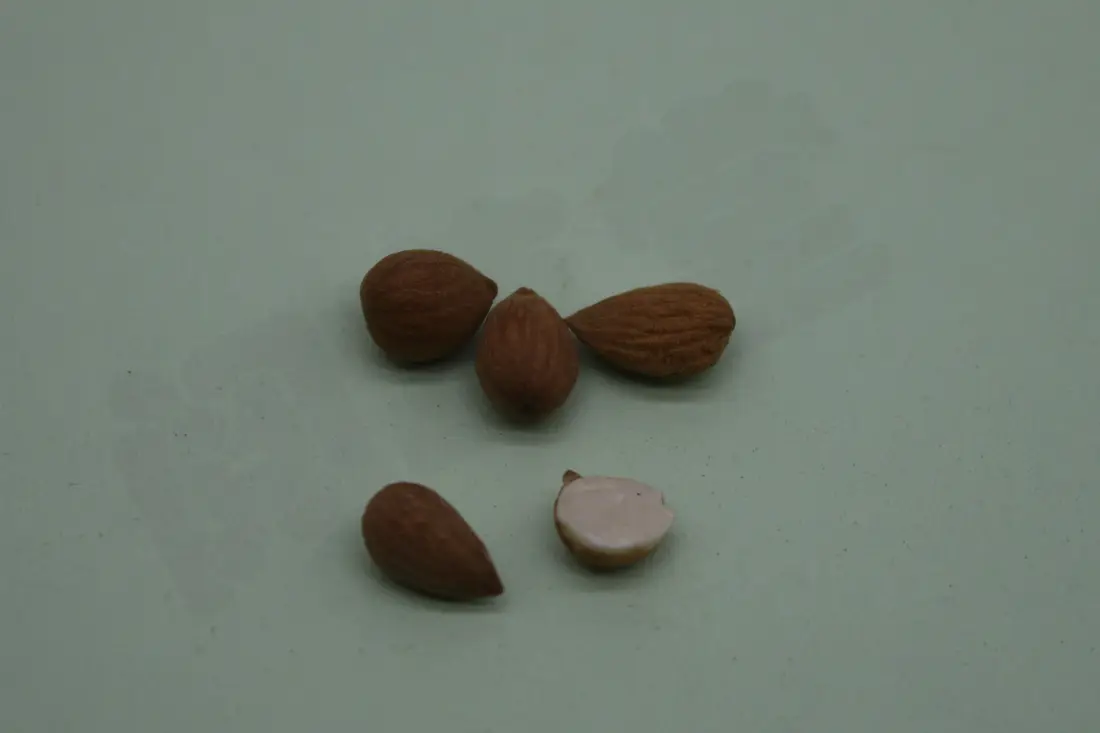
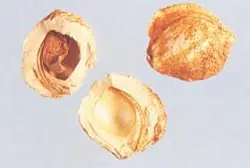
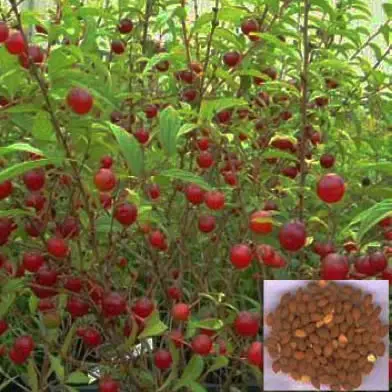
Small Li Ren: ovoid, 5–8 mm long, 3–5 mm in diameter; surface yellowish-white or light brown, pointed at one end and bluntly rounded at the other. A linear hilum is present on the pointed side, and a dark chalaza at the center of the rounded end, with several longitudinal vascular bundle striations extending upward from the chalaza. Seed coat thin; two cotyledons, milky white, rich in oil. Slight odor; slightly bitter taste. Large Li Ren: 6–10 mm long, 5–7 mm in diameter; surface yellowish-brown.
Properties and actions性味与功效
ActionsMoisten the intestines and unblock the bowels · Descend qi and promote urination
IndicationsUsed for dry intestines due to depletion of fluids; food accumulation with qi stagnation; abdominal distension and constipation; edema; beriberi; and difficult urination.
Dosage6–10 g, decocted and taken orally.
CautionUse with caution in cases of deficiency-cold of the spleen and stomach or loose stools; not for long-term use in pregnant women without professional guidance.
Processing炮制
CrudeRemove impurities; crush before use.
Modern research现代药理
Laxative effectThe prunuside contained has a strong purgative action and significantly promotes small intestinal motility.
Anti-inflammatory and analgesic effectsThe IR-A and IR-B protein fractions extracted from Yuli Ren have anti-inflammatory and marked analgesic effects.
Expectorant and antitussive effectsThe saponins have an expectorant action, while the organic acids have antitussive and expectorant effects.
Blood pressure effectThe tincture has a certain hypotensive effect in experimental animals.
Nicotinic acid contentThe nicotinic acid (a B vitamin) promotes cell metabolism and dilates blood vessels; it can be used to prevent and treat pellagra and similar vitamin deficiencies.
ToxicityLarge doses of saponins can destroy red blood cells and cause hemolysis. Large doses of amygdalin can first excite and then paralyze the medullary center.
Diuretic effectThe prunus glycosides have a certain diuretic action.
Classical records历代本草
Li Shizhen's Bencao Gangmu records that Yuli Ren is sweet, bitter and moistening, with a descending nature, hence it can descend qi and promote urination. The Songshi (History of Song) recounts that Qian Yi used Yuli Ren wine to treat a woman whose eyes could not close after fright, explaining that the herb disperses binding and, guided by wine into the gallbladder, allows the eyes to close. Jingyue Quanshu notes its bitter-pungent flavor, moistening and descending nature, and its use for abdominal distension, edema, constipation and food accumulation.《本草纲目》:郁李仁甘苦而润,其性降,故能下气利水。《宋史·钱乙传》云:一乳妇因悸而病,既愈,目张不得瞑。乙曰:煮郁李酒饮以使醉,即愈。所以然者,目系内连肝胆。悠则气结,胆横不下。郁李能玄结,随酒入胆,结去胆下,则目能瞑也。此盖得肯綮之妙者也。
《景岳全书》:味苦辛,阴中有阳,性润而降。故能下气消食,利水道,消面目四肢大腹水气浮肿,开肠中结气滞气,关隔燥涩,大便不通,破血积食癖。凡妇人、小儿实热结燥者皆可用。
Culinary use民间药膳
Yuli Ren CongeeYuli Ren 30 g, japonica rice 100 g
Grind Yuli Ren into powder, soak in water and rinse, filter to obtain the juice, add japonica rice and cook into congee; take on an empty stomach.
Moistens the intestines and unblocks the bowels; promotes urination and reduces swelling.
Cultivation and authentication栽培与鉴别
2 cultivation notes and 1 authentication articles exist for this herb. They are long-form field material and are published in Chinese only.
Read them in Chinese →