Anemarrhena rhizome (Zhi Mu)
Zhi Mu
ANEMARRHENAE RHIZOMA
Nature and flavorBitter, sweet, cold.
Meridians enteredLung, Stomach, Kidney.
Dosage6–12 g
Reference market price¥11 / kgBozhou market · spec 统片 · 安徽 · snapshot 2026-11-21
Anemarrhena rhizome is a heat-clearing herb used for high fever with thirst, dry cough, and internal heat with wasting-thirst.
Source药物来源
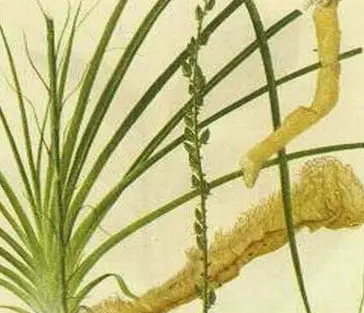
The dried rhizome of Anemarrhena asphodeloides Bge. (Liliaceae).
Identification性状特征
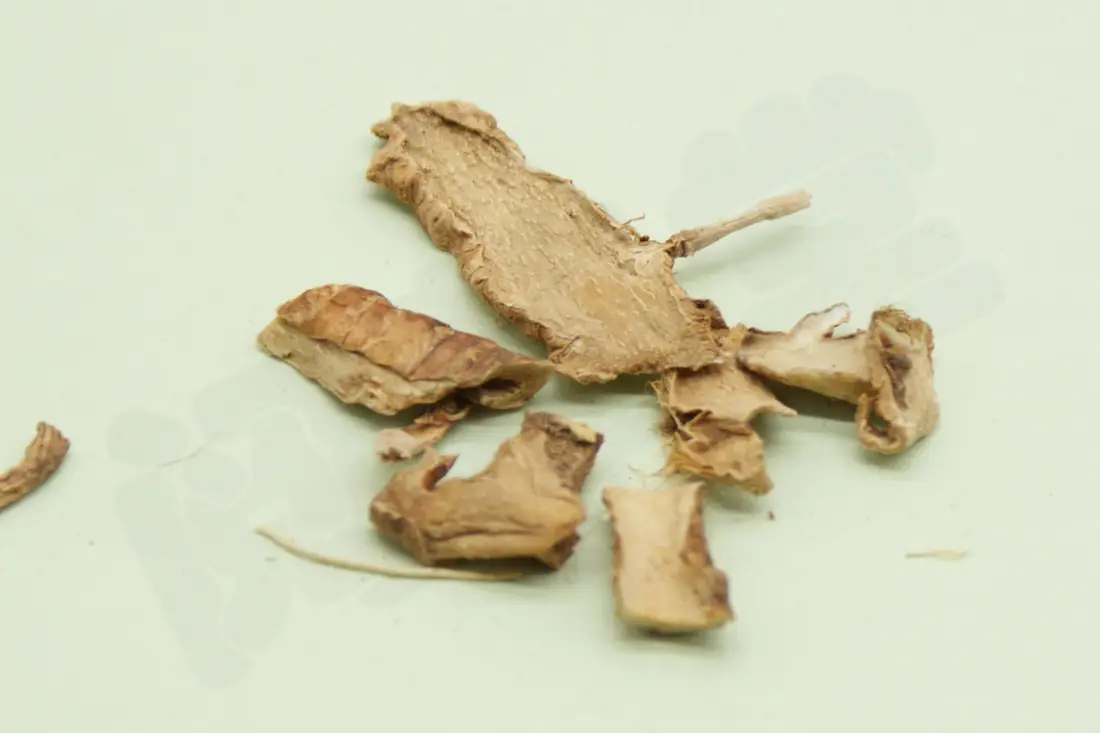
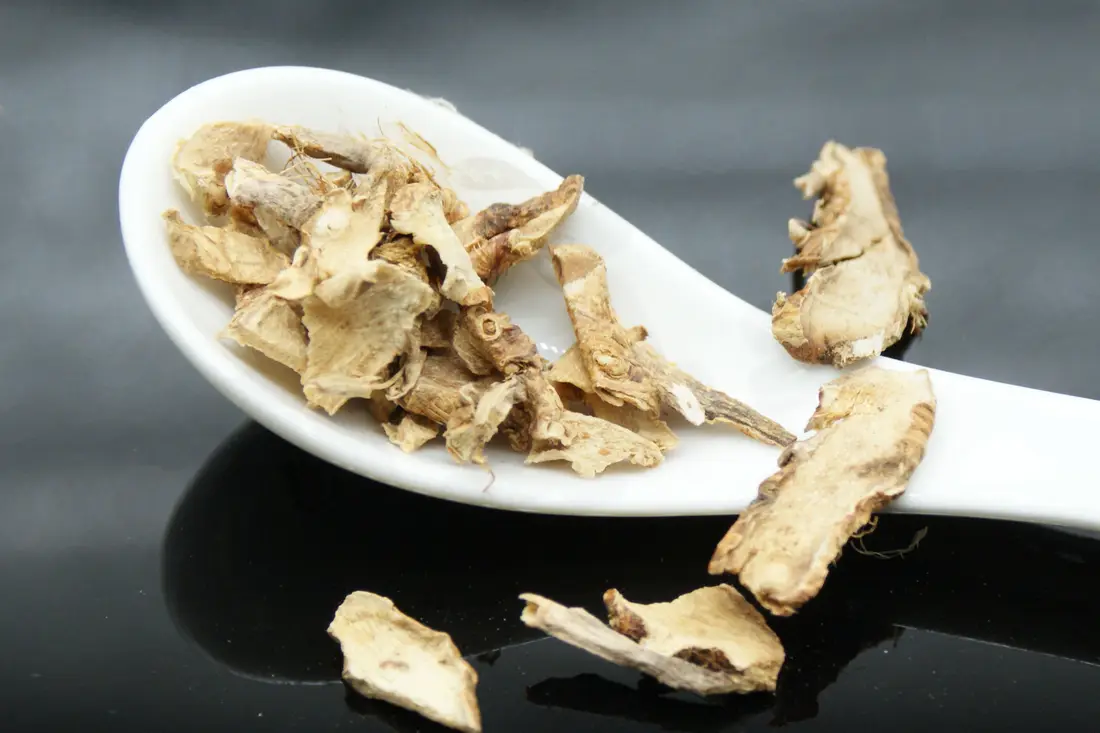
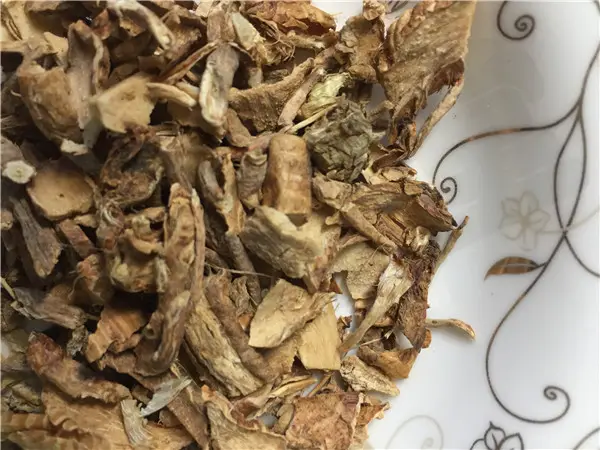
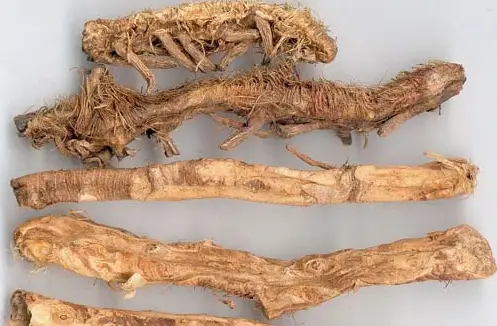
Long, slightly curved, somewhat flattened, occasionally branched, 3–15 cm long, 0.8–1.5 cm in diameter; one end shows pale yellow scars of stem and leaves. Surface yellow-brown to brown; upper surface has a longitudinal groove with closely arranged annular nodes, densely covered with yellow-brown remnants of leaf bases growing from both sides toward the upper part of the rhizome; lower surface raised and slightly wrinkled, with depressed or raised dot-like root scars. Hard, easily broken, fracture yellow-white. Slight odor; taste slightly sweet and slightly bitter; chewed it is sticky.
Properties and actions性味与功效
ActionsClear heat and drain fire · Nourish yin and moisten dryness
IndicationsUsed for exogenous febrile diseases with high fever and intense thirst, dry cough due to lung heat, bone-steaming tidal fever, internal heat with wasting-thirst, and constipation due to intestinal dryness.
CautionContraindicated in impotence, weak spleen with diarrhea, indigestion, poor appetite due to stomach deficiency, and loose stools due to kidney deficiency. Because the herb is cold, use with caution in deficiency-cold of the spleen and stomach.
Processing炮制
Zhi Mu (raw)Remove hairy substances and impurities, wash, soften thoroughly, cut into thick slices, dry, and sift out hair fragments.
Salt-processed Zhi MuTake clean Zhi Mu slices, place in a炒制 container, heat over gentle fire until color changes, sprinkle salt water while stirring until nearly dry, take out and cool, sift out fragments. Use 2 kg of salt per 100 kg of Zhi Mu slices.
Modern research现代药理
Antibacterial effectDecoction inhibits various cocci, bacilli, Candida albicans, and 10 kinds of dermatophytes including Trichophyton violaceum. Water-soluble saponins and flavonoid crystals inhibit Mycobacterium tuberculosis.
Antipyretic effectSubcutaneous injection of extract prevents and treats fever induced by E. coli in rabbits, with lasting effect.
Effect on cortisolHas both synergistic and antagonistic effects on adrenal cortical hormones (dissociation).
Effects on respiration and circulationIntravenous injection in rabbits inhibits respiratory center and lowers blood pressure; large doses cause respiratory and cardiac arrest. Methanol extract strongly inhibits platelet aggregation.
Aldose reductase inhibitionInhibits aldose reductase.
Antitumor effectHas antitumor activity.
Improves learning and memoryEnhances learning and memory function.
Mangiferin effectsMangiferin contained has diuretic, choleretic, antidepressant, antitussive, and expectorant effects.
Classical records历代本草
Classical texts such as Shen Nong Ben Cao Jing and Ben Cao Meng Quan record its bitter-cold nature, its use for wasting-thirst, heat in the middle, and edema, and note that it enters the Kidney, Stomach, and Lung meridians. It is used for bone-steaming fever and to moisten dryness and relieve thirst. Prolonged use may cause diarrhea.《神农本草经》:味苦,寒。主治消渴,热中,除邪气,肢体浮肿,下水,补不足,益气。
《本草蒙筌》:味苦、辛,气寒,气味俱厚。沉而降,阴也,阴中微阳。无毒。乃足少阴本药,而又入足阳明、入手太阴也。补肾气,泻去无根火邪;消浮肿,为利小便佐使。初痢脐下痛者能却,久疟烦热甚者堪除。治有汗骨蒸热痨,疗往来传尸疰病。润燥解渴,患人虚热口干,宜倍用之。止咳消痰。久服不宜,令人作泻。
谟按:东垣云:仲景用此为白虎汤,治不得眠者烦躁也。盖烦者肺,躁者肾,以石膏为君,佐以知母之苦寒,以清肾之躁。缓以甘草,粳米之甘,使不速下也。经云:胸中有寒者瓜蒂散,表热里寒者白虎汤。瓜蒂、知母味皆苦寒,何谓治胸中寒也?曰:读者当逆识之,如言乱臣十人,乱当作治,仲景言寒,举其效言之,热在其中矣。若果为寒,安得复用苦寒之剂?且白虎汤证,脉尺寸俱长,其热明矣。岂可因其辞而害其意乎?
《开宝本草》:疗伤寒久疟烦热,胁下邪气,膈中恶,及风汗内疸。多服令人泄。
《名医别录》:主治伤寒久疟烦热,肋下邪气,膈中恶,及风汗内疸,多服令人泄。
《本草经疏》:知母禀天地至阴之气,故味苦气寒而无毒。《药性论》兼平,日华子兼甘,皆应有之。入手太阴、足少阴经。苦寒能除烦热,至阴能入骨,故主消渴热中,除邪气。脾肾俱虚则湿热客之,而成肢体浮肿,肺为水之上源,肾属水,清热滋肺金,益水脏,则水自下矣。补不足者,清热以滋金水之阴,故补不足。热散阴生,故益气。苦寒至阴之性,烦热得之即解,故疗伤寒,久疟烦热,及胁下邪气。凡言邪者,皆热也。膈中恶,即邪恶之气中于膈中也。风汗者,热则生风,而汗自出也。内疸者,即女劳色疸也。热火既散,阴气即生,故主上来诸证也。多服令人泄者,阴寒之物,其味复苦,则必伤脾胃生发之气,故作泄也。
简误:阳痿,及易举易痿,泄泻脾弱,饮食不消化,胃虚不思食,肾虚溏泄等证,法并禁用。
Culinary use民间药膳
Steamed Soft-shelled Turtle with Two 'Mu' Herbs1 soft-shelled turtle, 6 g Chuan Bei Mu, 6 g Zhi Mu, 6 g Xing Ren, 6 g Qian Hu, 6 g Yin Chai Hu; appropriate amounts of scallion, ginger, Sichuan pepper, salt, sugar, yellow wine, and MSG.
Slaughter the turtle, drain blood, remove shell, discard viscera, cut off claws, wash and cut into large pieces. Wash herbs, cut into thin slices, place in gauze bag and tie tightly.
Nourish yin and clear heat, clear lung and stop cough.
Cultivation and authentication栽培与鉴别
7 cultivation notes and 1 authentication articles exist for this herb. They are long-form field material and are published in Chinese only.
Read them in Chinese →