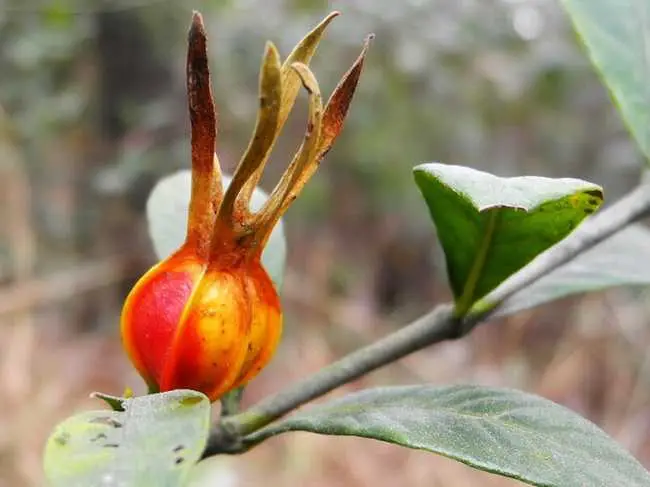
Gardenia fruit (Zhi Zi)
Gardenia fruit is a key herb for clearing heat and fire, resolving toxicity, and cooling the blood.
The dried ripe fruit of Gardenia jasminoides Ellis (Rubiaceae).
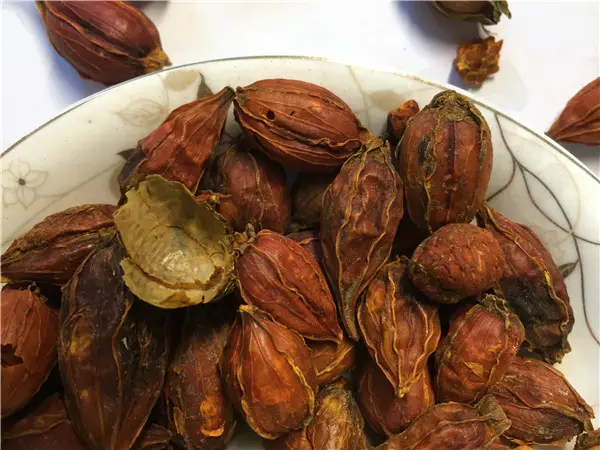
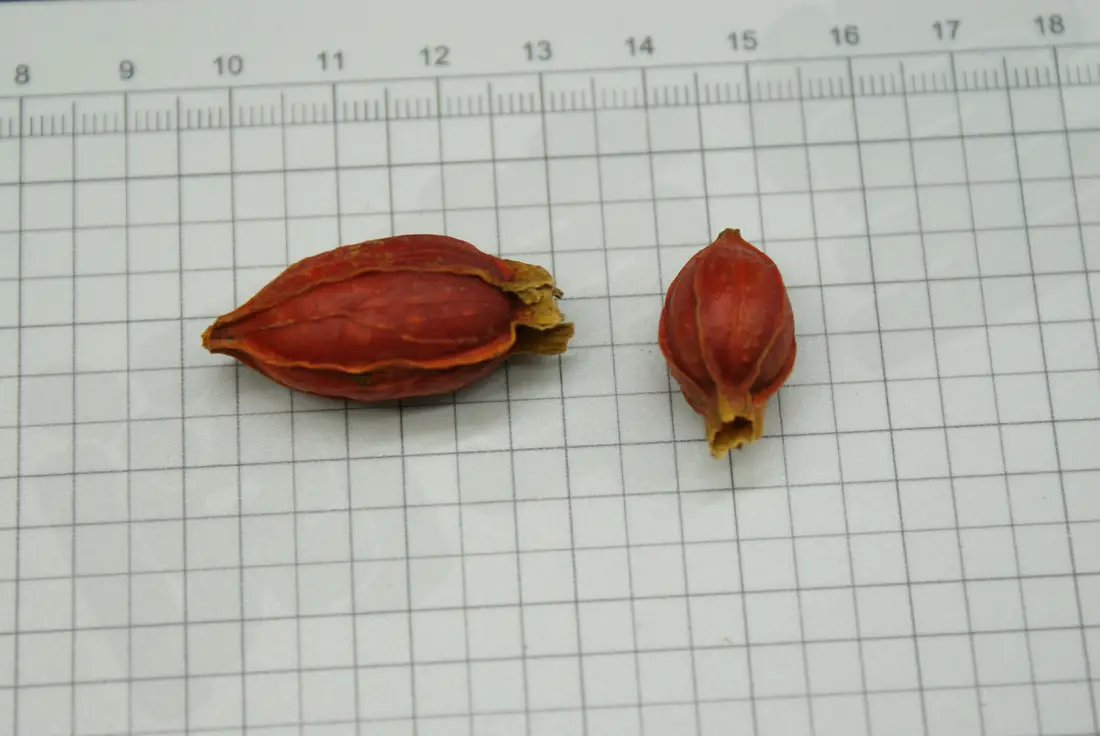
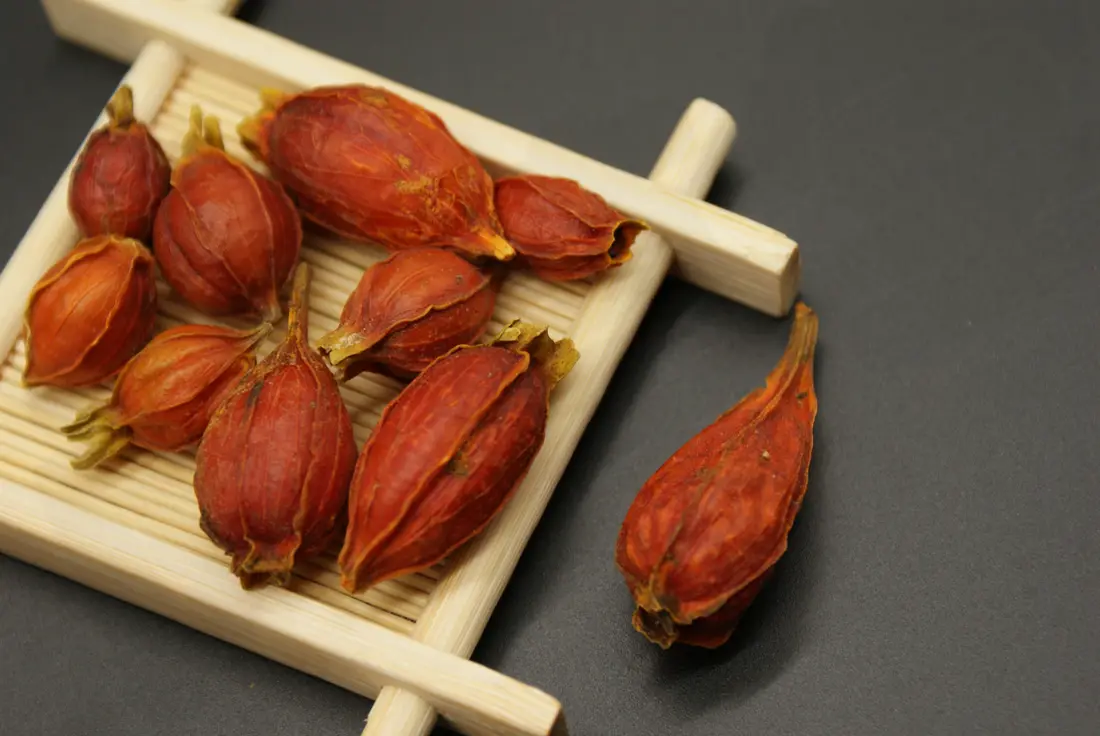
Oval or oblong, 1.5–3.5 cm long, 1–1.5 cm in diameter. Surface red-yellow or brown-red, with 6 winged longitudinal ridges, often with 1 distinct longitudinal vein between ridges, branched. Apex with persistent calyx, base slightly pointed with fruit stalk scar. Pericarp thin and brittle, slightly lustrous; inner surface paler and shiny, with 2–3 raised false septa. Seeds numerous, flattened oval, clustered into a mass, deep red or red-yellow, densely covered with tiny warty projections. Odor slight; taste slightly sour and bitter.
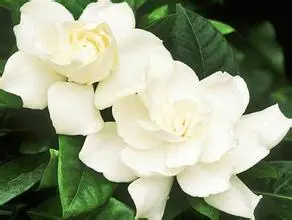
Gardenia has been prized in China since ancient times for its ornamental, culinary, and medicinal uses. Its flowers were introduced to Japan as a symbol of peace in the Tang dynasty, reached Europe in the 17th century, and later gained international fame. The fruit is used to make yellow dye, the flowers to scent tea, and the wood for carving. Historical records note its high value, and poets from the Southern Dynasties through the Ming and Qing praised its beauty. Traditional external pastes of gardenia with flour and liquor were used for sprains and bruises, as recorded in Qing imperial medical cases.
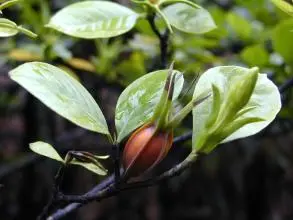
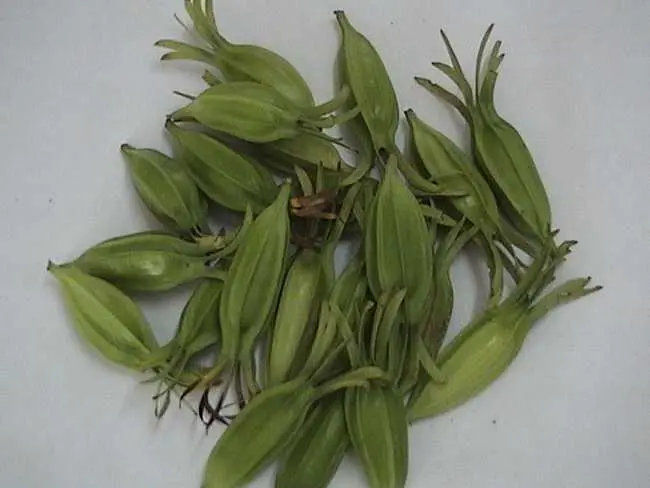
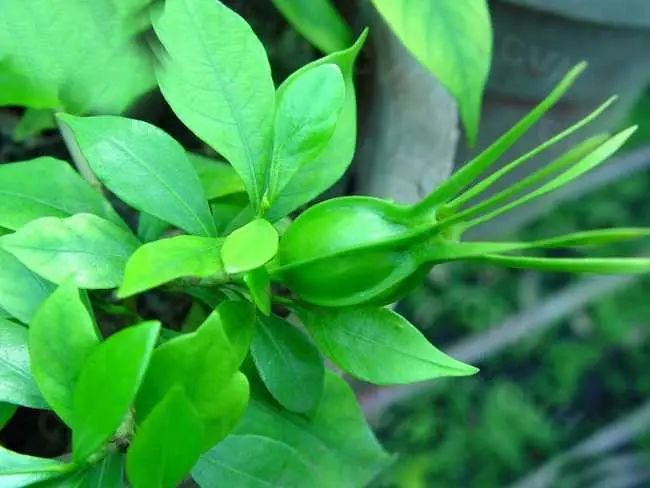
11 cultivation notes and 5 authentication articles exist for this herb. They are long-form field material and are published in Chinese only.
Chinese version · All herbs