Sang Piao Xiao (Mantis Egg-case)
Sang Piao Xiao
MANTIDIS OOTHECA
Nature and flavorSweet and salty, neutral; enters the Liver and Kidney meridians.
Meridians enteredLiver and Kidney meridians
Dosage5–10 g
Reference market price¥420 / kgBozhou market · spec 生大绵 · Shandong · snapshot 2026-11-21
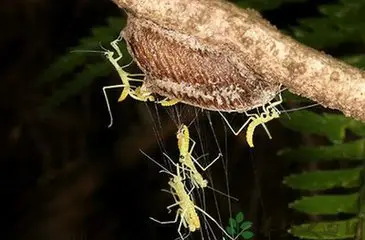
Sang Piao Xiao is the dried egg-case of mantises, used in traditional medicine to secure essence, reduce urination and tonify the kidney.
Source药物来源
The dried egg-case of the mantis species Tenodera sinensis Saussure, Statilia maculata (Thunberg), or Hierodula patellifera (Serville) (family Mantidae).
Identification性状特征
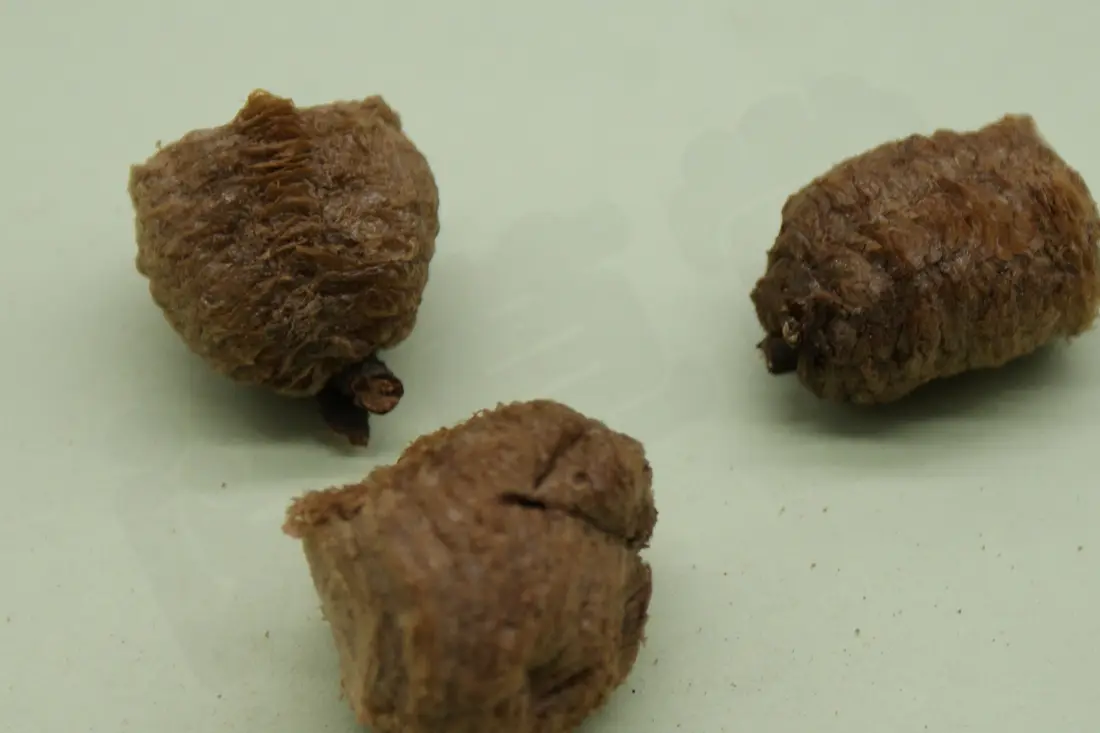
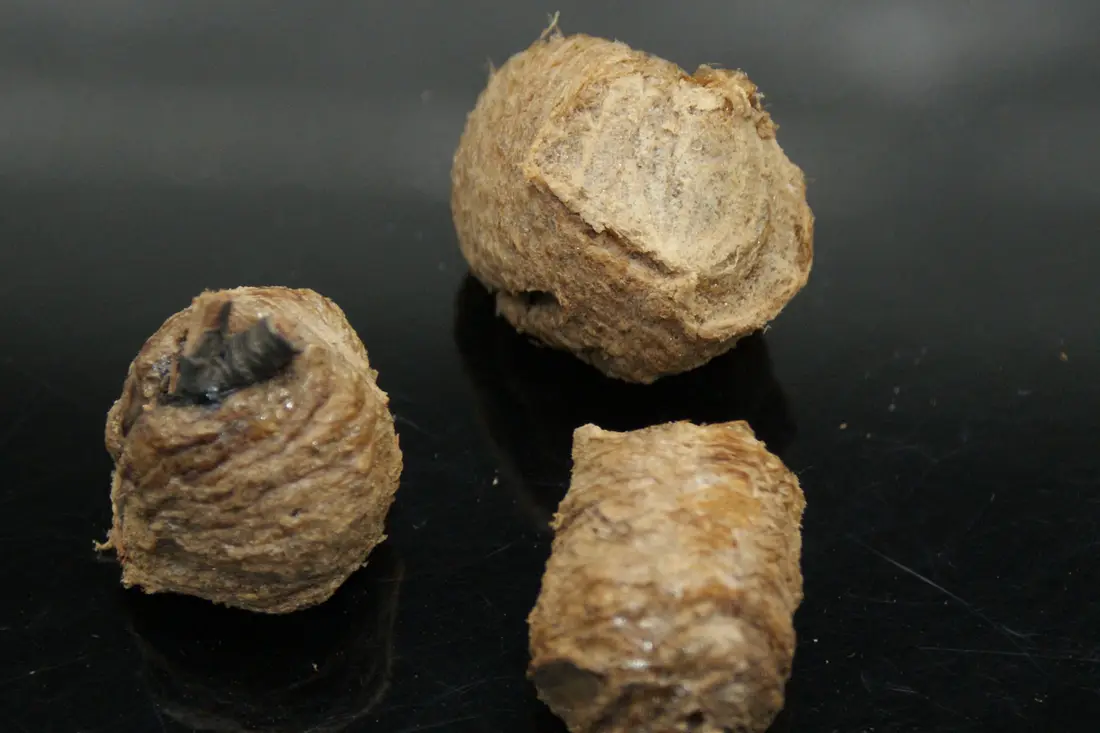
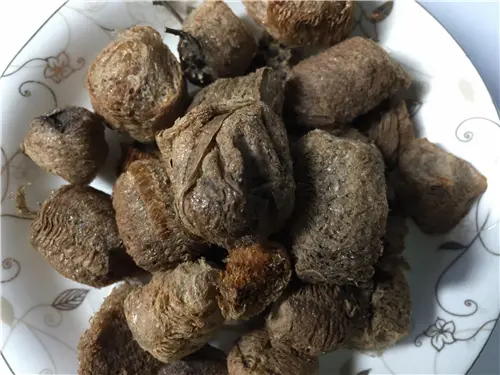
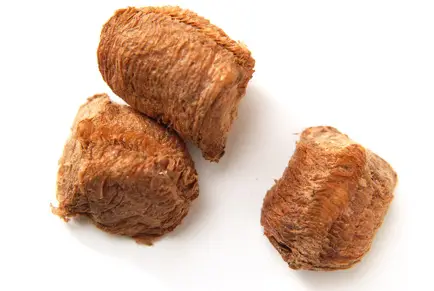
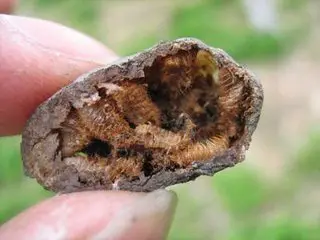
Tuan Piao Xiao: roughly cylindrical or semicircular, composed of multiple membranous layers, 2.5–4 cm long, 2–3 cm wide. Surface light yellowish-brown, with inconspicuous band-like ridges on top; base flat or with a groove. Light, loose and tough; cross-section shows an outer spongy layer and an inner layer of many radially arranged small chambers, each containing a tiny oval egg, dark brown and glossy. Slight fishy odor; taste bland or slightly salty.
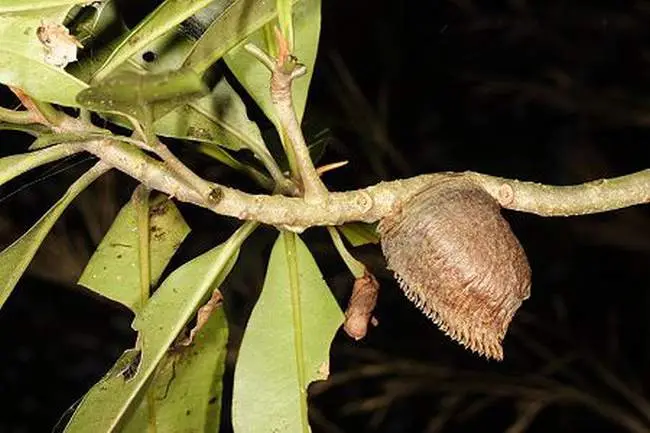
Chang Luo Piao Xiao: somewhat elongated, one end narrower, 2.5–5 cm long, 1–1.5 cm wide. Surface grayish-yellow, with distinct band-like ridges on top, each side of the band with a dark brown shallow groove and oblique striations. Hard and brittle.
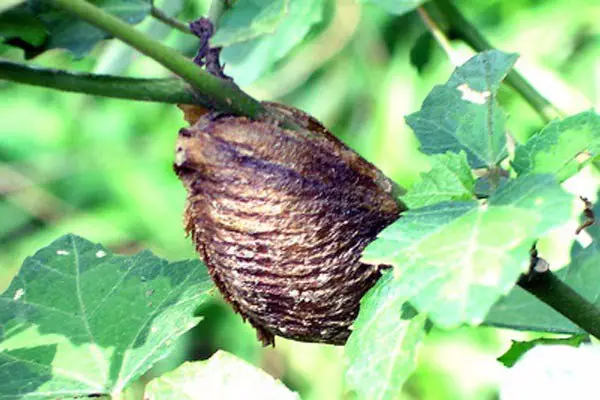
Hei Piao Xiao: somewhat parallelogram-shaped, 2–4 cm long, 1.5–2 cm wide. Surface grayish-brown, with distinct band-like ridges on top and oblique striations on both sides, slightly upturned near the tail end. Hard and tough.
Properties and actions性味与功效
ActionsSecure essence and reduce urination · Tonify the kidney and assist yang
IndicationsUsed for spermatorrhea and nocturnal emission, enuresis and frequent urination, and turbid white urine.
CautionUse with caution in cases of yin deficiency with heat or damp-heat; not suitable for those with urinary difficulty due to damp-heat.
Processing炮制
ProcessingRemove impurities, steam thoroughly, and dry. Cut into pieces before use.
Modern research现代药理
Phospholipids and blood cellsThe phospholipids contained in Sang Piao Xiao are major raw materials for red blood cell and other cell membranes and can promote red blood cell development.
Anti-atherosclerotic effectThe phospholipids in Sang Piao Xiao have an effect of alleviating atherosclerosis.
Thymus and testis indicesSang Piao Xiao can increase thymus and testis indices in mice.
Anti-hypoxia and anti-fatigueSang Piao Xiao has anti-hypoxic and anti-fatigue effects.
Anti-diuretic and warming effectSang Piao Xiao has anti-diuretic effects, increases body temperature in yang-deficient mice, and reduces sweating.
Classical records历代本草
The Shennong Bencao Jing records it as salty and neutral, used for abdominal masses, impotence, and promoting urination. Bencao Gangmu states it is a liver, kidney and mingmen medicine. Bencao Mengquan notes it is used for menstrual block and low back pain in women, and deficiency in men, and is indispensable in formulas for nocturnal emission.《神农本草经》:味咸,平。主伤中,疝瘕,阴痿,益精,生子,治女子血闭,腰痛,通五淋,利小便水道。
《本草纲目》:肝、肾、命门药也,古方盛用之。
《本草蒙筌》:味咸、甘,气平。无毒。畏旋复花,宜白龙骨。主女人血闭腰痛,治男子虚损肾衰。益精强阴,补中除疝。止精泄而愈白浊,能淋闭以利小便。又禁小便自遗,故《本经》注云:凡梦遗方中,不可缺也。俗谓禁尿窠,亦指此焉。
《名医别录》:味甘,无毒。主治男子虚损,五藏气微,梦寐失精,遗溺。久服益气,养神。
《本草图经》:古方漏精及风药中多用之。
Culinary use民间药膳
Stewed Pig Bladder with Yi Zhi Ren and Sang Piao XiaoGlutinous rice, salt, MSG, Sang Piao Xiao, Yi Zhi Ren (Alpinia oxyphylla), black beans, pig bladder
1. Wash the pig bladder;
2. Wash glutinous rice, stuff into the pig bladder, tie tightly with string, and prick some holes with a needle;
3. Wash black beans, Yi Zhi Ren, and Sang Piao Xiao;
4. Put appropriate amount of water in a pot, add pig bladder, black beans, Sang Piao Xiao, and Yi Zhi Ren, simmer over low heat until the pig bladder is cooked;
5. Add appropriate amount of salt and a little MSG, simmer briefly, and remove the herbs.
Warms the kidney and assists yang, secures essence and reduces urination; suitable for middle-aged and elderly people with frequent urination.
Cultivation and authentication栽培与鉴别
0 cultivation notes and 6 authentication articles exist for this herb. They are long-form field material and are published in Chinese only.
Read them in Chinese →