Mume Fruit (Wu Mei)Materia Medica

Mume Fruit (Wu Mei)

Wu Mei
MUME FRUCTUS
Nature and flavorSour, astringent, neutral. Enters liver, spleen, lung, and large intestine meridians.
Meridians enteredLiver, spleen, lung, and large intestine meridians
Dosage6–12 g
Reference market price¥12 / kgBozhou market · spec common grade · 四川 · snapshot 2026-11-21

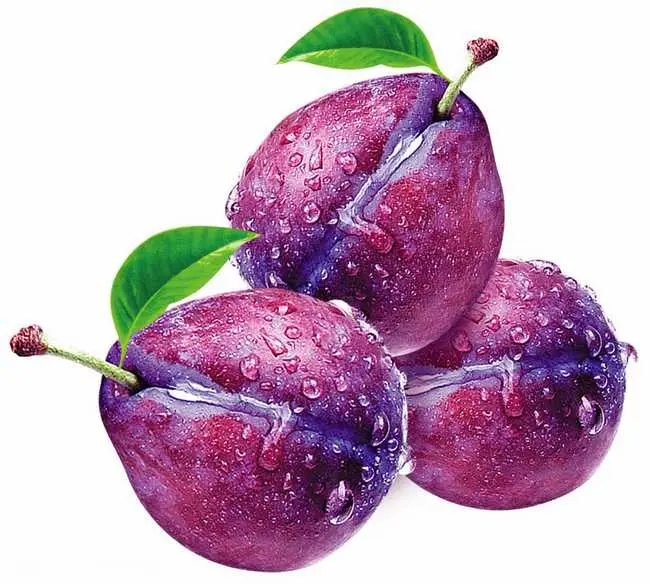
Mume Fruit (Wu Mei) is the dried nearly ripe fruit of Prunus mume, used in traditional medicine for its astringent and fluid-generating properties.

Source药物来源

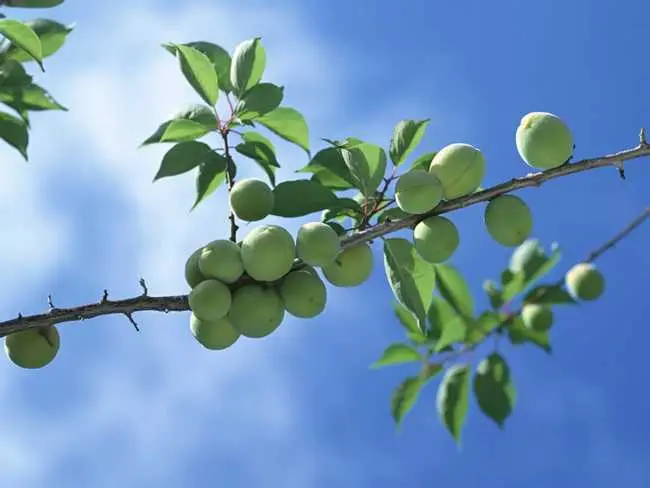
The dried nearly ripe fruit of Prunus mume (Sieb.) Sieb. et Zucc. (Rosaceae).

Identification性状特征

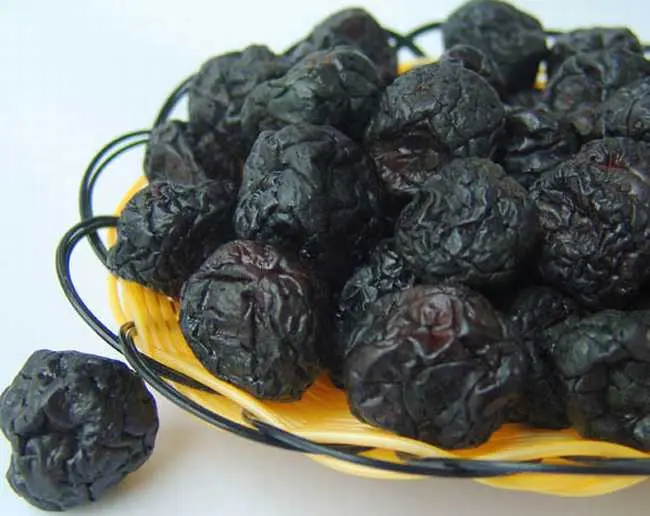
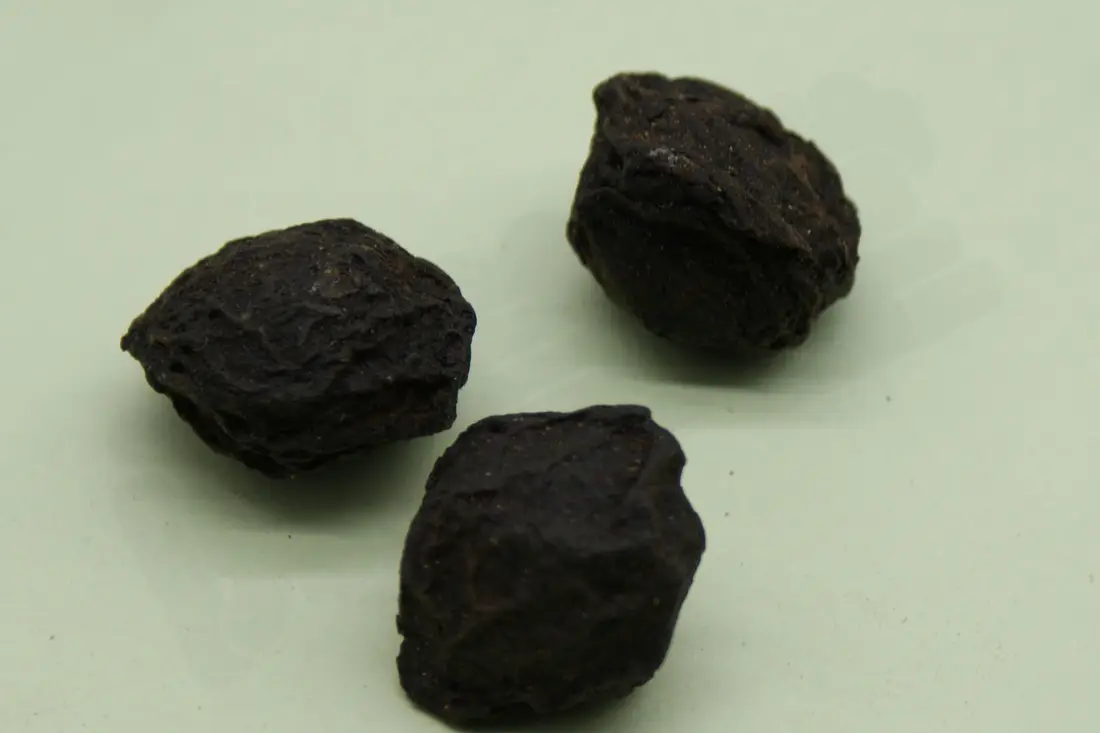
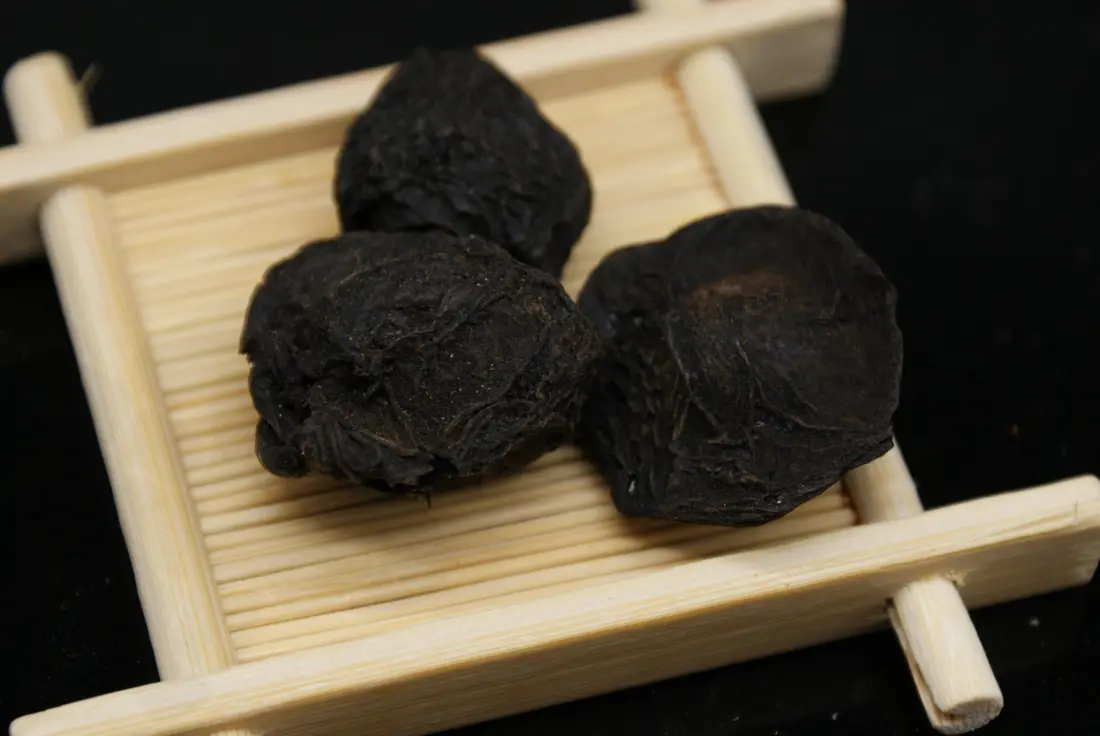
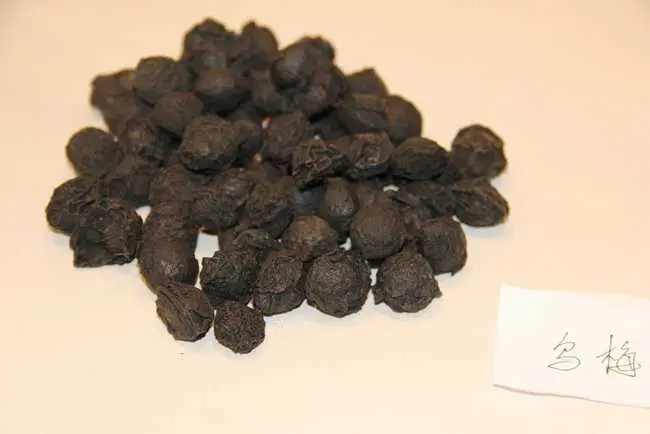
Subspherical or flattened subspherical, 1.5–3 cm in diameter. Surface blackish or brownish-black, wrinkled, with a circular fruit stalk scar at the base. Pit hard, elliptical, brownish-yellow, with pitted surface; seed flattened ovate, pale yellow. Odor slight; taste extremely sour.

Properties and actions性味与功效
Actions
Astringes the lung · Binds the intestines · Generates fluid · Calms roundworm
Indications
Used for chronic cough due to lung deficiency, chronic diarrhea and dysentery, wasting-thirst with deficiency heat, and ascariasis with vomiting and abdominal pain.
Dosage
6–12 g.
Caution
Astringent properties may retain pathogens; use with caution in cases of exterior syndromes or damp-heat accumulation. Not recommended for patients with spleen-stomach deficiency-cold or in the early stages of diarrhea and dysentery.
Processing炮制
Mume Fruit
Remove impurities, wash, and dry.
Mume Fruit Flesh
Take clean Mume Fruit, soften with water or by steaming, and remove the pit.
Mume Fruit Charred
Take clean Mume Fruit and stir-fry until the skin and flesh puff up, using the charring method.
Modern research现代药理
Effects on secretion and smooth muscle
Stimulates salivary and gastric secretion; mildly contracts the gallbladder, promotes bile secretion, and alters bile pH. The decoction inhibits isolated rabbit intestine and relaxes the sphincter of Oddi.
Antiparasitic effects
Exerts excitatory and repellent effects on Ascaris lumbricoides; also has some effect against hookworm and Clonorchis sinensis.
Antiallergic and immune effects
Reduces mortality in protein-induced and histamine-induced shock and has desensitizing effects. Enhances immune function in mice.
Antimicrobial effects
Has broad-spectrum antibacterial and some antifungal activity.
Antitumor and anti-radiation effects
Shows certain antitumor and anti-radiation activities.
Antioxidant effects
The fruit pulp has significant antioxidant and anti-hemolytic effects, inhibits lipid peroxidation in liver homogenate, and has anti-aging and anti-fatigue properties.
Anticoagulant and fibrinolytic effects
The extract has in vitro anticoagulant and antifibrinolytic activities.
Hepatoprotective and analgesic effects
Contains picric acid, which may improve liver function, and amygdalin, which has antipyretic and analgesic effects.
Classical records历代本草
The Shennong Bencao Jing records it as sour and neutral, used to lower qi, relieve heat and restlessness, and treat bodily pain. The Bencao Gangmu explains its sour-astringent properties for treating chronic cough, diarrhea, and roundworm, and notes its use in Mume Pill for ascariasis.
《神农本草经》:味酸,平。主下气,除热烦满,安心,肢体痛,偏枯不仁,死肌,去青黑痣,恶疾。 《本草纲目》:所主诸病,皆取酸收之义。惟仲景治蛔厥乌梅丸及虫匿方中用者,取虫得酸即止之义,稍有不同耳。大丞梁庄肃公痢血,应用乌梅胡黄连灶下土等分为末,茶调服,亦效。盖血得酸则敛,得寒则止,得苦则涩故也。其蚀恶疮胬肉,虽是酸收,却有物理之妙。说出《本经》,其法载于《刘涓子鬼遗方》:用乌梅肉烧存性,研敷恶肉上,一夜立尽。《圣惠》用乌梅和蜜作饼贴者,其力缓。《简便方》:起臂生一痈,脓溃百日方愈,中有恶肉突起,如蚕豆大,月余不消,医治不效,因阅本草得此方,试之,一日夜去其大半,再上一日而平。 敛肺涩肠,止久嗽泻痢,反胃噎膈,蛔厥吐利,消肿涌痰,杀虫,又治泻痢烦渴,霍乱吐下,下血血崩。 《本草蒙筌》:收敛肺气,解渴除烦。因涩大肠,禁痢止泻。却伤寒温疟,逐虚劳骨蒸。同建茶干姜为丸,治休息久痢尤验。黑痣可脱,虫痛能安。 《开宝本草》:味酸,平,无毒。止下痢,好唾,口干。 《名医别录》:无毒。止下痢,好唾,口干。 《本草图经》:除痰。
Folklore本草传说

During the Three Kingdoms period, Cao Cao's troops were tormented by heat and thirst. Cao pointed ahead and claimed there was a plum grove, causing soldiers to salivate and quicken their pace until they found water. Tang poet Luo Yin wrote: 'Though not used in soup, it once quenched the general's thirst.' Another tale from Mount Emei tells of a monk who imagined plums and found his thirst relieved. In the Qing dynasty, Chen Shiduo noted its rapid effect on diarrhea and malaria. The Yi Shuo records cures for chronic bloody diarrhea using salted plum flesh or plum with coptis and hearth soil.
Culinary use民间药膳
Mume Tea
Fresh mume fruit 500 g, white sugar 50 g.
Wash the mume fruit, add sugar, mash in a clay pot, cover with a small opening for ventilation. After 7 days, strain through gauze, boil the juice, and cool. Drink regularly.
Relieves heat and summerheat, calms irritability.
Bamboo Shavings Drink
Bamboo shavings 30 g, mume fruit 6 g, licorice 3 g.
Decoct in water, take the liquid as a frequent tea substitute.
Clears stomach heat, stops vomiting, generates fluid, and relieves cough.
Gypsum and Mume Drink
Raw gypsum 150 g, mume fruit 20 pieces, white honey to taste.
Crush gypsum, wrap in gauze, decoct with mume fruit, remove residue, add white honey, and drink as tea frequently.
Clears heat, drains fire, generates fluid, and quenches thirst.
Audio and video语音与视频
Narration · Chinese · 7:34
Latin name · pronunciation
Narration and video are shared by all language versions and are in Chinese; the images and footage themselves are language-independent.
Photographs药材图片
Mume Fruit (Wu Mei)
Mume Fruit (Wu Mei)
Mume Fruit (Wu Mei)
Mume Fruit (Wu Mei)
Mume Fruit (Wu Mei)
Mume Fruit (Wu Mei)
Mume Fruit (Wu Mei)
Mume Fruit (Wu Mei)
Cultivation and authentication栽培与鉴别

4 cultivation notes and 7 authentication articles exist for this herb. They are long-form field material and are published in Chinese only.

Read them in Chinese →

Compiled from public Chinese materia medica sources for study and reference. Not medical advice.
Chinese version · All herbs