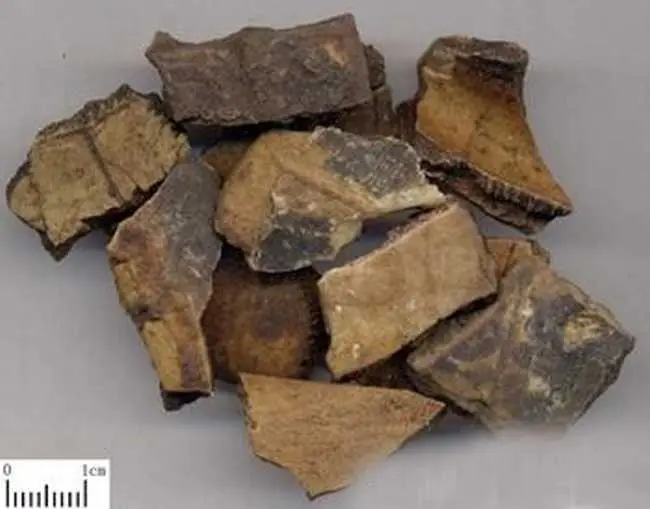
Testudinis Carapax et Plastrum (Gui Jia)
Gui Jia is the shell of the freshwater turtle, used in traditional Chinese medicine to nourish yin, anchor yang, and strengthen bones.
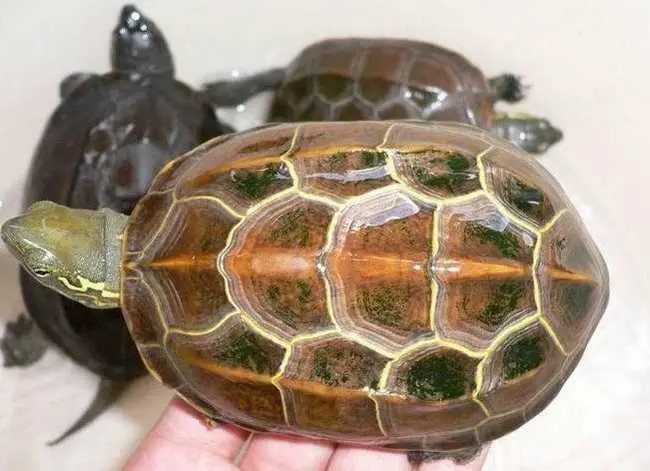
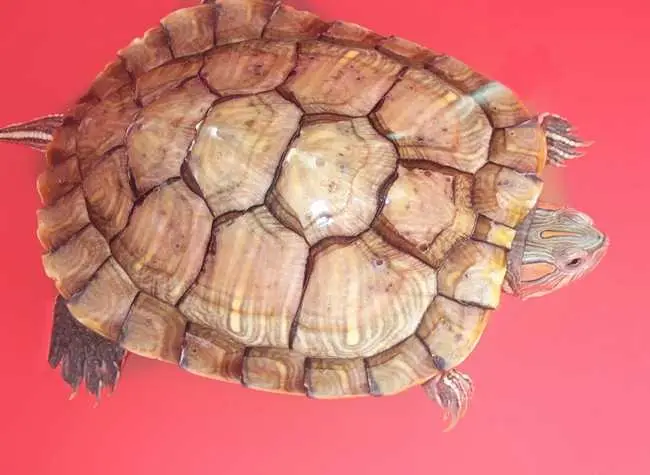
The dorsal and ventral shells of the turtle (Setaria italica (L.) Beauv.).
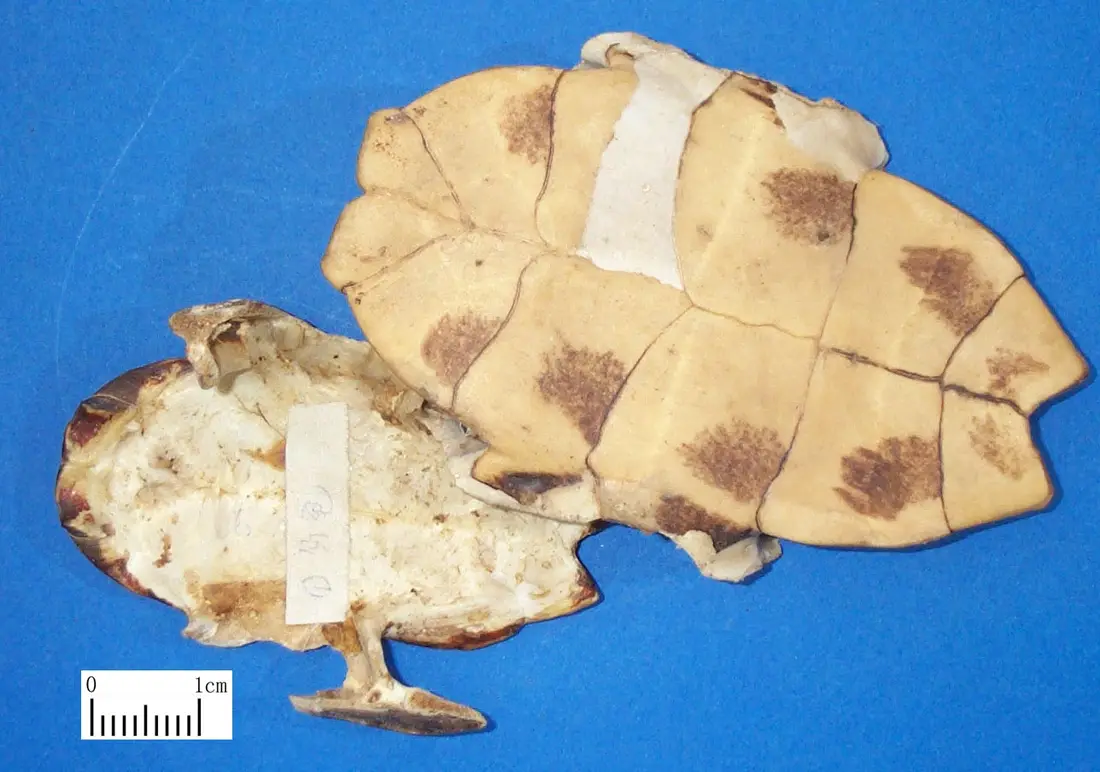
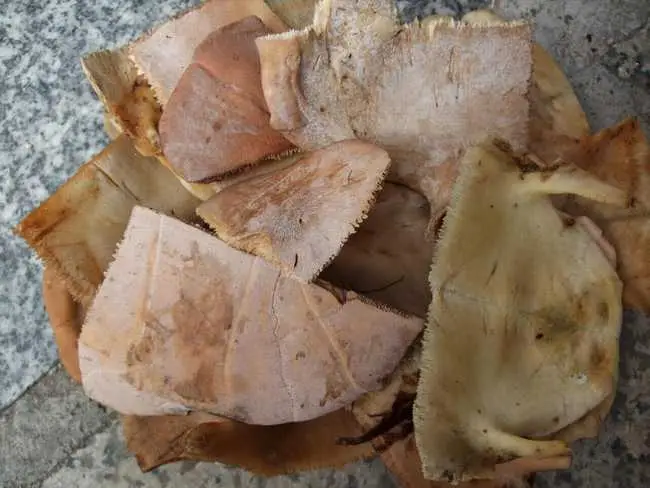
The dorsal and ventral shells are connected by a bridge; the dorsal shell is slightly longer than the ventral and often separate. Dorsal shell: elongated oval, arched, 7.5–22 cm long, 6–18 cm wide; outer surface brown to blackish-brown, with 3 longitudinal ridges; 1 nuchal scute, narrow anteriorly and broad posteriorly. 5 vertebral scutes, first longer than wide or nearly equal, second to fourth wider than long; 4 costal scutes on each side; 11 marginal scutes on each side; 2 supracaudal scutes. Ventral shell: flat, nearly rectangular-oval, 6.4–21 cm long, 5.5–17 cm wide. Outer surface pale yellowish-brown to brownish-black, with 12 scutes, each often with purple-brown radiating stripes; middle sutures of abdominal, pectoral, and femoral scutes long, those of gular and anal scutes shorter, humeral scutes shortest. Inner surface yellowish-white to grayish-white, sometimes with traces of blood or flesh; after cleaning, 9 bony plates visible, interlocking in a serrated pattern; anterior end blunt or truncate, posterior end with a triangular notch, sides with wing-like bridge curving upward. Hard in texture. Slight fishy odor, slightly salty taste.
1 cultivation notes and 3 authentication articles exist for this herb. They are long-form field material and are published in Chinese only.
Chinese version · All herbs