Morinda root (Ba Ji Tian)
Ba Ji Tian
MORINDAE OFFICINALIS RADIX
Nature and flavorSlightly warm; sweet, pungent
Meridians enteredKidney, Liver
Dosage3–10 g
Reference market price¥60 / kgBozhou market · spec common grade · 广东 · snapshot 2026-11-21
Morinda root is a traditional kidney-yang tonic used to strengthen the lower back and legs and to relieve wind-dampness pain.
Source药物来源
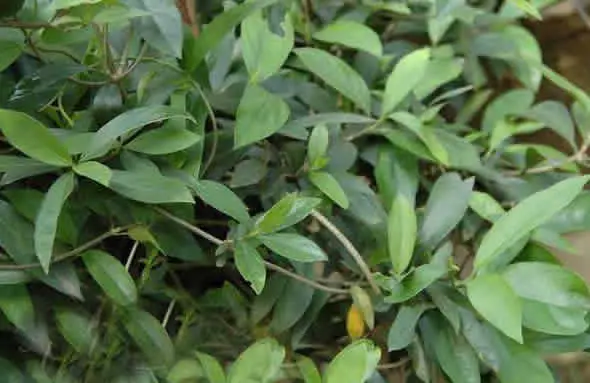
The dried root of Morinda officinalis How (family Rubiaceae).
Identification性状特征
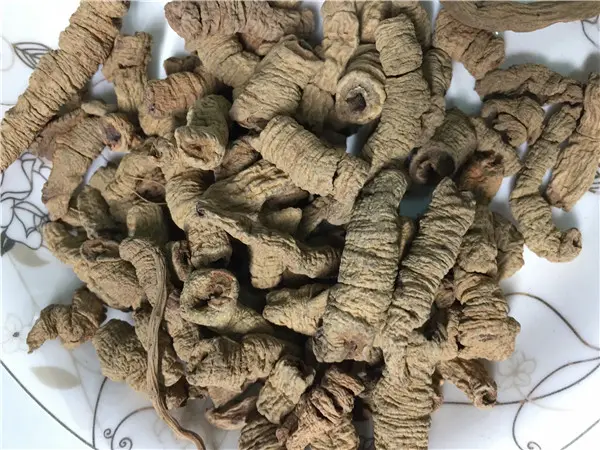
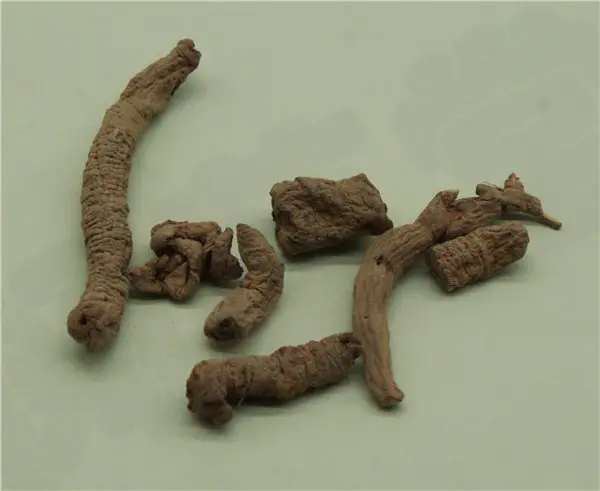
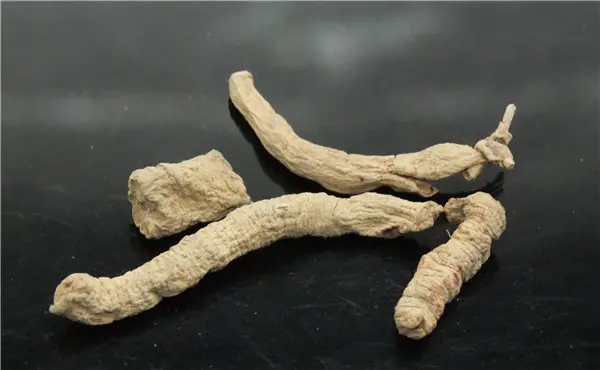
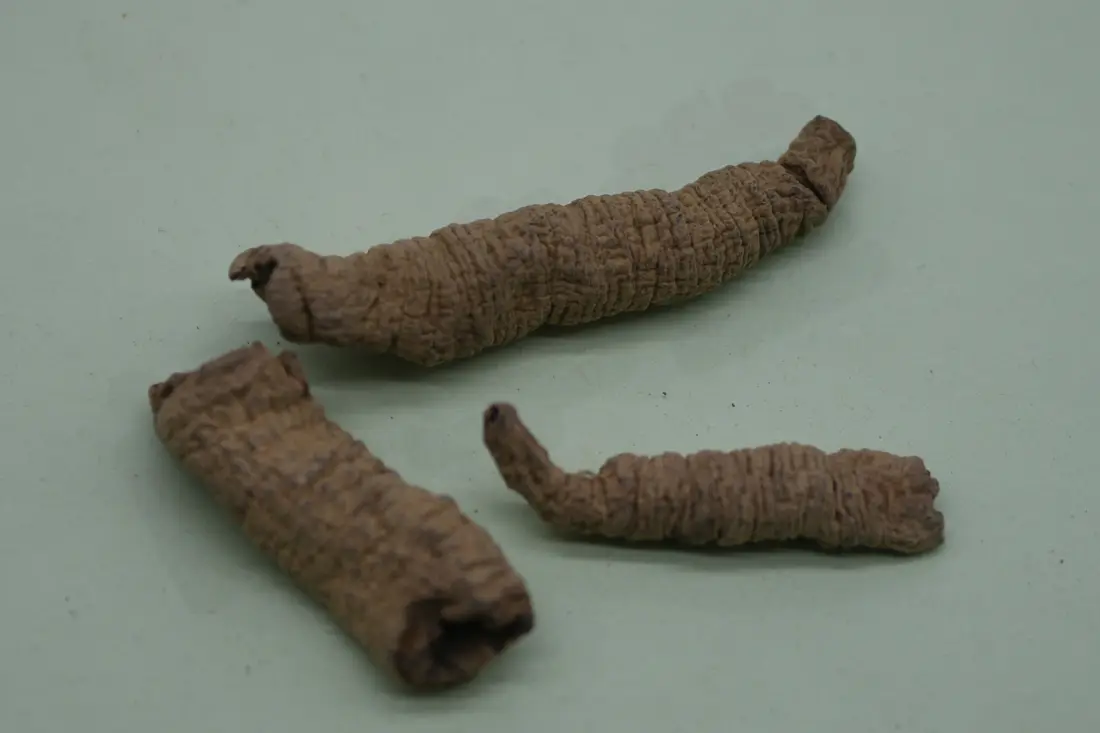
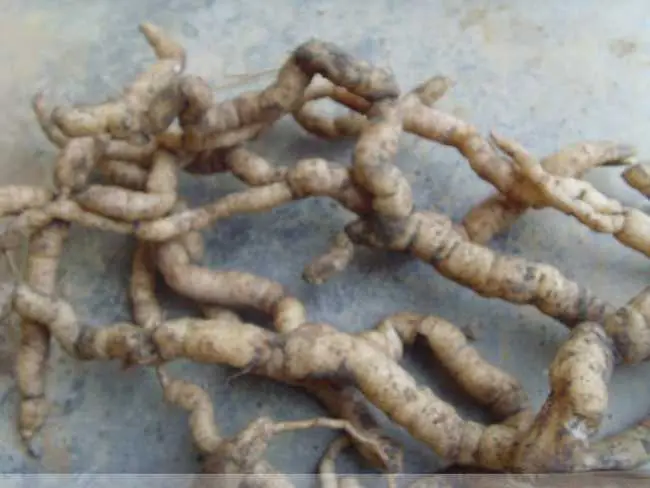
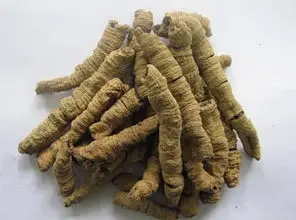
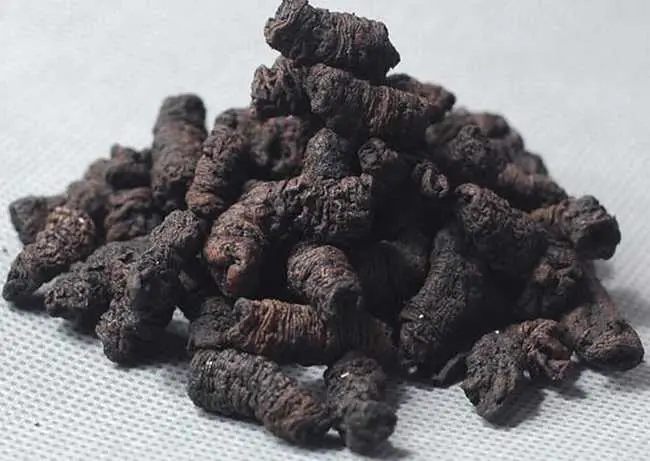
Flattened cylindrical, slightly curved, variable in length, 0.5–2 cm in diameter. Surface grayish-yellow or dark gray, with longitudinal and transverse cracks; sometimes the cortex breaks transversely exposing the wood. Texture tough; fractured surface shows a thick, purple or pale purple cortex easily separated from the wood; wood hard, yellow-brown or yellowish-white, 1–5 mm in diameter. Odor slight; taste sweet and slightly astringent.
Properties and actions性味与功效
ActionsTonify kidney yang · Strengthen sinews and bones · Dispel wind-dampness
IndicationsImpotence and seminal emission, infertility due to cold uterus, irregular menstruation, cold and painful lower abdomen, rheumatic arthralgia, and flaccidity and weakness of sinews and bones.
Dosage3–10 g, decocted and taken orally.
CautionContraindicated in cases of yin deficiency with fire hyperactivity, such as red urine, bitter taste, dry mouth, irritability, and constipation. Use with caution in those with spleen-stomach deficiency-cold.
Processing炮制
Ba Ji Tian (raw)Remove impurities, wash, and dry.
Ba Ji Rou (flesh)Steam the cleaned root until thoroughly steamed, remove the woody core while hot, cut into segments, and dry; sift out fragments.
Salt-processed Ba Ji TianMix the cleaned root with salt water, steam until soft, remove the woody core, cut into segments, and dry. Use 2 kg of salt per 100 kg of root.
Licorice-processed Ba Ji TianDecoct crushed licorice twice with 5 times its volume of water, combine the decoctions, mix with the cleaned root, and simmer over gentle heat until the liquid is nearly absorbed. Remove the woody core while hot, cut into segments, and dry. Use 6 kg of licorice per 100 kg of root, yielding about 50 kg of decoction.
Modern research现代药理
Immunomodulatory and endocrine effectsOral liquid of Morinda root inhibits thymus atrophy in young mice, increases white blood cell count, and increases oxygen consumption in hypothyroid mice, restoring M-receptor activity to normal.
Adrenal and androgenic effectsExtract increases blood corticosterone levels and has ACTH-like activity; it also exerts androgen-like effects in patients with yang deficiency.
Antimicrobial and antiviral effectsThe ethanol extract inhibits Bacillus subtilis in vitro and shows inhibitory activity against hepatitis B virus in vitro.
Classical records历代本草
The Bencao Gangmu records it for treating beriberi, dispelling wind, and replenishing the blood sea. The Bencao Mengquan notes its use for impotence, lower abdominal pain, and strengthening the five viscera, while warning against use in cases of seminal emission. The Bencao Jingshu explains its ability to tonify original yang and disperse pathogenic wind.《本草纲目》:治脚气,去风疾,补血海。
《本草蒙筌》:味辛、甘,气微温。无毒。恶丹参雷丸,宜覆盆为使。禁梦遗精滑,补虚损劳伤。治头面游风,及大风浸淫血癞;主阳痿不起,并小腹牵引绞疼。安五脏健胃强筋,安心气利水消肿。益精增志,惟利男人。
《名医别录》:味甘,无毒。主治头面游风,小腹及阴中相引痛,下气,补五劳,益精,利男子。
《开宝本草》:味辛、甘,微温,无毒。疗头面游风,小腹及阴中相引痛,下气,补五劳,益精,利男子。
《本草经疏》:巴戟天禀土德真阳之精气,兼得天之阳和,阳主发散,散则横行,是当木之令而兼金之用也,故其味辛。《别录》益以以甘,而《本经》又曰微温无毒,宜其然也。其主大风邪气,及头面游风者,风为阳邪,势多走上,经曰:邪之所凑,其气必虚。巴戟天性能补助元阳而兼散邪,况真元得补,邪安所留?此所以愈大风邪气也。主阴痿不起,强筋骨,安五脏,补中增志益气者,是脾肾二经得所养而诸虚自愈矣。其能疗少腹及阴中引痛,下气并补五劳,益精利男子者,五脏之劳肾为之主,下气则火降,火降则水升,阴阳互宅,精神内守,故主肾气滋长,元阳益盛,诸虚为病者不求其退而退矣。
简误:巴戟天性温属阳,故凡病相火炽盛,思欲不得,便赤口苦,目昏目痛,烦躁口渴,大便燥闭,法咸忌之。
Culinary use民间药膳
Morinda and Achyranthes WineMorinda root 100 g, Achyranthes root 100 g, white liquor 1500 g.
Soak both herbs in the liquor. Take 15–30 ml each morning and evening.
Tonifies kidney yang, benefits essence and blood, and strengthens sinews and bones.
Cultivation and authentication栽培与鉴别
7 cultivation notes and 11 authentication articles exist for this herb. They are long-form field material and are published in Chinese only.
Read them in Chinese →