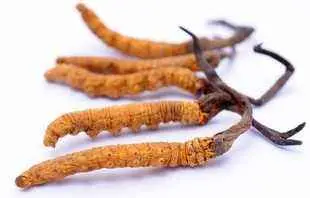
Chinese caterpillar fungus
A tonic herb that tonifies the kidney and lung, stops bleeding and resolves phlegm.
The dried composite body of the fungus Cordyceps sinensis (Berk.) Sacc. (family Clavicipitaceae) parasitizing the larvae of moths of the family Hepialidae, consisting of the stroma and the larval cadaver.
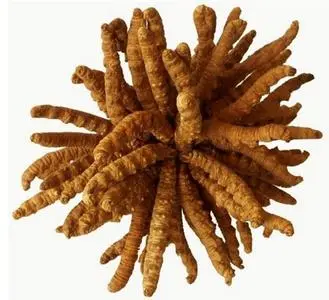
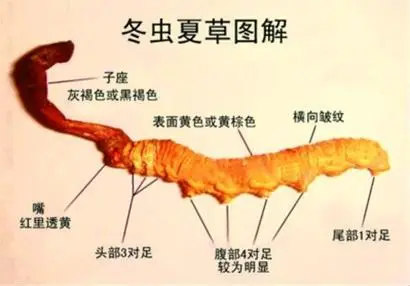
The product consists of the insect body joined to the fungal stroma growing from the insect's head. The body resembles a silkworm, 3–5 cm long, 0.3–0.8 cm in diameter; surface deep yellow to yellow-brown, with 20–30 rings, finer near the head. Head reddish-brown; 8 pairs of legs, of which the 4 middle pairs are more conspicuous; brittle, easily broken, fracture slightly flat and pale yellowish-white. The stroma is slenderly cylindrical, 4–7 cm long, about 0.3 cm in diameter; surface deep brown to brownish-black, with fine longitudinal wrinkles, slightly swollen above. Texture flexible, fracture nearly white. Odor slightly fishy, taste slightly bitter.
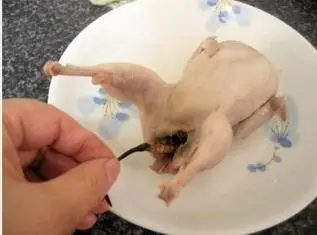
Legend tells of Empress Wu Zetian, who in her later years suffered from chronic cough and weakness. A chef from her kitchen prepared duck stewed with Chinese caterpillar fungus, but the Empress mistook the dark fungus for poison and had him imprisoned. Another chef then created 'caterpillar fungus whole duck' by stuffing the fungus inside the duck so it was invisible. After eating it regularly, the Empress recovered, and the first chef was released.
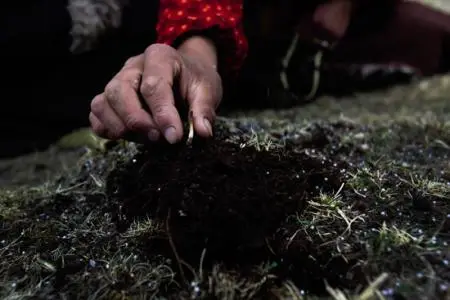
9 cultivation notes and 23 authentication articles exist for this herb. They are long-form field material and are published in Chinese only.
Chinese version · All herbs