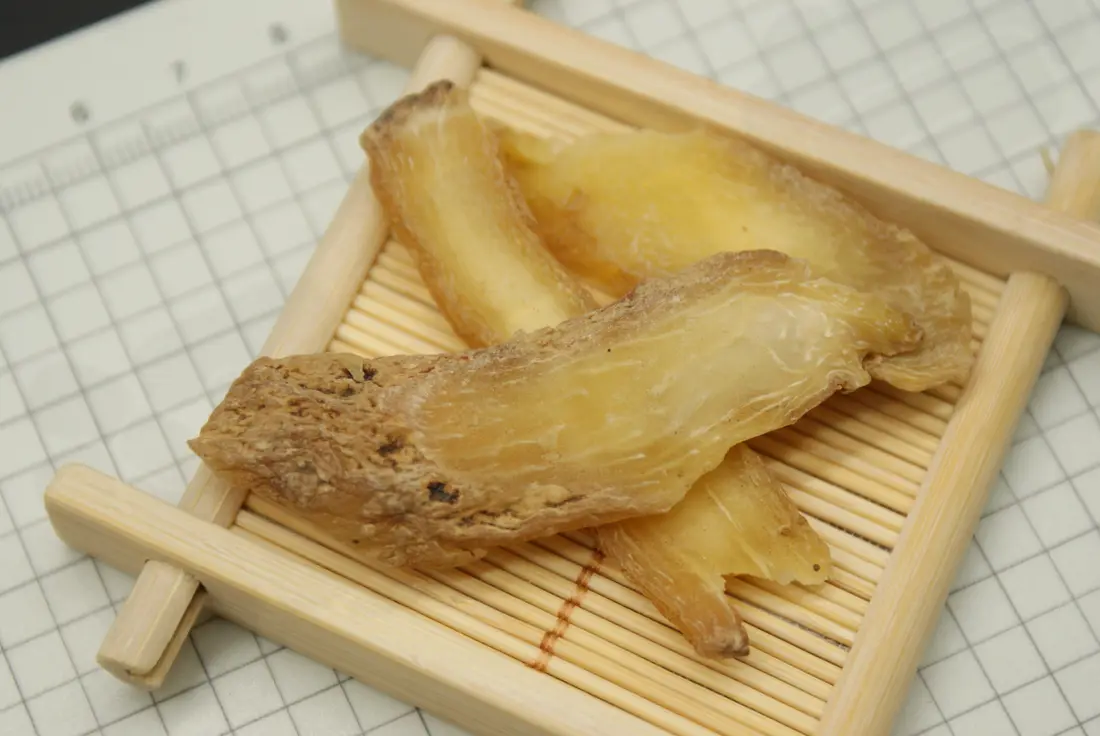
Polygonatum rhizome (Huang Jing)
Polygonatum rhizome is a sweet, neutral tonic used to supplement qi and nourish yin, strengthen the spleen, moisten the lung and benefit the kidney.
The dried rhizome of Polygonatum kingianum Coll. et Hemsl., Polygonatum sibiricum Red. or Polygonatum cyrtonema Hua (family Liliaceae).
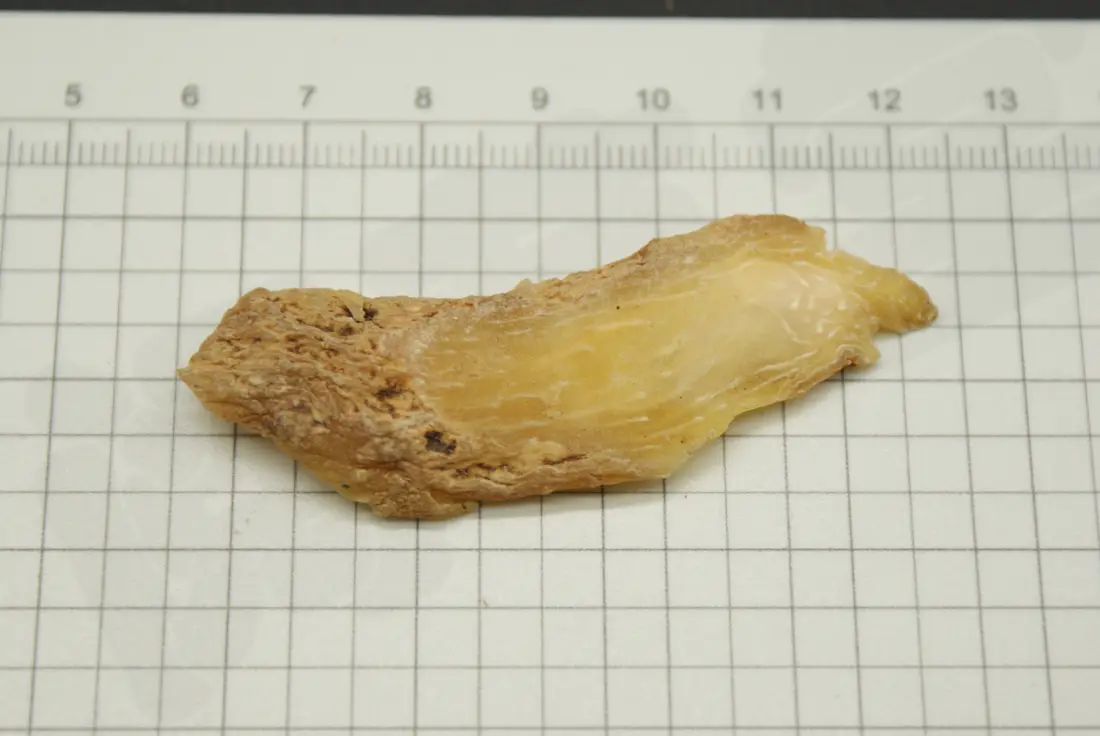
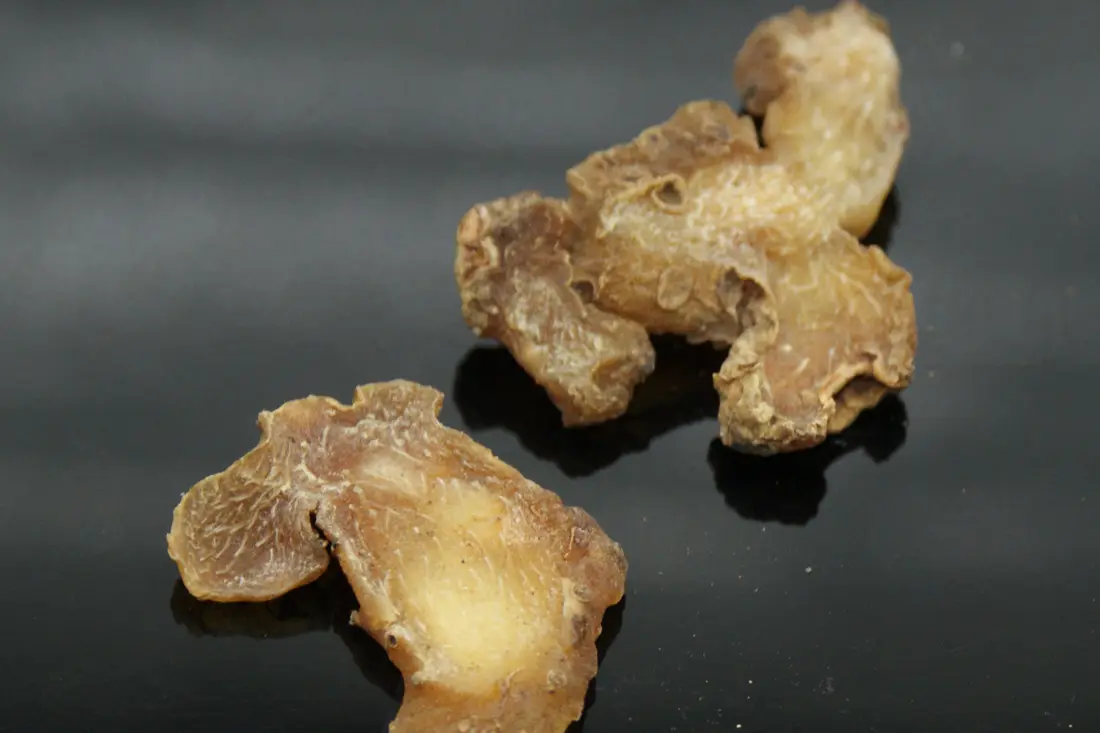
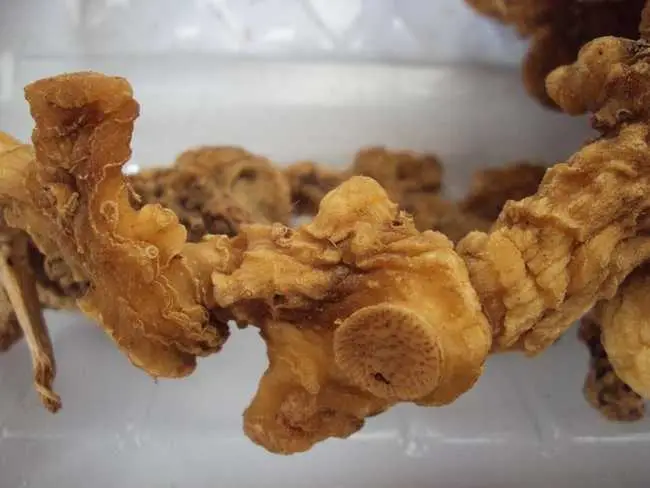
Large Huang Jing: fleshy nodular blocks, nodules up to over 10 cm long, 3–6 cm wide, 2–3 cm thick. Surface pale yellow to yellow-brown, with rings, wrinkles and rootlet scars; stem scars on the upper side of nodules are disc-shaped, concave around the circumference and prominent in the center. Hard and tough, not easily broken; fracture horny, pale yellow to yellow-brown. Slight odor; sweet taste, mucilaginous on chewing. Chicken-head Huang Jing: nodular, curved columnar, 3–10 cm long, 0.5–1.5 cm in diameter. Nodules 2–4 cm long, slightly conical, often branched. Surface yellowish-white or grayish-yellow, semi-translucent, with longitudinal wrinkles; stem scars circular, 5–8 mm in diameter. Ginger-shaped Huang Jing: long strip-like nodular blocks of varying length, often several blocks connected. Surface grayish-yellow or yellow-brown, rough; upper side of nodules has protruding disc-shaped stem scars, 0.8–1.5 cm in diameter. Bitter-tasting material must not be used medicinally.
According to legend, Huang Jing was named because it absorbs the essence of earth and heaven, and was regarded by Daoists as a superior herb for longevity. The <i>Shenxian Zhicao Jing</i> says it broadens the middle and supplements qi, making the five viscera harmonious, muscles full, marrow strong, and hair black again. In the Sui dynasty, Yang Gong's method of taking Huang Jing called it the essence of the numinous mushroom. A tale tells of Huang Jing, a young man whose wife was ill; guided by the immortal Ge Xuan, he found a cave on Mount Tiantai where divine water flowed and Huang Jing grew. After defeating the heavenly soldiers, the villagers gathered Huang Jing and were cured. The cave was later named Huang Jing Cave in his honor. Another legend says the monk Wuxia lived in seclusion on Mount Jiuhua for over 100 years, surviving on Huang Jing and wild fruits, and wrote 81 blood-written sutras.
10 cultivation notes and 9 authentication articles exist for this herb. They are long-form field material and are published in Chinese only.
Chinese version · All herbs