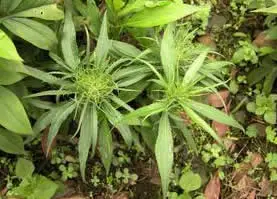
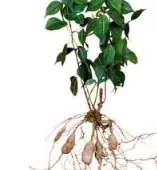
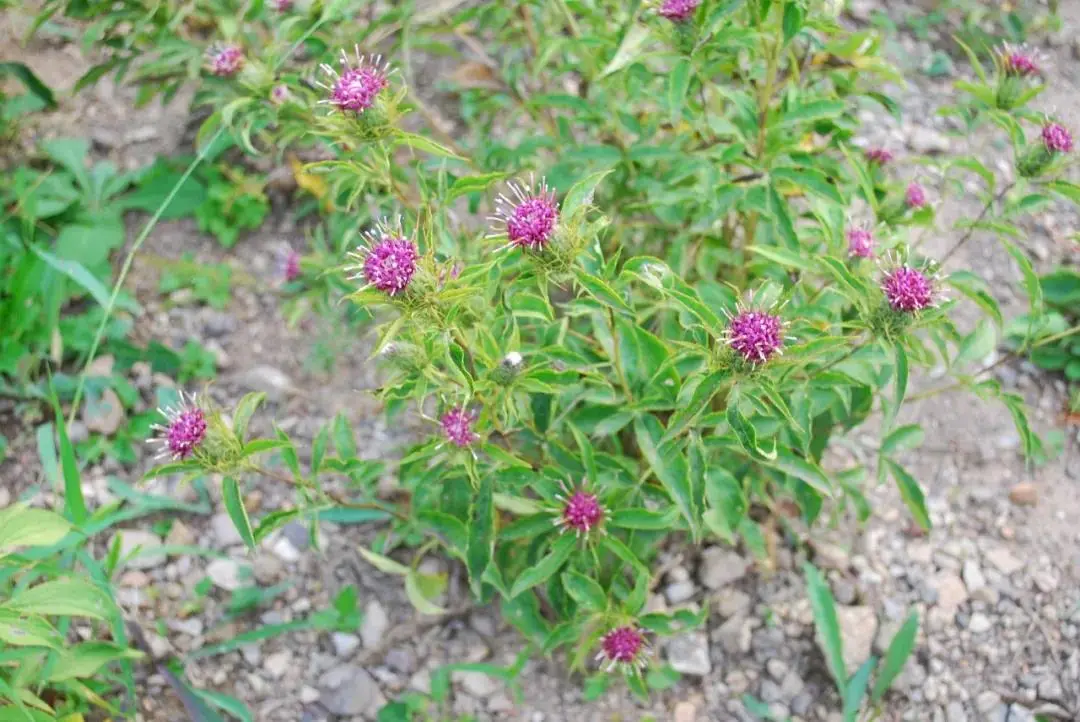
Atractylodes macrocephala rhizome (Bai Zhu)Materia Medica

Atractylodes macrocephala rhizome (Bai Zhu)

Bai Zhu
ATRACTYLODIS MACROCEPHALAE RHIZOMA
Nature and flavorBitter, sweet, warm. Enters the spleen and stomach meridians.
Meridians enteredSpleen, Stomach
Dosage6–12 g
Reference market price¥13 / kgBozhou market · spec common grade · 安徽 · snapshot 2026-11-21

Bai Zhu is a key herb in traditional Chinese medicine for strengthening the spleen, drying dampness, and calming the fetus.

Source药物来源

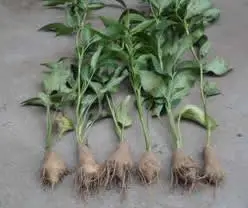
The dried rhizome of Atractylodes macrocephala Koidz. (family Asteraceae).

Identification性状特征

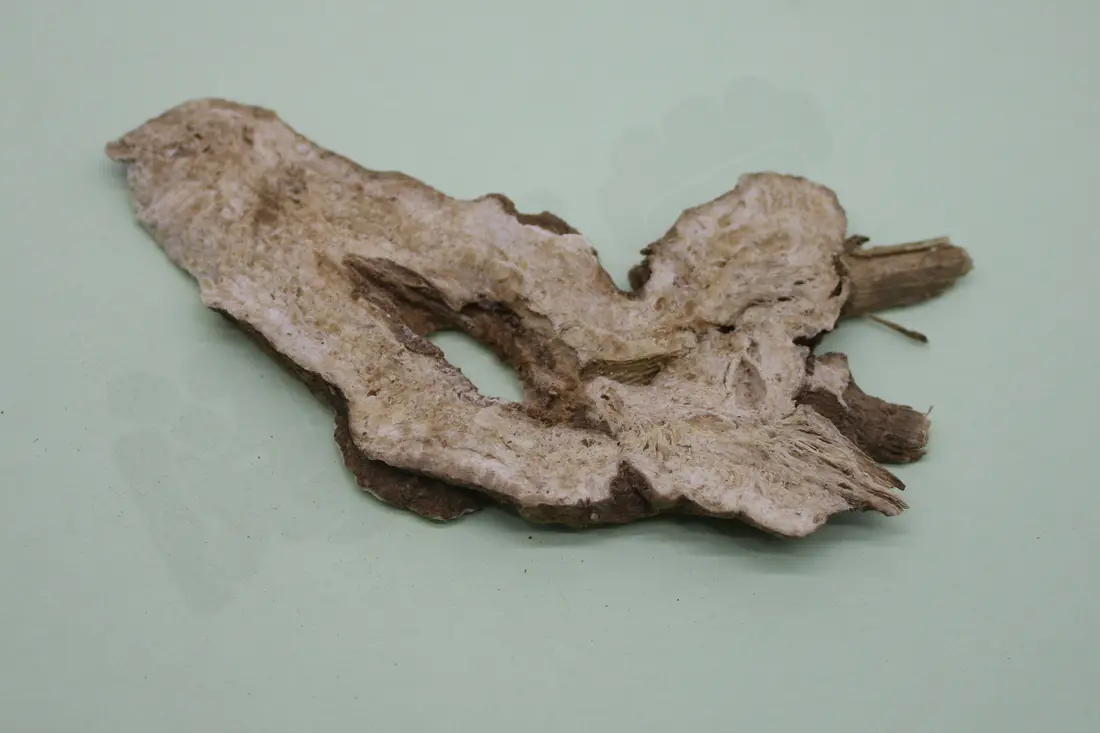
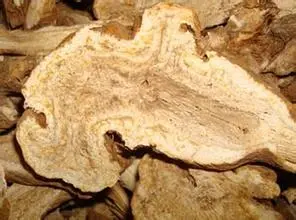
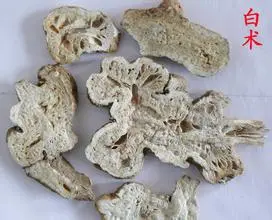
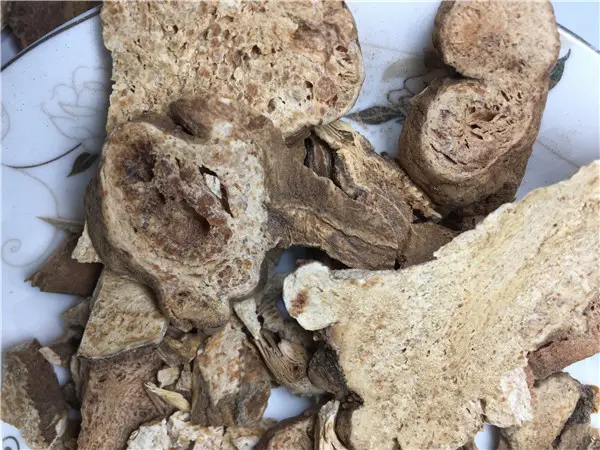
Irregular, thick, lumpy rhizome, 3–13 cm long, 1.5–7 cm in diameter. Surface grayish-yellow or grayish-brown, with nodular protrusions, discontinuous longitudinal wrinkles and grooves, and rootlet scars; apex with residual stem base and bud scars. Texture hard and not easily broken; fracture uneven, yellow-white to pale brown, with scattered brownish-yellow dotted oil cavities. When dried by heating, the fracture is horny, darker, or fissured. Odor delicate and aromatic; taste sweet and slightly pungent; chewed with a slight mucilaginous feel.

Properties and actions性味与功效
Actions
Strengthen the spleen and tonify qi · Dry dampness and promote urination · Stop sweating · Calm the fetus
Indications
Used for spleen deficiency with poor appetite, abdominal distension and diarrhea, phlegm-fluid dizziness and palpitations, edema, spontaneous sweating, and restless fetus.
Dosage
6–12 g.
Caution
Use with caution in cases of yin deficiency with heat or excessive heat; may cause dry mouth. For patients with deficiency-cold of the spleen and stomach, use under professional guidance.
Processing炮制
Bai Zhu (raw)
Remove impurities, wash, soften thoroughly, cut into thick slices, and dry. Sift out fragments.
Earth-fried Bai Zhu
First, heat earth powder in a preheated frying container over medium heat until it flows freely. Add clean Bai Zhu slices and fry until the surface is evenly coated with earth powder. Remove, sift out the earth powder, and cool. For every 100 kg of clean Bai Zhu slices, use 25 kg of stove-center earth.
Bran-fried Bai Zhu
Heat a frying container, scatter in wheat bran, and heat over medium heat. When smoke appears, add clean Bai Zhu slices and stir constantly until the herb turns yellowish-brown. Remove and sift out the bran. For every 100 kg of clean Bai Zhu slices, use 10 kg of wheat bran.
Modern research现代药理
Hepatoprotective and choleretic effects
Bai Zhu has liver-protective and choleretic effects, significantly inhibits experimental gastric ulcer and stress ulcer, and markedly regulates intestinal motility.
Diuretic effect
Bai Zhu has a significant and lasting diuretic effect.
Immune enhancement
Bai Zhu can enhance the phagocytic function of the reticuloendothelial system, promote cellular immune function, increase serum IgG levels, and raise white blood cell count in leukopenia.
Antitumor effect
The volatile oil of Bai Zhu has obvious antitumor effects, enhancing the antigenicity of cancer cells and specific active immunity of antibodies.
Cardiovascular and respiratory effects
Bai Zhu inhibits the heart, dilates vascular smooth muscle to lower blood pressure, and has sedative and respiratory-stimulating effects.
Hypoglycemic and antiplatelet effects
Bai Zhu can lower blood sugar and significantly inhibit platelet reduction.
Antibacterial and anti-inflammatory effects
Bai Zhu inhibits various bacteria to varying degrees. Its extract has anti-inflammatory and cooling effects.
Uterine relaxant effect
Bai Zhu significantly inhibits uterine smooth muscle in rabbits, guinea pigs, mice, and rats.
Classical records历代本草
The Shennong Bencao Jing records Bai Zhu as sweet and warm, non-toxic, treating wind-dampness arthralgia, dead muscle, and jaundice, stopping sweating, removing heat, and promoting digestion. The Bencao Mengquan notes its use for spleen deficiency and dampness, and compares it with Cang Zhu.
《神农本草经》:气味甘温,无毒,治风寒湿痹、死肌、痉疸,止汗、除热、消食。 《本草蒙筌》:味苦、甘、辛,气温。味厚气,可升可降,阳中阴也。无毒。入心脾胃三焦四经,须仗防风地榆引使。除湿益燥,缓脾生津。驱胃脘食积痰涎,消脐腹水肿胀满。止呕逆霍乱,补劳倦内伤。手足懒举贪眠,多服益善;饮食怕进发热,倍用正宜。间发痎音皆疟殊功,两日一发者。卒暴注泻立效。水泻不禁者。或四制研散敛汗,出东垣方。或单味粥丸调脾。出丹溪方。奔豚积忌煎,因浑常闭气;痈疽毒禁用,为多生脓。治皮毛间风,利腰脐间血。故止而皮毛,中而心胸,下而腰脐。在气主气,在血主血。又无汗则发,有汗则止,与黄芪同功。同枳实为消痞方,助黄芩乃安胎剂。哮喘误服,壅窒难当。又种色苍,乃名苍术。亦防风地榆使引,入足经阳明太阴。消痰结窠囊,去胸中窄狭。治身面大风,风眩头痛甚捷;辟山岚瘴气,瘟疫时气尤灵。暖胃安胎,宽中进食。驱痃癖气块,止心腹胀疼。因气辛烈窜冲,发汗除上焦湿,其功最优。若补中焦除湿,而力甚不及于白也。仍与黄柏同煎,即二妙散。健行下焦湿热。 谟按:术虽二种,补脾燥湿,功用皆同,但白者补性多,且有敛汗之效;苍者治性多,惟专发汗之能。凡入剂中,不可代用。然白术既燥,《本经》又谓生津何也?盖脾恶湿,脾湿既胜,则气不得施化,津何由生?故曰膀胱津液之府,气化出焉。今用白术以燥其湿,则气得周流,而津液亦随气化而生矣。他如茯苓亦系渗湿之药,谓之能生津者,义与此同。 《开宝本草》:味苦、甘,温,无毒。主大风在身面,风眩头痛,目泪出,消痰水,逐皮间风水结肿,除心下急满,及霍乱、吐下水止,利腰脐间血,益津液,暖胃,消谷,嗜食。 《名医别录》:味甘,无毒。主治大风在身面,风眩头痛,目泪出,消痰水,逐皮间风水结肿,除心下急满,及霍乱,吐下不止,利腰脐间血,益津液,暖胃,消谷,嗜食。 《药性论》:君,味甘,辛,无毒。能主大风b痹,多年气痢,心腹胀痛,破消宿食,开胃,去痰涎,除寒热,止下泄。主面光悦,驻颜,去黑。治水肿胀满,吐呕逆,腹内冷痛,吐泻不住,及胃气虚冷痢。 《药性赋》:味甘,气温,无毒。可升可降,阳也。其用有四:利水道,有除湿之功;强脾胃,有进食之效,佐黄芩有安胎之能,君枳实有消痞之妙。
Culinary use民间药膳
Eight-Treasure Rice
6 g each of Euryale seed, Chinese yam, lotus seed, Poria, Codonopsis, Bai Zhu, Coix seed, and white hyacinth bean; 150 g glutinous rice; appropriate amount of rock sugar.
First decoct Codonopsis, Bai Zhu, and Poria to obtain a liquid. Wash glutinous rice. Grind Euryale seed, yam, lotus seed, Poria, Coix seed, and hyacinth bean into coarse powder and mix with glutinous rice. Add the decoction and rock sugar, steam until cooked. Alternatively, cook directly with water. Serve as a staple food.
Tonifies qi and strengthens the spleen, promotes health and longevity. Suitable for those with spleen deficiency, weakness, poor appetite, loose stools, and fatigue.
Cooked Medicinal Beans
24 g each of prepared Polygonum multiflorum and Goji berry; 12 g each of raw Rehmannia, prepared Rehmannia, Angelica sinensis, fried Eucommia, and Achyranthes; 3 g each of chrysanthemum, licorice, Ligusticum chuanxiong, tangerine peel, Bai Zhu, white peony, and Moutan cortex; 6 g Astragalus; 18 g salt; 500 g black beans.
Boil the above herbs with black beans until thoroughly cooked, then sun-dry. Remove the herbs and eat the black beans as a snack. About 30–50 g per day.
Darkens hair and beard, strengthens teeth, and brightens eyes. Suitable for blood deficiency with white hair, dizziness, palpitations, and pale complexion, lips, and nails.
Carp Soup
1 carp (about 500 g), 15 g Bai Zhu, 9 g each of ginger, white peony, and Angelica sinensis, 12 g Poria.
Remove scales and intestines from carp, wash, and set aside. Chop the other five herbs into soybean-sized pieces, decoct in water to obtain a liquid, strain, and cook the fish in the liquid. When fish is cooked, add seasonings. Eat fish and drink soup, divided into 3–5 servings within one day.
Strengthens the spleen and nourishes blood, promotes urination and reduces weight. Suitable for obese women with difficult urination, dizziness, and edema of the limbs.
Ten-Ingredient Great Tonifying Soup
10 g each of ginseng, Astragalus, Bai Zhu, Poria, prepared Rehmannia, and white peony; 5 g each of Angelica sinensis and cinnamon; 3 g each of Ligusticum chuanxiong and licorice; 12 jujubes; 20 g ginger; 250 g each of cuttlefish, fattened hen, old duck, cleaned pork tripe, and pork knuckle; 500 g pork ribs; 50 g each of winter bamboo shoots, mushrooms, peanuts, and scallions; appropriate seasonings.
Place herbs in a gauze bag and tie tightly. Wash duck, chicken, and pork tripe; wash ribs and chop into small pieces; crush ginger; cut winter bamboo shoots into pieces; wash mushrooms and remove impurities and woody parts. Put all ingredients in a pot, add water, bring to a boil over high heat, then simmer over low heat. Add rice wine, Sichuan pepper, salt, and other seasonings. When meats are tender, remove, cut into strips, and return to the soup. Remove herb bag. Bring to a boil, add MSG. Eat meat and drink soup, one small bowl each morning and evening. After finishing, prepare again after 5 days.
Warms and tonifies qi and blood.
Sleep-Promoting Nourishing Soup
500 g each of black-boned chicken and duck meat; 20 g each of Spatholobus stem, Agrimonia, and Polygonum multiflorum vine; 12 g each of Cibotium, Dodder seed, Eclipta, Mulberry mistletoe, and Ligustrum; 8 g each of Bai Zhu, Albizia bark, raw Rehmannia, prepared Rehmannia, and Dipsacus; 5 g ginseng; 2 g MSG; 4 g salt; 10 g each of ginger and scallion.
Wash the 14 herbs, decoct in water, strain, and set aside the liquid. Clean chicken and duck, blanch in boiling water, and cut into uniform pieces. Add water to a pot, bring chicken and duck to a boil. Cut scallion into sections, ginger into thin slices, and add to the pot with the herbal liquid. Simmer over low heat for 2 hours, remove ginger and scallion, add MSG and salt to taste. Serve.
Calms the spirit, tonifies qi, and strengthens bones and muscles. Very suitable for patients with dual deficiency of qi and blood, frequent insomnia, and malnutrition.
Spleen-Benefiting Cake
30 g Bai Zhu, 250 g red dates, 15 g chicken gizzard lining, 6 g dried ginger, 500 g flour, appropriate salt.
Place Bai Zhu and dried ginger in a gauze bag, tie tightly, put in a pot with red dates, add 1000 ml water, bring to a boil over high heat, then simmer over low heat for 1 hour. Remove herb bag, remove date pits, and mash dates into a paste. Grind chicken gizzard lining into fine powder, mix with flour, add date paste, flour, and a little salt, knead into dough. Divide dough into small pieces and make thin cakes. Heat vegetable oil in a pan and fry cakes until cooked. Eat on an empty stomach.
Strengthens the spleen, tonifies qi, warms the middle, dispels cold, and promotes appetite and digestion.
Ten-Ingredient Fish Soup
Ginseng, cinnamon, Ligusticum chuanxiong, prepared Rehmannia, Poria, Bai Zhu, licorice, Astragalus, Angelica sinensis, white peony.
1. Wash ingredients; 2. Heat sesame oil over high heat, add old ginger slices, then turn to low heat and fry until brown but not burnt; 3. Add fish, ten-ingredient packet, and postpartum water, bring to a boil over high heat, then simmer over low heat, cover and cook for 10 minutes, turn off heat and enjoy.
120 g fish, 5 slices of old ginger with skin, one ten-ingredient packet (1 slice each of ginseng, cinnamon, Ligusticum chuanxiong, prepared Rehmannia, Poria, Bai Zhu, licorice, Astragalus, Angelica sinensis, white peony), 45 ml sesame oil, 350 ml postpartum water.
Audio and video语音与视频
Narration · Chinese · 7:34
Latin name · pronunciation
Narration and video are shared by all language versions and are in Chinese; the images and footage themselves are language-independent.
Photographs药材图片
Atractylodes macrocephala rhizome (Bai Zhu)
Cultivation and authentication栽培与鉴别

19 cultivation notes and 10 authentication articles exist for this herb. They are long-form field material and are published in Chinese only.

Read them in Chinese →

Compiled from public Chinese materia medica sources for study and reference. Not medical advice.
Chinese version · All herbs