Ginseng (Ren Shen)Materia Medica

Ginseng (Ren Shen)

Ren Shen
GINSENG RADIX ET RHIZOMA
Nature and flavorSweet, slightly bitter; slightly warm. Enters the spleen, lung, heart, and kidney meridians.
Meridians enteredSpleen, Lung, Heart, Kidney
Dosage3–9 g, decocted separately and mixed with other decoctions; or ground into powder, 2 g per dose, twice daily.

Ginseng, the premier qi-tonifying herb, is renowned for powerfully replenishing vital qi and restoring the pulse.

Source药物来源

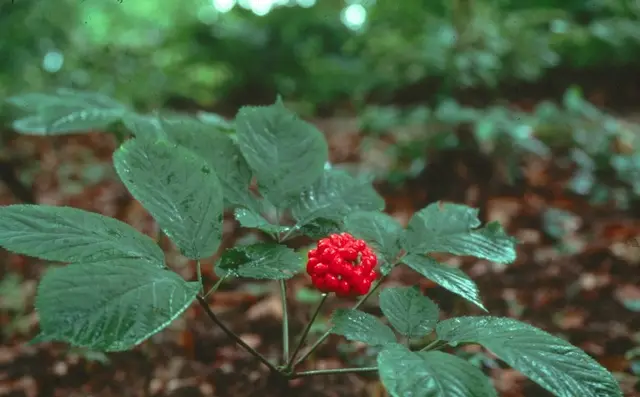
The dried root and rhizome of Panax ginseng C.A.Mey. (Araliaceae).

Identification性状特征

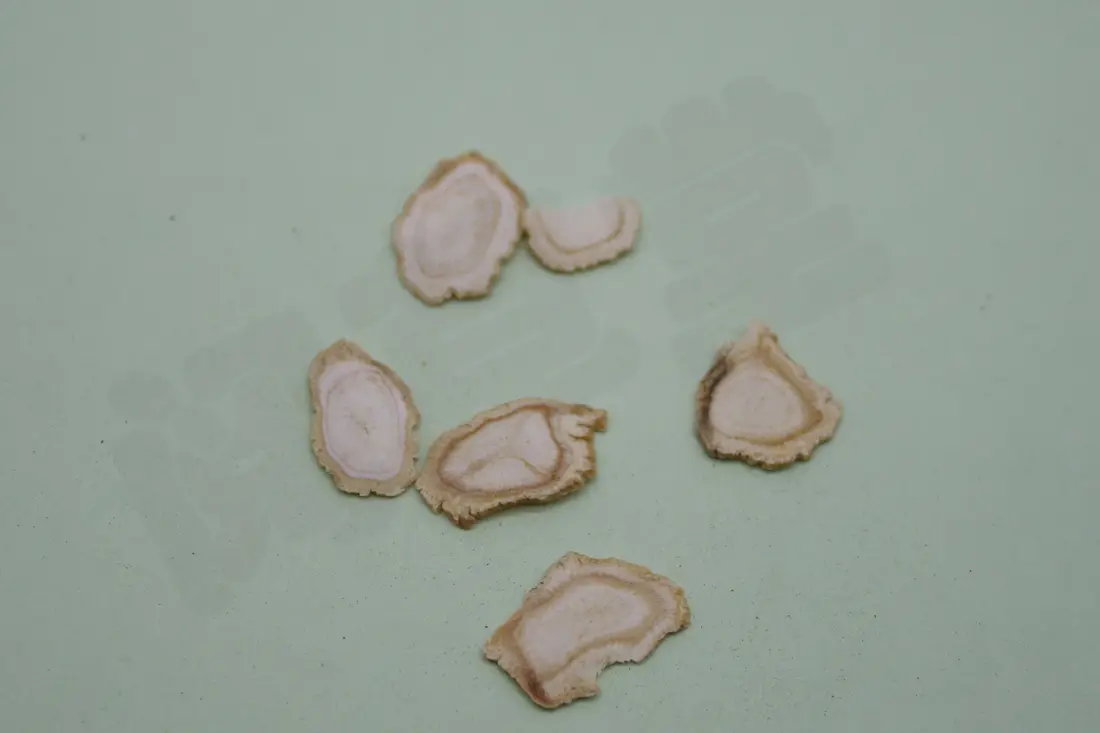
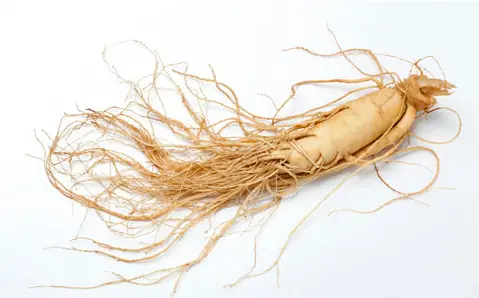
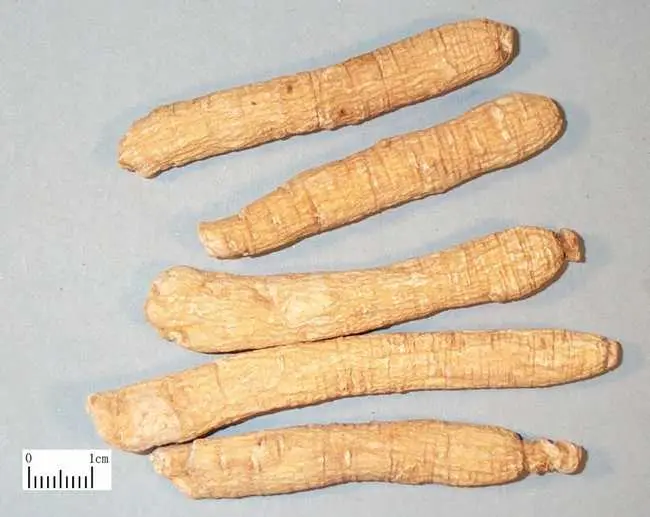
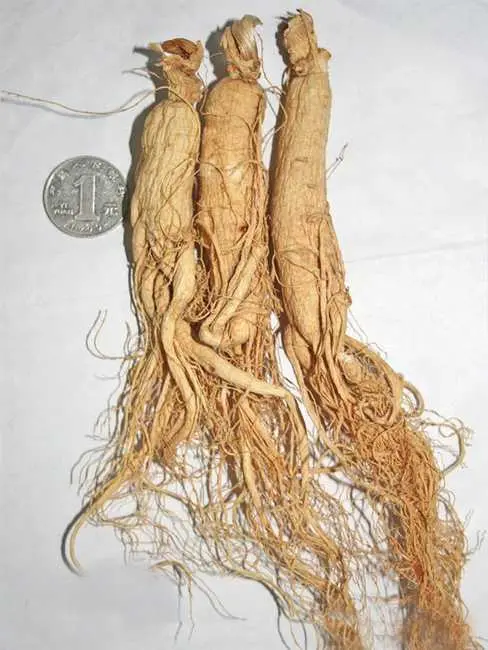
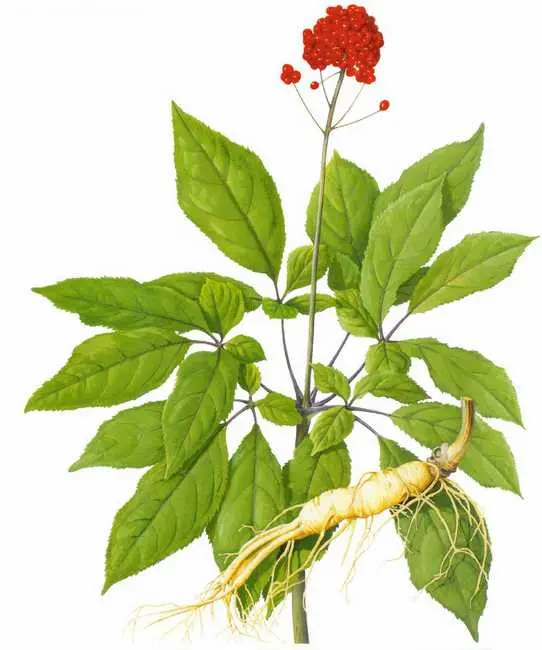
Main root spindle-shaped or cylindrical, 3–15 cm long, 1–2 cm in diameter. Surface grayish-yellow, with sparse, shallow, discontinuous coarse transverse wrinkles and distinct longitudinal wrinkles on the upper part or whole; lower part with 2–3 branch roots bearing numerous slender fibrous roots, often with inconspicuous small warty protrusions. Rhizome (rhizoma) 1–4 cm long, 0.3–1.5 cm in diameter, mostly twisted and curved, with adventitious roots (ding) and sparse depressed stem scars (lu wan). Texture relatively hard; fracture pale yellowish-white, powdery, cambium ring brownish-yellow, cortex with yellowish-brown dotted resin canals and radial clefts. Odor peculiar; taste slightly bitter and sweet. Or main root nearly as long as or shorter than rhizome, cylindrical, rhomboid, or human-shaped, 1–6 cm long. Surface grayish-yellow with longitudinal wrinkles, rings on upper or middle-lower part; branch roots mostly 2–3, fibrous roots few, slender, clear and not tangled, with obvious warty protrusions. Rhizome slender, a few thick and short, with sparse or dense deep stem scars on middle-upper part. Adventitious roots slender, mostly pendulous.

Properties and actions性味与功效
Actions
Greatly tonify vital qi, restore the pulse and secure collapse · Tonify the spleen and benefit the lung · Generate fluid and nourish blood · Calm the spirit and improve intelligence
Indications
Used for body weakness verging on collapse, cold limbs and faint pulse, spleen deficiency with poor appetite, lung deficiency with wheezing and cough, fluid depletion with thirst, internal heat with wasting-thirst, qi and blood deficiency, chronic illness with emaciation, palpitations and insomnia, impotence and cold uterus.
Dosage
3–9 g, decocted separately and taken mixed with other decoctions; or ground into powder and swallowed, 2 g per dose, twice daily.
Caution
Contraindicated in excess conditions with heat or in cases of qi stagnation and fire hyperactivity; use with caution in deficiency-cold of the spleen and stomach. Do not use with Veratrum (Li Lu), and avoid simultaneous use with Wu Ling Zhi (Trogopterus dung).
Processing炮制
Sun-dried ginseng (Sheng Shai Shen)
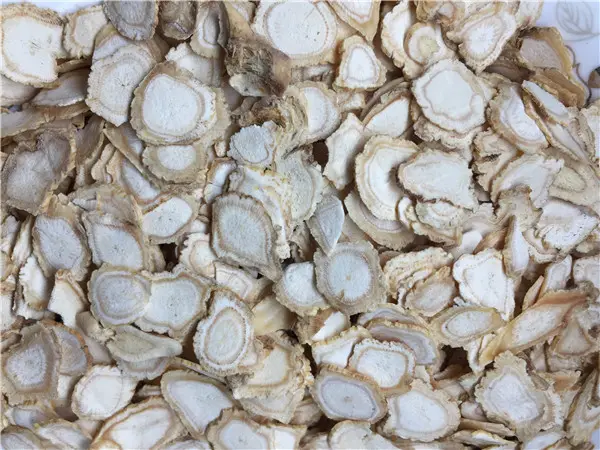
Remove impurities, wash, soften by moistening, slice thinly, and dry. Or pulverize or crush before use.
Red ginseng (Hong Shen)
Wash, steam, and dry. When used, soften by steaming or slight soaking and roasting, slice thinly, and dry. Or directly crush or grind into powder.
Modern research现代药理
Cognitive enhancement
Ginseng improves learning and memory. Total ginsenosides have an excitatory effect on the central nervous system at low doses and an inhibitory effect at high doses.
Receptor effects
Ginseng preparations have M-receptor-like effects and also influence α- and β-receptors and neurotransmitters. Ginsenosides alleviate morphine addiction.
Endocrine and diuretic effects
Ginseng stimulates the pituitary-adrenal cortex and pituitary-gonadal systems; has a diuretic effect; increases insulin synthesis; short-term high doses enhance thyroid function in rabbits, while long-term use shows inhibition.
Metabolic regulation
Ginseng lowers blood sugar, promotes protein and liver cell lipid synthesis, and regulates energy metabolism.
Adaptogenic effect
Ginseng enhances adaptability, with anti-fatigue and anti-stress effects.
Immune function
Ginseng promotes immune function.
Antitumor effect
Ginseng has antitumor effects.
Cardiovascular effects
Ginseng strengthens myocardial contractility, showing initial excitation followed by inhibition in various animal hearts (excitation at low doses, inhibition at high doses); lowers blood pressure and has anti-shock effects; improves symptoms of coronary heart disease; and inhibits ATPase activity on myocardial cell membranes.
Myocardial protection
Ginsenosides protect against myocardial ischemia-reperfusion injury during open-heart surgery, have anti-free radical damage effects on the heart, and have anti-atherosclerotic and anti-diabetic arteriosclerosis effects.
Hematological effects
Ginseng inhibits platelet aggregation, enhances serum in major organs of normal animals, effectively inhibits serotonin- and endotoxin-induced reduction in tissue blood flow; has anti-hemolytic and anti-thrombotic effects; increases red blood cells, white blood cells, and hemoglobin; and enhances hematopoietic function.
Anti-aging effect
Ginseng has obvious anti-aging effects.
Renal and antidiuretic effects
Ginseng inhibits Na+, K+-ATPase, has an antidiuretic effect, and provides some protection against kidney damage and anti-mutagenic effects.
Gastrointestinal and hepatoprotective effects
Ginseng protects against gastric mucosal damage, promotes spontaneous intestinal activity, inhibits experimental gastric ulcers, and has hepatoprotective and antiviral effects.
Skeletal muscle effects
Ginsenosides synergistically increase creatine kinase isoenzyme activity induced by strenuous exercise, promote skeletal muscle growth and differentiation, increase acetylcholinesterase activity in muscle cells, and have some effect on calcium channel antagonist receptors on skeletal muscle cell membranes.
Classical records历代本草
The Shennong Bencao Jing records ginseng as sweet and slightly cold, tonifying the five viscera, calming the spirit, and brightening the eyes. The Bencao Gangmu states it treats all deficiency syndromes in men and women.
《神农本草经》:味甘,微寒。主补五脏,安精神,定魂魄,止惊悸,除邪气,明目,开心益智。 《本草纲目》:治男妇一切虚证,发热自汗,眩晕头痛,反胃吐食,阂疟,滑泻久痢,小便频数淋沥,劳倦内伤,中风中暑,痿痹,吐血、嗽血、下血、血淋、血崩、胎前,产后诸病。 《本草蒙筌》:味甘,气温、微寒。气味俱轻,升也,阳也,阴中微阴。无毒。反藜芦,恶卤咸,畏五灵脂。诸虚兼调,五脏俱补。肥白人任多服,苍黑人宜少投。丹溪云:肥白气虚,苍黑气实,然考医案中证虚色苍黑者,亦每多用。此云其常,犹当应其变也。健脉理中,生津止渴。开心益志,明目轻身。却惊悸,除梦邪,消胸胁逆满;养精神,安魂魄,苏心腹鼓疼。肠胃积冷温平,霍乱吐泻止息。定喘嗽,通畅血脉;泻阴火,阴虚生内热尔。一说:阳气下陷阴分,而生热也。丹溪言:补阴火者,一说:阳气下陷阴分,而生热也。丹溪言:补阴火者,非补助火邪。正谓虚火可补,龙火反治,补中有泻意也。今恐读者不能解悟,认假为真,故直书,与下文相贯,使毋惑云。滋补元阳。洁古云:补上焦元气,而泻脾、肺、胃中火邪,升麻为引;补下焦元气,而泻肾中火邪,茯苓为使。东垣曰:人参、黄芪、甘草三味,退虚火圣药也。丹溪治外感挟内伤证,但气虚热甚者,必与黄芪同用,托住正气。仍恐性缓,不能速达,少加附子。资其健悍之性,以助成功。是知火与元阳,热不两立。一胜一负,辄用匡扶。经曰:邪所凑,正必虚是尔。芦发吐痰沫善驱,味总甘和缓不峻。虚羸音雷老弱,膈壅煎宜。《衍义》亦云:难服藜芦,用此可代。 谟按:《集要》注曰:肺受寒邪,短气少气,虚喘宜用。肺受火邪,喘嗽及阴虚火动劳嗽、吐血勿用。盖人参入手太阴而能补火,故肺受火邪者忌之。王氏此言,乃述海藏肺寒用人参,肺热用沙参。及后好事者,假名东垣,辑成括曰:肺寒则可服,肺热还伤肺。东垣既云退虚火圣药,岂复语此,故知后人假名也。踵其遗辙,亦引寒热。对云:安知寒热之中,犹有虚实之别也。肺中实热,忌之固宜。肺中虚热,用之何害!况丹溪云:虚火可补,参术之类是也。即虚火也。在人身,虽指下焦相火为云,然而上下同法。肺中虚火,亦相侔焉。此火非水可扑,每当浓阴骤雨之时,火焰愈炽,或击碎木石,或烧毁房屋,燔灼酷烈之势,诚不可抗。太阳一照,火自消弥。可见人身虚火,无问上中下三焦之殊。但证有见于外,必非寒凉助水之药可制,务资此甘温补阳之剂补足元阳,则火自退尔。补中兼泻,泻中有补,正经所谓甘温能除大热是也。矧斯议者,匪特丹溪独知,如前洁古、东垣俱谓能泻火者,亦因洞烛此理,辄言之真切,用之的确如山石而不移焉。王氏弗知参能泻火之邪,反胃补火为忌。惟引寒热,不辨实虚,妄著示人,深可哂也。大抵人参补虚,虚寒可补,虚热亦可补;气虚宜用,血虚亦宜用。虽阴虚火动、劳嗽吐血、病久元气虚甚者,但恐不能抵当其补,非谓不可补尔。苟以王氏之言为拘,则前王氏生者,亦何屡用而不忌乎?如张仲景治亡血脉虚,非不知火动也,用
Folklore本草传说

Ginseng is named for its human-like shape and its power to participate in the work of heaven and earth. Legend tells of a boy in a red bellyband who helped a young monk with his chores, only to be revealed as a ginseng spirit. When a greedy old monk tried to capture and boil him, the boy flew away, and the remaining ginseng fled to the Changbai Mountains, explaining why wild ginseng is now scarce in central China but abundant in the northeast.

Culinary use民间药膳
Eight Immortals Longevity Cake
Astragalus 30 g, ginseng 30 g, Poria 30 g, Chinese yam 30 g, lotus seed 30 g, Gordon euryale seed 30 g, Coix seed 30 g, white hyacinth bean 30 g, glutinous rice 500 g.
Stir-fry the above until yellow, grind finely, add 150 g white sugar, and form into cakes. Eat as desired.
Tonifies and nourishes the spleen and stomach, promotes longevity.
Longevity and Root-Strengthening Wine
Goji berry 60 g, Asparagus tuber 60 g, Schisandra fruit 60 g, Ophiopogon tuber 60 g, Chinese yam 60 g, ginseng 60 g, raw rehmannia 60 g, prepared rehmannia 60 g, white rice wine 3000 ml.
Slice ginseng, yam, raw and prepared rehmannia; clean goji and schisandra; halve Asparagus and Ophiopogon. Place all herbs in a silk bag, tie tightly; put the bag in a clean jar, pour in the wine, seal the jar with wet cotton paper and a lid. Place the jar in a pot, heat over water for about 1 hour, remove, cool, and bury in the ground to remove fire toxicity. After 3–5 days, unearth, open, remove the herb bag, filter through fine gauze, store in a clean bottle, and let stand for 7 days before drinking. Take once each morning and evening, 50–100 ml depending on tolerance.
Darkens hair and beard, nourishes the heart and spirit, promotes longevity.
Deficiency-Supplementing Vital Qi Porridge
Honey-fried astragalus 30 g, ginseng 3 g (or codonopsis 15 g), polished rice 100 g, a little white sugar.
Slice astragalus and ginseng (or codonopsis), soak in cold water for 30 minutes, boil in a clay pot, then simmer to a thick decoction. Strain, add water again, and decoct a second time; strain. Combine the two decoctions, divide into two portions, and cook porridge with rice and appropriate water each morning and evening. When the porridge is ready, add a little white sugar and simmer briefly. Ginseng can also be powdered and added to the astragalus porridge. Take one dose daily, for 3–5 days as a course, with a 2–3 day interval before the next course.
Tonifies vital qi, treats deficiency, and strengthens the spleen and stomach.
Ginseng and Walnut Soup
Ginseng 6 g, walnut meat 15 g, fresh ginger 5 slices, jujube 7 pieces.
Mince ginseng and walnut meat (shelled but with skin), add water along with ginger and jujube, decoct twice, mix the two decoctions evenly, and take in 2–3 divided doses.
Tonifies the lung and kidney, relieves wheezing and cough.
Ten Complete Great Tonifying Decoction
Ginseng 10 g, astragalus 10 g, atractylodes 10 g, poria 10 g, prepared rehmannia 10 g, white peony 10 g, angelica 5 g, cinnamon 5 g, ligusticum 3 g, licorice 3 g, jujube 12 pieces, fresh ginger 20 g, cuttlefish 250 g, fat hen 250 g, old duck 250 g, cleaned pork tripe 250 g, pork knuckle 250 g, pork ribs 500 g, winter bamboo shoots 50 g, mushrooms 50 g, peanuts 50 g, scallion 50 g, seasonings as needed.
Place the herbs in a gauze bag and tie tightly. Clean the duck, chicken, and pork tripe; wash the ribs and chop into small pieces; crush the ginger; cut the bamboo shoots into pieces; clean the mushrooms and remove impurities and woody parts. Put all ingredients in a pot with appropriate water. Bring to a boil over high heat, then simmer over low heat, adding yellow wine, Sichuan pepper, and salt to taste. When the meats are tender, remove and cut into strips, return to the soup, and remove the herb bag. Bring to a boil, season with MSG, and serve. Eat meat and drink soup, one small bowl each morning and evening. After finishing the whole batch, wait 5 days before making another.
Warms and tonifies qi and blood.
Ginseng and Lotus Seed Soup
White ginseng 10 g, lotus seeds 15 pieces, rock sugar 30 g.
Place white ginseng and lotus seeds (with core removed) in a bowl, add appropriate water to soak, add rock sugar, and steam over water for about 1 hour. The ginseng can be used up to 3 times; the third time, eat the ginseng as well. Take in divided doses for breakfast and dinner.
Tonifies qi and benefits the spleen, nourishes the heart and secures the kidney.
Ginseng Porridge
Ginseng 3 g, polished rice 100 g, rock sugar to taste.
Wash the rice, place in a clay pot with ginseng (sliced or powdered), add appropriate water, and cook until porridge is done. Add melted rock sugar syrup, mix well, and serve.
Tonifies vital qi, benefits the spleen and lung, generates fluid, and calms the spirit.
Sheng Mai Drink
Ginseng 10 g, Ophiopogon tuber 15 g, Schisandra fruit 10 g.
Wash the three herbs, cut ginseng into small pieces, place in a clay pot, add appropriate water, decoct over low heat for about 1 hour, strain, and take warm at any time.
Greatly tonifies vital qi, benefits qi and generates fluid, astringes yin and stops sweating.
Sour Jujube Seed Soup
Sour jujube seed (shelled, kernel used), honey-fried licorice, raw rehmannia, gardenia fruit, Ophiopogon tuber, ginseng, angelica body — equal parts.
Take 9 g of sour jujube seed, crush, and decoct in water. Best taken one hour before bed each night.
Sour jujube seed inhibits the central nervous system and has a relatively stable sedative effect. It is effective for restlessness and insomnia or palpitations caused by blood deficiency.
Sour Jujube Seed and Ginseng Powder
Sour jujube seed (moderate amount), ginseng (small amount), poria (larger amount).
Grind together into a fine powder. Take 5–6 g each time with warm water. Can also be cooked in porridge.
Audio and video语音与视频
Narration · Chinese · 7:34
Latin name · pronunciation
Narration and video are shared by all language versions and are in Chinese; the images and footage themselves are language-independent.
Photographs药材图片
Ginseng (Ren Shen)
Ginseng (Ren Shen)
Ginseng (Ren Shen)
Ginseng (Ren Shen)
Ginseng (Ren Shen)
Ginseng (Ren Shen)
Ginseng (Ren Shen)
Cultivation and authentication栽培与鉴别

42 cultivation notes and 33 authentication articles exist for this herb. They are long-form field material and are published in Chinese only.

Read them in Chinese →

Compiled from public Chinese materia medica sources for study and reference. Not medical advice.
Chinese version · All herbs