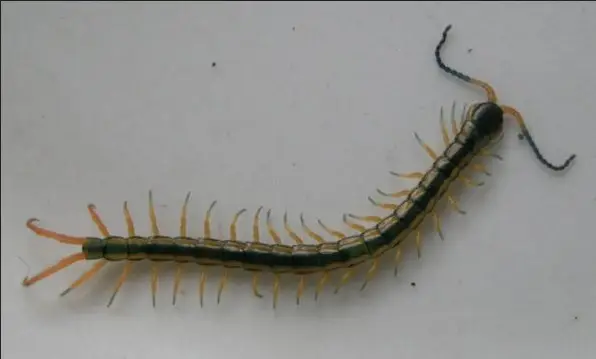
Centipede (Wu Gong)
Centipede (Wu Gong) is a wind-extinguishing herb used in traditional Chinese medicine for convulsions, pain, and toxic swellings.
The dried body of Scolopendra subspinipes mutilans L. Koch (family Scolopendridae).
Flat, elongated, 9-15 cm long, 0.5-1 cm wide. Consists of head and trunk, with 22 segments in total. Head dark red or reddish-brown, slightly glossy, covered by a nearly circular head plate, front slightly protruding, with a pair of mandibular limbs on each side and a pair of antennae at the front. First dorsal plate of trunk same color as head plate; remaining 20 dorsal plates brownish-green or dark green, glossy, with two longitudinal grooves from the fourth to the twentieth dorsal plate. Ventral surface pale yellow or brownish-yellow, wrinkled; from the second segment, each segment has a pair of walking legs on each side. Walking legs yellow or reddish-brown, occasionally yellowish-white, curved like hooks; the last pair is tail-like, hence called tail legs, easily detached. Brittle, with fissures on fracture surface. Slight fishy odor, with a special pungent stench; taste pungent, slightly salty.
According to the Shennong Bencao Jing, centipede treats snake, insect, and fish toxins. Li Shizhen noted that red-legged centipedes are best for subduing snakes. In the Qing dynasty, Huang Gongxiu said centipede is poisonous but good at biting snakes, so it is used for snake bites. A modern snake expert, Ji Desheng, saved his life by taking 15 live centipedes after a severe snake bite. Another case: a farmer bitten by a pit viper was treated by Professor Zhu Liangchun with roasted centipede powder, 3 g every 6 hours, and recovered.
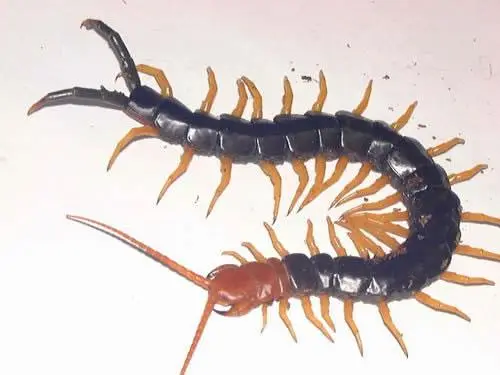
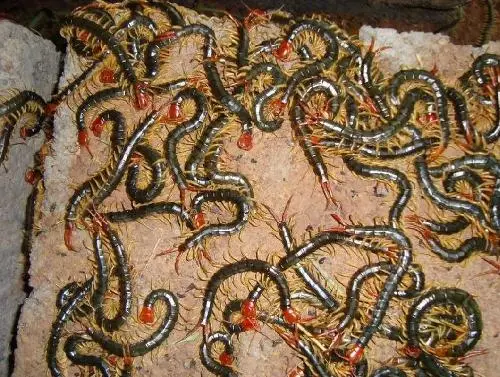
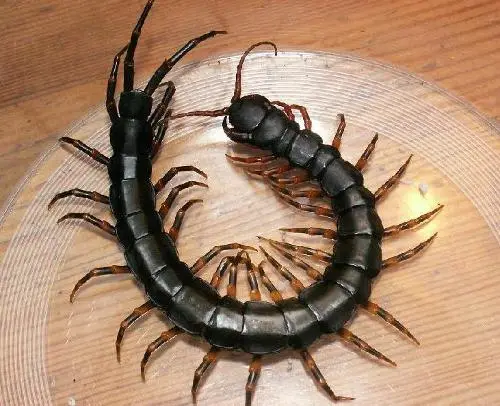
14 cultivation notes and 4 authentication articles exist for this herb. They are long-form field material and are published in Chinese only.
Chinese version · All herbs