Lingzhi (Ganoderma)
Lingzhi, the 'herb of immortality', is a mushroom used to calm the spirit and support the lungs.
The dried fruiting body of Ganoderma lucidum (Leyss. ex Fr.) Karst. or Ganoderma sinense Zhao, Xu et Zhang (family Polyporaceae).
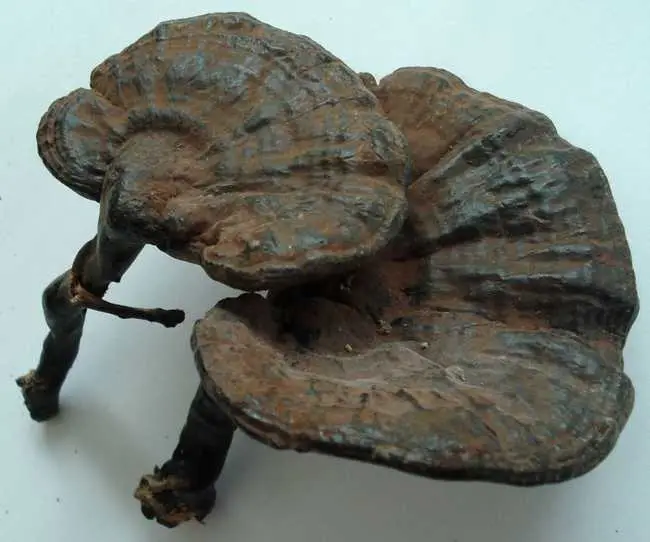
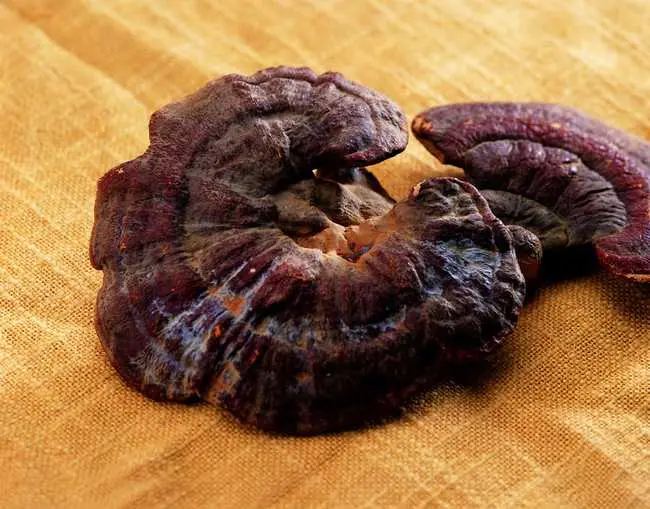
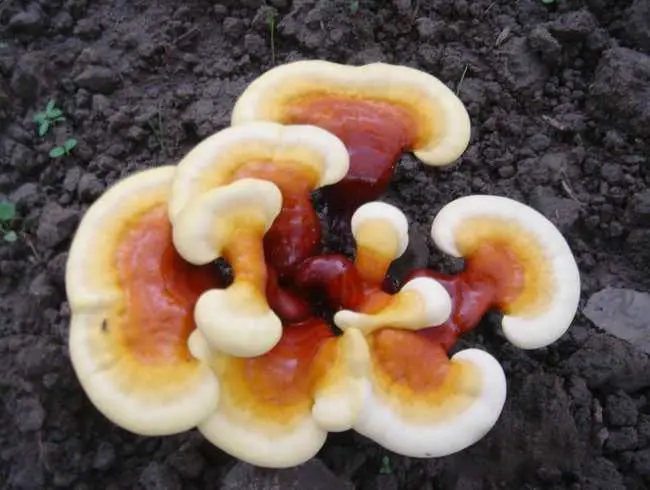
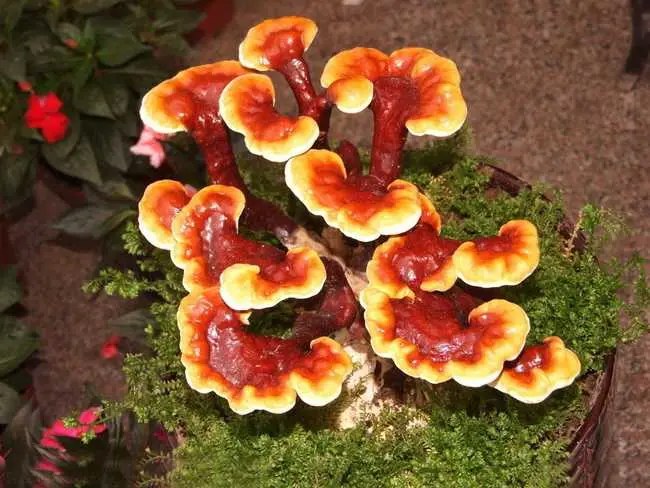
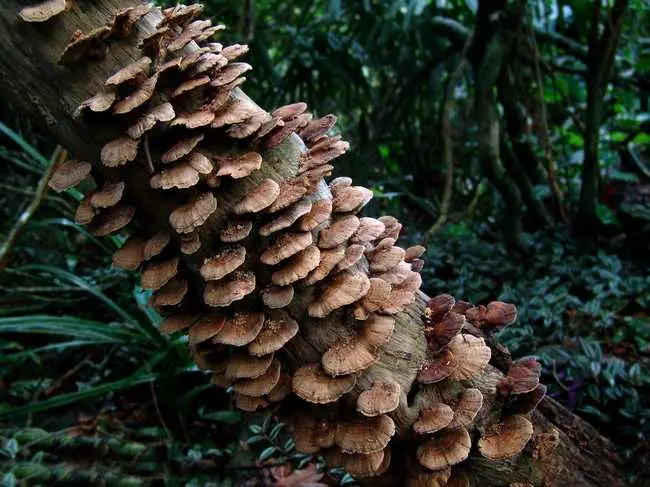
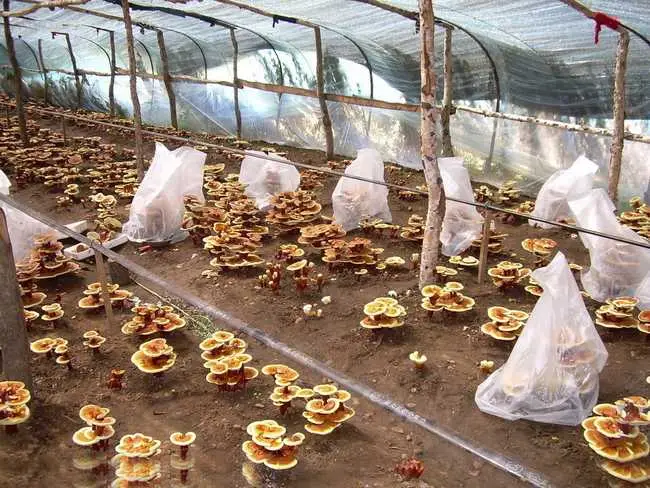
Red Ganoderma: Fruiting body umbrella-shaped, cap kidney-shaped, semicircular or nearly round, 10–18 cm in diameter, 1–2 cm thick. Crust hard, yellowish-brown to reddish-brown, glossy, with concentric ridges and radial wrinkles; margin thin and truncate, often slightly incurved. Context white to pale brown. Stipe cylindrical, lateral, rarely eccentric, 7–15 cm long, 1–3.5 cm in diameter, reddish-brown to purplish-brown, shiny. Spores minute, yellowish-brown. Odor faintly fragrant; taste bitter and astringent. Purple Ganoderma: Crust purplish-black, lacquer-like luster. Context rusty brown. Stipe 17–23 cm long. Cultivated products: Fruiting body stouter and thicker, 12–22 cm in diameter, 1.5–4 cm thick. Crust often covered with abundant dust-like yellowish-brown spores.
In the 'Shan Hai Jing', the daughter of Emperor Yan, Yao Ji, died young and her spirit transformed into the 'Yao Cao' (Lingzhi) on Mount Guyao. Eating it would make one dream of the person one longs for. Later, she was revered as the Goddess of Mount Wu, appearing as clouds at dawn and rain at dusk. King Huai of Chu dreamt of her and built the 'Zhao Yun' temple in her honor. The great poet Song Yu wrote 'Gao Tang Fu' and 'Shen Nü Fu', stating that the 'herb of the spirit' is indeed Lingzhi. In the legend of 'The White Snake', Lingzhi can bring the dead back to life, and Bai Suzhen fights the mountain god to save Xu Xian. The famous physician He Shixi, at over eighty, took Lingzhi daily and found his sleep improved. Many poets, including Li Bai, Du Fu, Su Shi, and Lu You, praised Lingzhi in their verses.
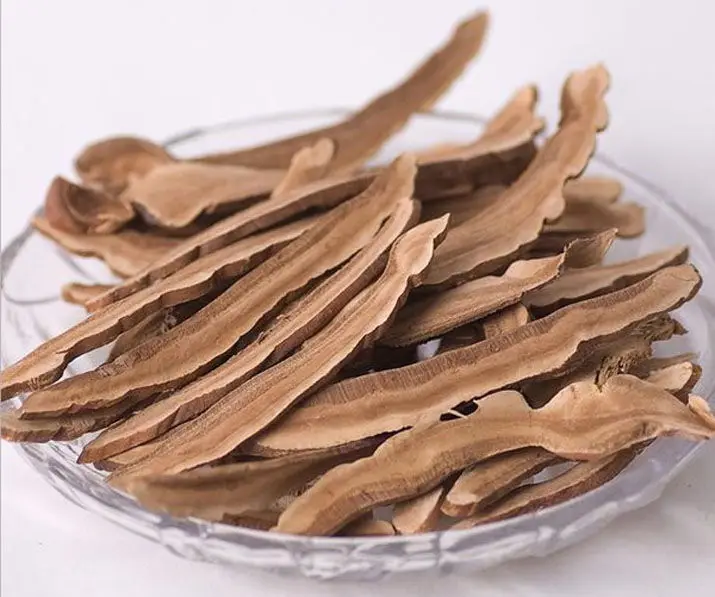
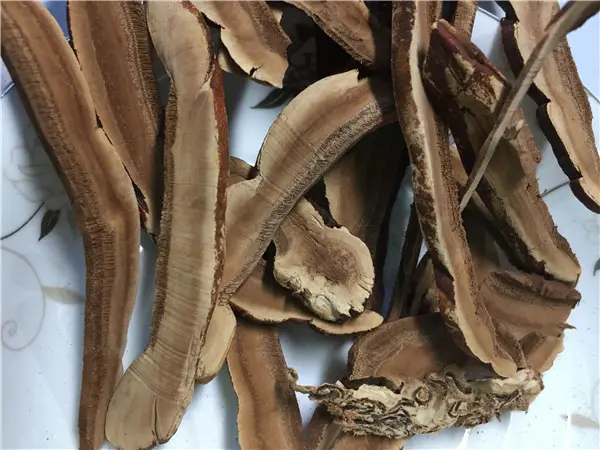
43 cultivation notes and 18 authentication articles exist for this herb. They are long-form field material and are published in Chinese only.
Chinese version · All herbs