Pumice Stone (Hai Fu Shi)
Hai Fu Shi
PumiceStone
Nature and flavorSalty, cold
Meridians enteredLung, kidney, liver, large intestine
DosageDecoction 9–15 g; or in pills and powders. External use: grind into powder and apply, or water-grind for eye drops.
Reference market price¥4 / kgBozhou market · spec common grade · 浙江 · snapshot 2026-11-21
Pumice Stone (Hai Fu Shi) is a mineral drug used to clear lung fire, resolve phlegm, soften masses, and treat strangury.
Source药物来源
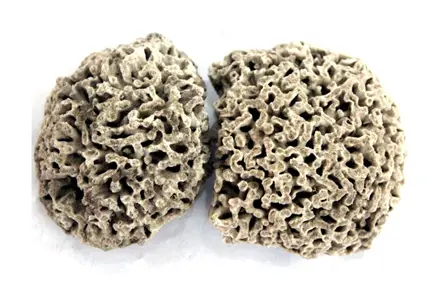
Two types: pumice (volcanic rock) and sea stone flower (dried skeleton of Costazia aculeata or C. costazii).
Identification性状特征
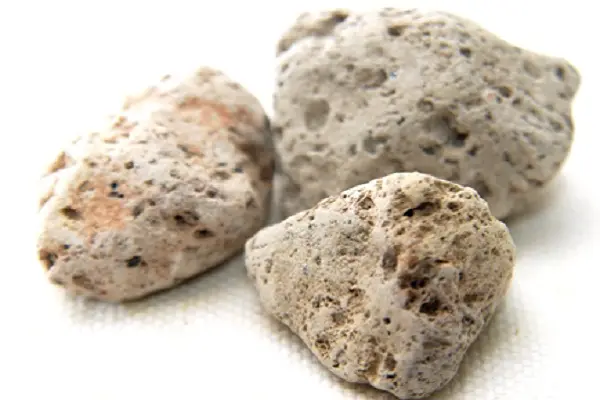
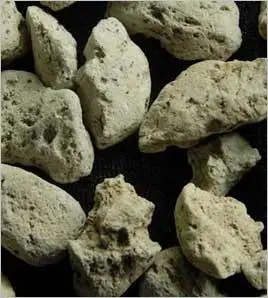
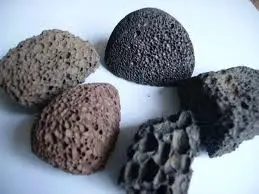
Pumice is irregular, 2–7 cm, rough with pores, grayish-white or grayish-yellow, hard but brittle. Sea stone flower is mainly calcium carbonate with magnesium, iron, and acid-insoluble matter.
Properties and actions性味与功效
Actions
clear lung fire and resolve phlegm · soften hardness and dissipate nodules
Indications
Clears lung fire, transforms old phlegm, softens hardness, and unblocks strangury. Used for phlegm-heat cough and asthma, old phlegm masses, goiter, scrofula, strangury, hernia, sores and swellings, and eye nebula. Clears lung and resolves phlegm, softens hardness and dissipates nodules. Used for lung-heat cough with thick yellow sputum, hemoptysis, bronchitis, and lymph node tuberculosis.
Dosage
Oral: decoction, 9–15 g; or in pills/powders. External: grind and sprinkle, or water-grind for eye drops.
Caution
Use with caution in deficiency-cold of the spleen and stomach; long-term use may impair digestion.
Processing炮制
Raw Pumice
Remove impurities, wash, sun-dry, crush before use.
Calcined Pumice
Place in a fire-resistant container, heat with strong fire until red-hot, remove, cool, and crush.
Modern research现代药理
Antitussive effect
Pumice has an antitussive effect; its active component is calcium carbonate, similar to snake bile and Fritillaria powder.
Classical records历代本草
Bencao Gangmu states pumice is formed from water froth, white and light, resembling the lung; its salty cold nature moistens and descends, so it enters the lung to remove upper jiao phlegm-heat, stop cough, and soften hardness. Other texts note its ability to treat strangury and nodules.
《本草纲目》:浮石乃水沫结成,色白而体轻,其质玲珑,肺之象也。气味咸寒,润下之用也。故入肺除上焦痰热,止咳嗽而软坚。清其上源,故又治诸淋。《席上腐谈》:肝属木,当浮而反沉;肺属金,当沉而反浮,何也?肝实而肺虚也。故石入水则沉,而南海有浮水之石;木入水则浮,而南海有沉水之香。虚实之反若此。
消瘤瘿结核疝气,下气,消疮肿。
《日华子本草》:平,无毒。止渴,治淋。
《本草求真》:[批]散上焦积热,软下焦积块。
海浮石专入肺、肾。即书所云浮石者是也。其石系水沫结成,浮于水上,故以浮名。色白体轻,味咸气寒。时珍曰:其质玲珑,肺之象也。盖既有升上之能,复有达下之力,其曰能治上焦痰热,目翳痘痈者,以其气浮上达之谓也;能治诸淋积块瘿瘤者,以其咸润软坚之意也。余琰《席上腐谈》云:肝属木当浮而反沉,肺属金当沉而反浮何也?肝实而肺虚也。故石入水则沉,而南海有浮水之石;木入水则浮,而南海有沉水之香,虚实之反如此。至于实则宜投,虚则忌服者,以其忌有克削之气也。
《本经疏证》:咸,寒。软坚润下,入肺止嗽,通淋,化上焦老痰,能消结核。
Audio and video语音与视频
Latin name · pronunciation
Photographs药材图片
Compiled from public Chinese materia medica sources for study and reference. Not medical advice.
Chinese version · All herbs
Chinese version · All herbs