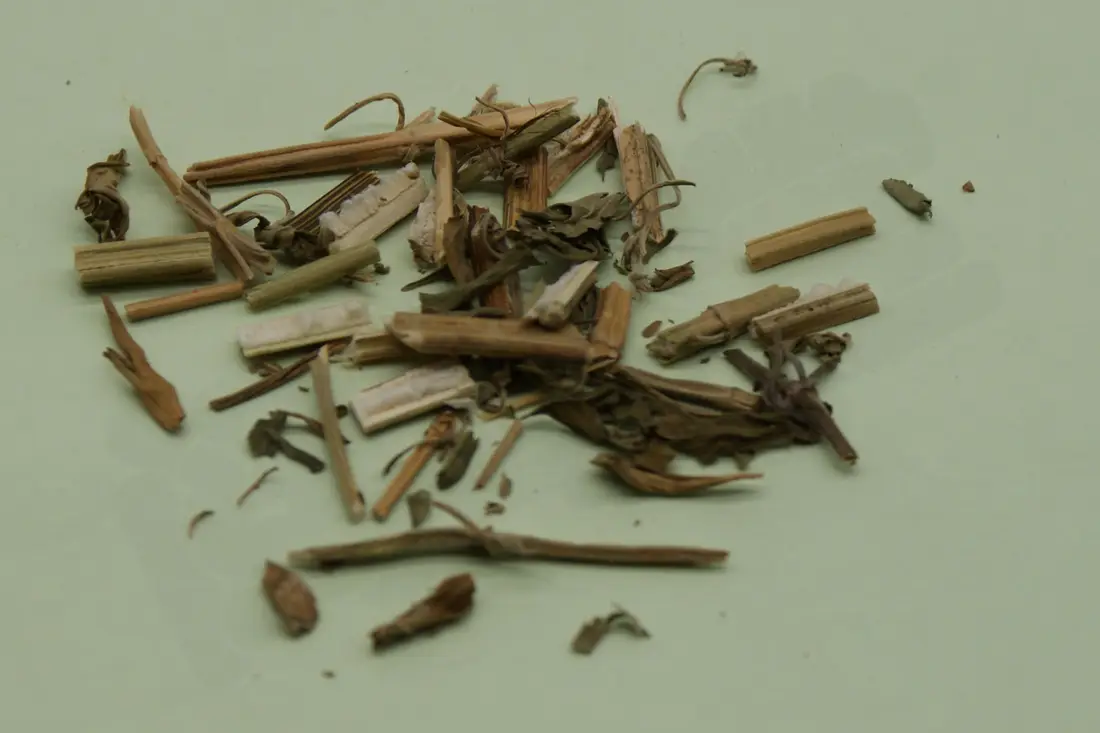
Yi Mu Cao (Leonurus herb)
Yi Mu Cao is a blood-invigorating herb used for menstrual disorders, edema and skin infections.
The fresh or dried aerial parts of Leonurus japonicus Houtt. (family Lamiaceae).
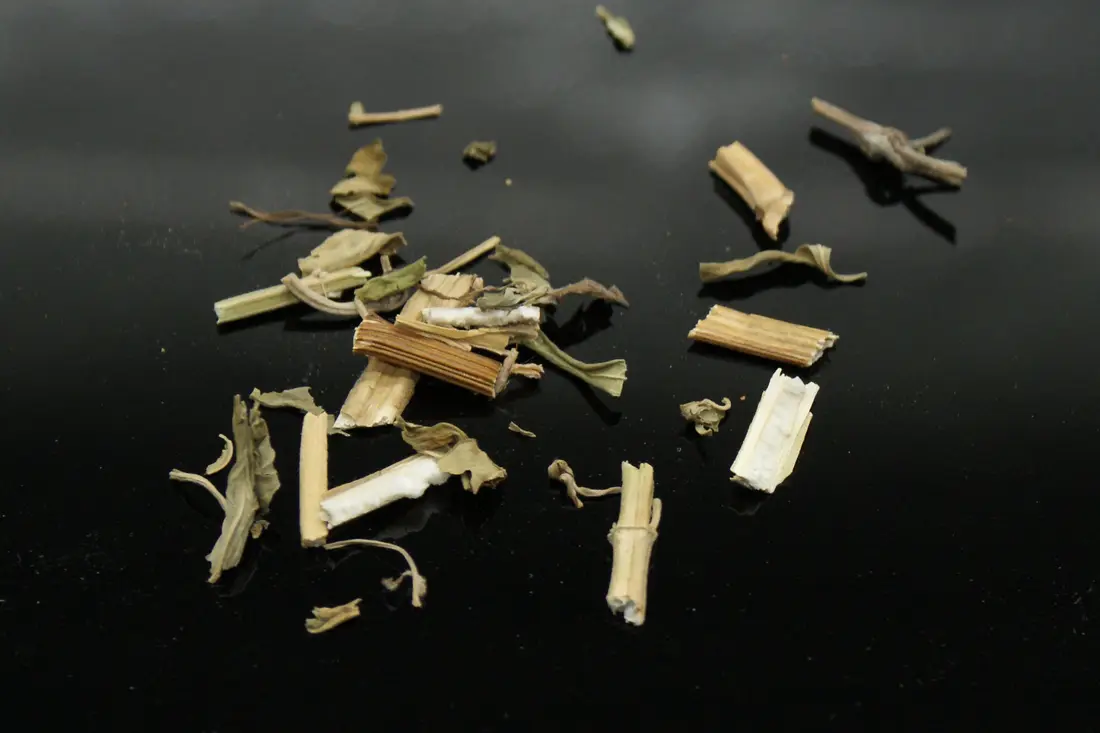
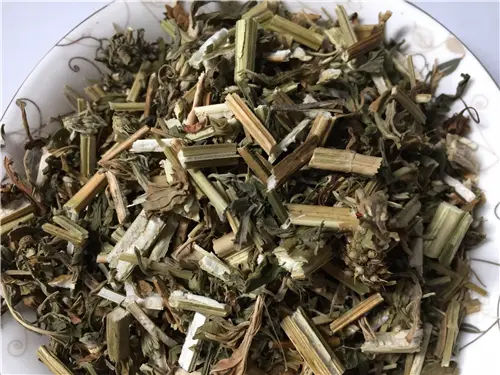
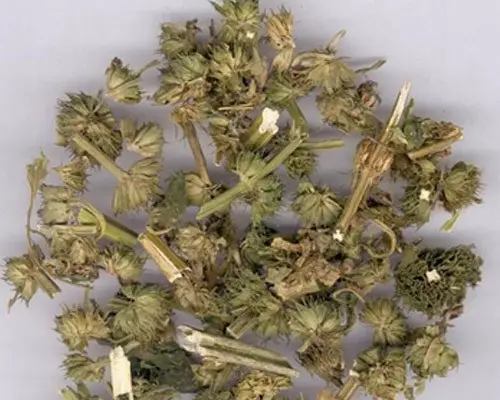
Fresh Yi Mu Cao: seedlings without stem, basal leaves cordate-orbicular, 5–9 shallow lobes, each lobe with 2–3 obtuse teeth. Pre-flowering stems square, much branched above, concave furrows on four sides, 30–60 cm long, 0.2–0.5 cm diameter; surface green; texture tender, pith in center. Leaves opposite, petiolate; blades green, tender, juicy when crushed; lower stem leaves palmately 3-lobed, upper leaves pinnately deeply lobed or shallowly 3-parted, lobes entire or few-toothed. Odor slight, taste slightly bitter. Dried Yi Mu Cao: stem surface grayish-green or yellowish-green; light, tough, pith in center. Leaves grayish-green, often crumpled, broken, easily shed. Verticillasters axillary, florets pale purple, calyx tubular, corolla bilabiate. Cut segments about 2 cm long.
Legend has it that a kind woman named Xiuniang saved a wounded muntjac from a hunter. Later, when she suffered difficult labor, the muntjac brought her a fragrant herb. After taking a decoction of it, her pain eased and she gave birth safely. She then cultivated the herb and gave it to other women in labor, naming it Yi Mu Cao (benefiting mothers). It is also said that Empress Wu Zetian used a beauty formula based on Yi Mu Cao, as recorded in Wang Tao's Waitai Miyao.



10 cultivation notes and 4 authentication articles exist for this herb. They are long-form field material and are published in Chinese only.
Chinese version · All herbs