Chuanxiong RhizomaMateria Medica

Chuanxiong Rhizoma

Chuan Xiong
CHUANXIONG RHIZOMA
Nature and flavorPungent, warm. Enters the Liver, Gallbladder and Pericardium meridians.
Meridians enteredLiver, Gallbladder, Pericardium
Dosage3–10 g
Reference market price¥13.4 / kgBozhou market · spec common grade · 四川 · snapshot 2026-11-21

Chuanxiong is a key herb for invigorating blood and moving qi, commonly used for headache and gynecological disorders.

Source药物来源

The dried rhizome of Ligusticum chuanxiong Hort. (family Apiaceae).

Identification性状特征

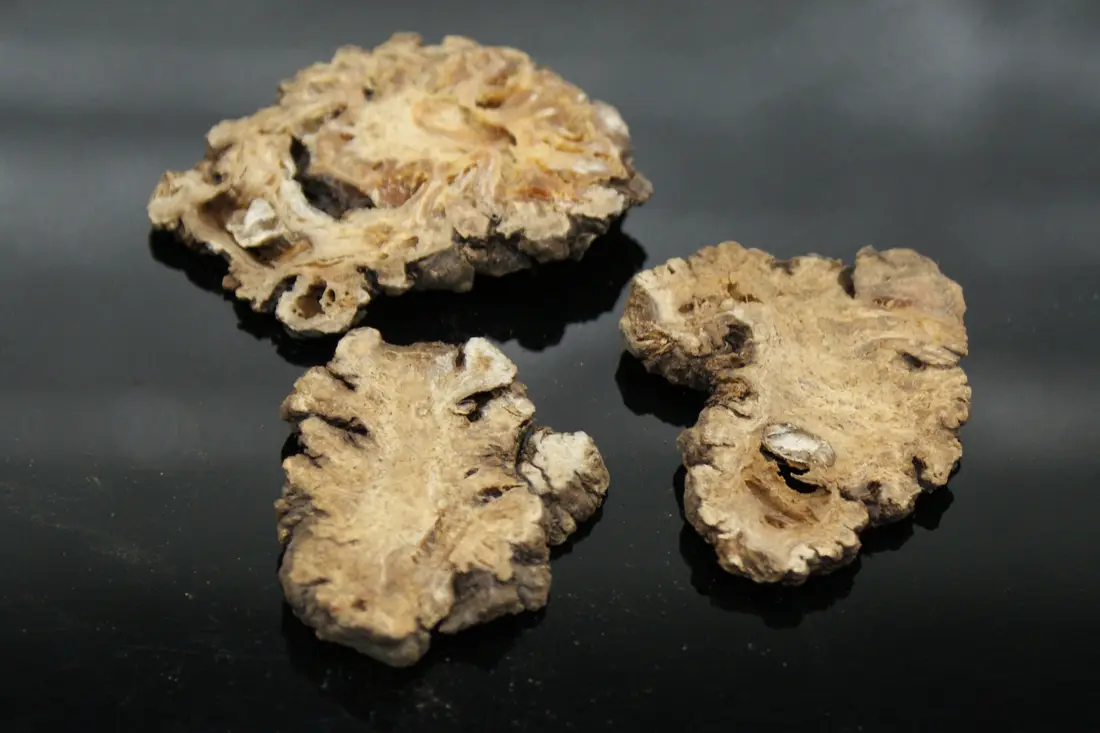
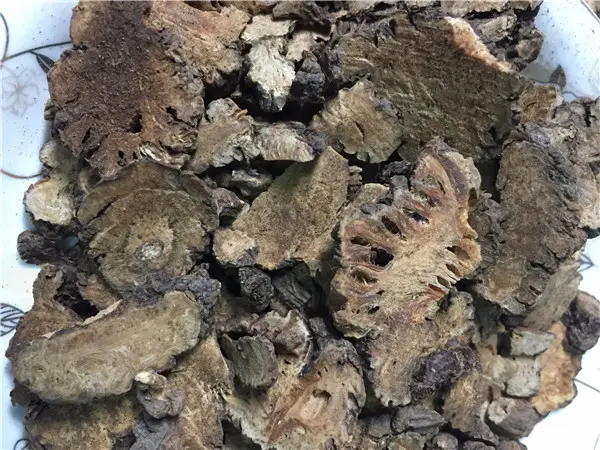
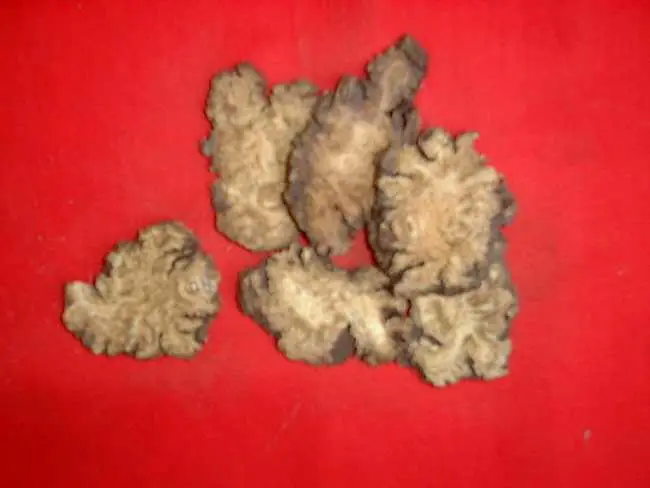
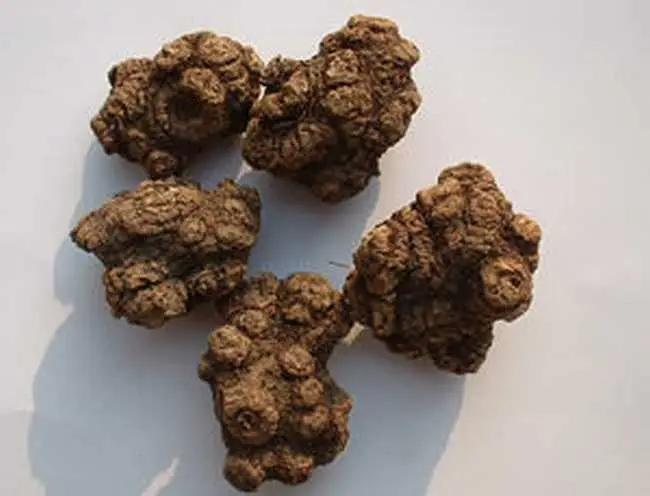
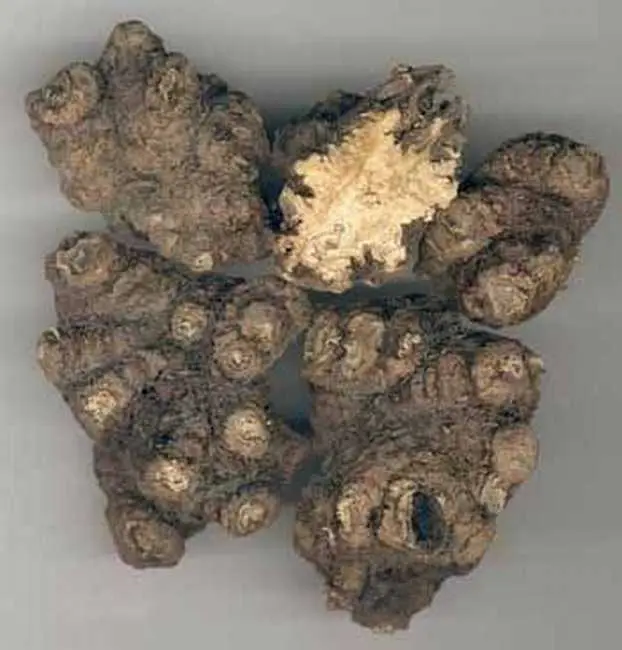
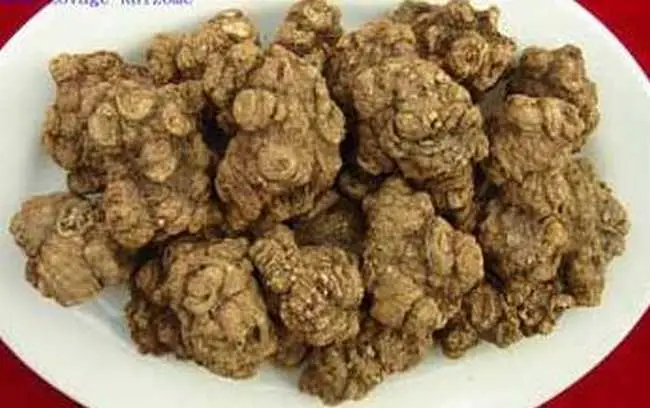
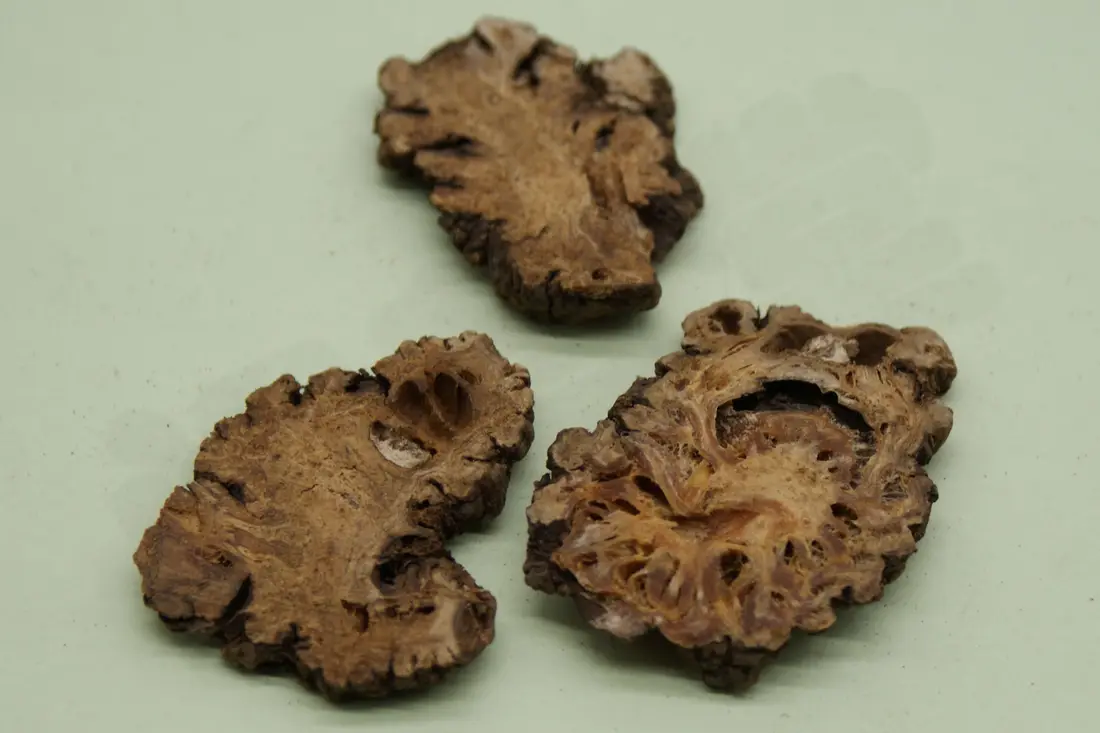
Irregular nodular fist-shaped masses, 2–7 cm in diameter. Surface grayish-brown or brown, rough and wrinkled, with many parallel raised rings; apex has a depressed subcircular stem scar; lower side and rings bear numerous small tuberculate root scars. Texture firm, not easily broken; fracture yellowish-white or grayish-yellow, scattered with yellowish-brown oil cavities; cambium ring wavy. Strong aromatic odor; taste bitter and pungent, slightly numbing, with a slight sweet aftertaste.

Properties and actions性味与功效
Actions
Invigorate blood and promote qi movement · Dispel wind and relieve pain
Indications
Used for chest impediment and heart pain, stabbing pain in the chest and hypochondria, traumatic swelling and pain, irregular menstruation, amenorrhea and dysmenorrhea, abdominal pain due to abdominal masses, headache, and wind-dampness arthralgia.
Dosage
3–10 g.
Caution
Use with caution in cases of yin deficiency with heat or excessive bleeding; long-term single use is not recommended as it may disperse vital qi.
Processing炮制
Chuanxiong
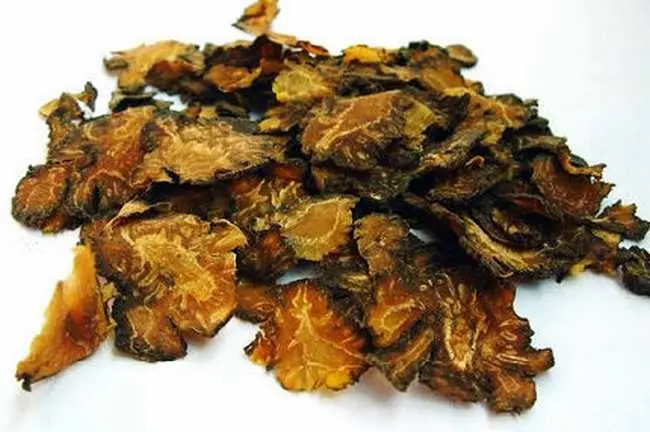
Remove impurities from the raw herb, separate by size, briefly soak, wash clean, moisten thoroughly, slice thinly, and dry. Sift out debris.
Wine-processed Chuanxiong
Mix clean Chuanxiong slices with a measured amount of yellow wine, let stand until absorbed, then stir-fry over gentle heat until brownish-yellow; remove, cool, and sift. Use 10 kg yellow wine per 100 kg Chuanxiong slices. This processing enhances the upward action and strengthens the effects of invigorating blood, moving qi, and relieving pain.
Modern research现代药理
Antithrombotic and antiplatelet effects
Ligustrazine promotes dissolution of red thrombi and inhibits white thrombus growth; ligustrazine and ferulic acid inhibit platelet aggregation.
Cardiovascular effects
Aqueous extract, alkaloids, ligustrazine and phenolic substances counteract pituitrin-induced myocardial ischemia and ECG changes; they dilate coronary arteries, increase coronary blood flow, and improve myocardial hypoxia. Ligustrazine has antiarrhythmic effects; it also dilates cerebral blood vessels and increases cerebral blood flow.
Microcirculation and blood pressure
Ligustrazine dilates peripheral vessels and improves microcirculation; the extract, ethanol extract and alkaloids have significant and lasting hypotensive effects.
Antispasmodic and anti-edema effects
Ligustrazine inhibits various smooth muscle spasms and edema.
Renal effects
Ligustrazine has preventive and therapeutic effects on experimental glomerulonephritis.
Other effects
The extract contracts the uterus; aqueous preparations counteract radiation; ligustrazine inhibits tumor metastasis and acute hemorrhagic pancreatitis; Chuanxiong promotes fracture healing and hematoma absorption, and enhances immune function.
Classical records历代本草
The Shennong Bencao Jing records Chuanxiong for headache, cold bi, and menstrual block. The Bencao Gangmu describes it as a qi-moving herb within blood, suitable for blood deficiency and qi stagnation, but warns against prolonged single use. The Bencao Mengquan emphasizes its use for headache and its contraindications with other herbs.
《神农本草经》:味辛,温。主治中风入脑头痛,寒痹,筋挛缓急,金创,妇人血闭无子。 《本草纲目》:川芎,血中气药也。肝苦急,以辛补之,故血虚者宜之。辛以散之,故气郁者宜之。《左传》言麦曲,川芎御湿,治河鱼腹疾。予治湿泻,每加二味,其应如响也。血痢已通而痛不止者,乃阴亏气郁,药中加芎为佐,气行血调,其病立止。此皆医学妙旨,圆机之士,始可语之。 五味入胃,各归其本脏。众服则增气偏胜,必有偏绝,故有暴夭之患。若药具五味,备四气,君臣作使配合得宜,岂有此害哉?如川芎,肝经药也。若单服既久,则辛喜归肺,肺气偏胜,金来贼木,肝必受邪,久则偏绝,岂不夭亡?故医者贵在格物也。 燥湿,止泻痢,行气开郁。 《本草蒙筌》:味辛,气温。升也,阳也。无毒。功专疗偏头疼。台芎出台州,属浙江。祗散风去湿;抚芎出抚郡,属江西。惟开郁宽胸。余产入药不堪,煮汤浴身则可。恶黄芪、山茱、狼毒,畏硝石、滑石、黄连。反藜芦,使白芷。乃手少阳本经之药,又入手足厥阴二经。堪佐升麻,升提气血。止本经头痛,血虚头痛之不可遗;余经头痛亦宜用,俱各加引经药。散肝经诸风,头面游风之不可缺。上行头目,下行血海。通肝经,血中之气药也。治一切血,破癥结宿血,而养新血及鼻洪吐血溺血,妇人血闭无娠;治一切气,驱心腹结气,诸般积气并胁痛痰气疝气,中恶卒痛气块。排脓消瘀长肉。兼理外科;温中燥湿散寒,专除外感。得牡蛎,疗头风眩晕吐逆;得细辛,治金疮作痛呻吟。同生地黄酒煎,禁崩漏不止;用陈艾汤调末,试胎孕有无。妇人经断三四月,用此药服之,腹内觉动是孕,否则病也。所忌须知,单服久服犯则走散真气,令人暴亡;务加他药佐之,中病便已。 谟按:川芎不宜单服久服,犯则走散真气,令人暴亡,无乃因其气味辛温、辛甘发散之过,丹溪尝此示人也。又古一妇人感患头风,服芎半年,一旦暴死,亦载经注,垂戒叮咛。迹此观之,芎散之祸,信弗轻矣。故今明医,每用四物汤治虚怯劳伤,减去其芎,亦鉴此辙。奈何乡落愚民,罔明药性,明采土芎煎茶,谓啜香美。体气稍实,侥幸无虞,倘涉虚羸,鲜不蒙其祸者,惟归天命,果真天作孽耶?抑自作孽耶? 《开宝本草》:味辛,温,无毒。除脑中冷动,面上游风去来,目泪出,多涕唾,忽忽如醉,诸寒冷气,心腹坚痛,中恶,卒急肿痛,胁风痛,温中内寒 《名医别录》:无毒。主除脑中冷动,面上游风去来,目泪出,多涕唾,忽忽如醉,诸寒冷气,心腹坚痛,中恶,卒急肿痛,温中内寒。 《本草图经》:蜜和大丸,夜服,治风痰殊效。
Folklore本草传说

The Mengxi Bitan records cases of sudden death after prolonged single use of Chuanxiong, warning against its long-term use alone. Han Qi of the Song dynasty praised its quality in a poem. These accounts remind us to use Chuanxiong judiciously and not as a single long-term remedy.

Culinary use民间药膳
Melon Seed and Sesame Paste
Sweet melon seeds, Angelica dahurica, Angelica sinensis, Chuanxiong, honey-fried licorice 60 g each; pine nuts 30 g; glutinous rice 150 g; black sesame 500 g.
Decoct the first four herbs, strain, and use the liquid to soak glutinous rice, melon seeds, and pine nuts; dry and re-soak until the liquid is used up. Then stir-fry the rice, seeds, nuts, and sesame until fragrant, and grind into powder. Take 30 g per dose, mix with boiling water into a paste. Twice daily.
Invigorates blood and nourishes blood, nourishes hair and skin. Suitable for premature graying and thinning of hair; also helps prevent aging and premature hair graying.
Cooked Black Beans
Prepared Polygonum multiflorum and wolfberry 24 g each; raw and prepared Rehmannia, Angelica sinensis, fried Eucommia, Achyranthes 12 g each; chrysanthemum, licorice, Chuanxiong, tangerine peel, Atractylodes, white peony, Moutan cortex 3 g each; Astragalus 6 g; salt 18 g; black beans 500 g.
Boil all herbs with black beans until thoroughly cooked, then sun-dry. Remove herbs and eat the beans as a snack, about 30–50 g per day.
Darkens hair and beard, strengthens teeth, and brightens eyes. Suitable for blood-deficiency white hair, dizziness, palpitations, and pale complexion, lips, and nails.
Ten-Ingredient Great Tonifying Soup
Ginseng, Astragalus, Atractylodes, Poria, prepared Rehmannia, white peony 10 g each; Angelica sinensis, cinnamon 5 g each; Chuanxiong, licorice 3 g each; jujube 12 pieces; fresh ginger 20 g; cuttlefish, fat hen, old duck, cleaned pork tripe, pork knuckle 250 g each; pork ribs 500 g; winter bamboo shoots, mushrooms, peanuts, scallions 50 g each; seasonings to taste.
Place herbs in a cloth bag and tie tightly. Clean meats and cut into pieces; clean and cut vegetables. Put all ingredients in a pot with water, bring to a boil over high heat, then simmer over low heat. Add yellow wine, Sichuan pepper, and salt to taste. When meats are tender, remove and cut into strips, return to soup, remove herb bag, and season with MSG. Eat meat and drink soup, one small bowl each morning and evening. After finishing, wait 5 days before preparing again.
Warms and tonifies qi and blood.
Pomelo Peel with Fermented Glutinous Rice
Pomelo peel (white part removed), Aristolochia debilis, Chuanxiong in equal parts; fermented glutinous rice and brown sugar as needed.
Grind the first three herbs into fine powder. For each small bowl of brown sugar fermented glutinous rice, add 3–6 g of the powder and take warm. Twice daily.
Regulates qi and relieves depression, harmonizes the stomach and relieves pain. Suitable for hypochondriac and epigastric pain due to liver-stomach disharmony, with distension, belching, poor appetite, and irritability.
Chuanxiong Boiled Eggs
Eggs, Chuanxiong.
Wash eggs and Chuanxiong, place in a pot with water, bring to a boil, then simmer for a few minutes until eggs are cooked. Remove eggs, shell them, and return to the pot; simmer for about 15 minutes to allow Chuanxiong flavor to penetrate.
Chuanxiong is warm and pungent; with eggs, it helps dispel wind-cold and relieve headache, as in Yixue Qiyuan: 'Tonifies blood, treats blood-deficiency headache.'
Liver-Pacifying Heat-Clearing Tea
Gentiana scabra 1.8 g, vinegar-processed Bupleurum 1.8 g, chrysanthemum 3 g, raw Rehmannia 3 g, Chuanxiong 1.8 g.
Grind herbs into coarse powder, decoct in water or steep in boiling water, and drink as tea. 1–2 doses per day.
Pacifies the liver and clears heat.
Chuanxiong and Angelica Dahurica Stewed Fish Head
Chuanxiong and Angelica dahurica 3–9 g each; bighead carp head 500 g; scallion, pepper, fresh ginger, salt to taste.
Remove gills from fish head and wash. Place fish head, Chuanxiong, Angelica dahurica, scallion, pepper, and ginger in a clay pot with water. Bring to a boil over high heat, then simmer over low heat for 30 minutes. Add salt to taste. Eat fish and drink soup in two servings, morning and evening.
Dispels wind, dissipates cold, invigorates blood, and relieves pain.
Ten-Ingredient Fish Soup
Ginseng, cinnamon, Chuanxiong, prepared Rehmannia, Poria, Atractylodes, licorice, Astragalus, Angelica sinensis, white peony.
1. Wash ingredients. 2. Heat sesame oil over high heat, add old ginger slices, then reduce to low heat and fry until brown (not burnt). 3. Add fish, ten-ingredient packet, and postpartum water, bring to a boil over high heat, then reduce to low heat, cover, and simmer for 10 minutes. Turn off heat and serve.
Fish 120 g, old ginger with skin 5 slices, ten-ingredient packet (1 slice each of ginseng, cinnamon, Chuanxiong, prepared Rehmannia, Poria, Atractylodes, licorice, Astragalus, Angelica sinensis, white peony), sesame oil 45 ml, postpartum water 350 ml.
Sheng Hua Tang
(one-day portion): Angelica sinensis 16 g, Chuanxiong 8 g, peach kernel (core removed) 1.5 g, old ginger 1.5 g, honey-fried licorice 1.5 g, postpartum water 500 ml.
Add herbs to 500 ml postpartum water, simmer covered over low heat for 50 minutes until about 300 ml remains. 2. Divide into three portions and drink before meals; can also be sipped as tea.
Nourishes blood, invigorates blood, and resolves stasis. Used postpartum to replenish blood and expel lochia; also boosts resistance and contracts the uterus. Take continuously for 14 days postpartum.
Audio and video语音与视频
Latin name · pronunciation
Narration and video are shared by all language versions and are in Chinese; the images and footage themselves are language-independent.
Photographs药材图片
Chuanxiong Rhizoma
Chuanxiong Rhizoma
Chuanxiong Rhizoma
Chuanxiong Rhizoma
Chuanxiong Rhizoma
Chuanxiong Rhizoma
Chuanxiong Rhizoma
Chuanxiong Rhizoma
Cultivation and authentication栽培与鉴别

12 cultivation notes and 10 authentication articles exist for this herb. They are long-form field material and are published in Chinese only.

Read them in Chinese →

Compiled from public Chinese materia medica sources for study and reference. Not medical advice.
Chinese version · All herbs