Notopterygium rhizome and root (Qiang Huo)
Qiang Huo
NOTOPTERYGII RHIZOMA ET RADIX
Nature and flavorPungent, bitter, warm; enters the bladder and kidney meridians.
Meridians enteredBladder, kidney
Dosage3–10 g
Reference market price¥120 / kgBozhou market · spec 条羌 · 四川 · snapshot 2026-11-21
A wind-dispelling, cold-dissipating herb used for wind-cold colds and painful bi syndrome.
Source药物来源
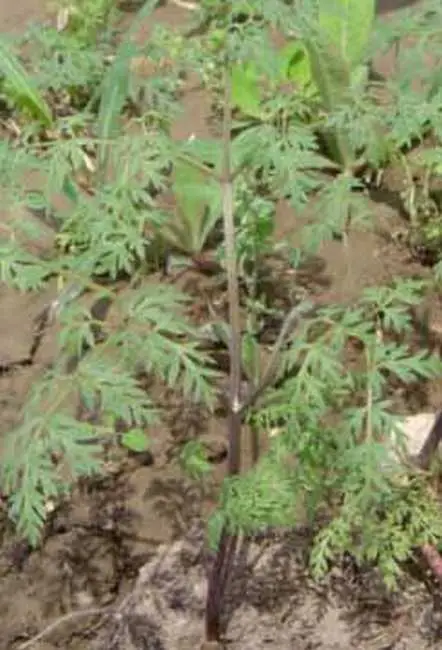
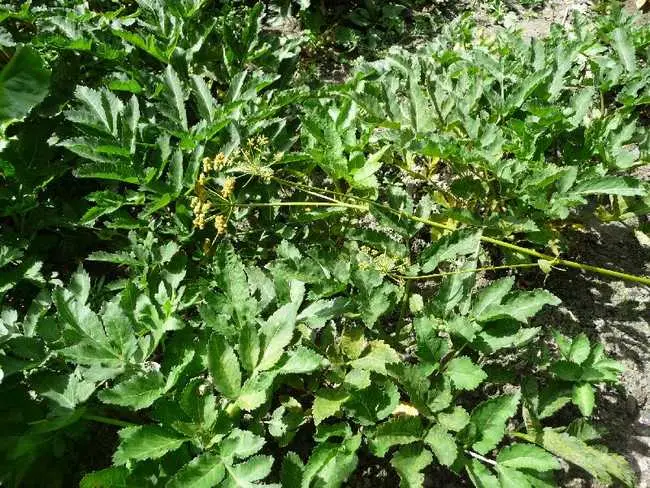
The dried rhizome and root of Notopterygium incisum Ting ex H. T. Chang or Notopterygium franchetii H. de Boiss. (family Apiaceae).
Identification性状特征
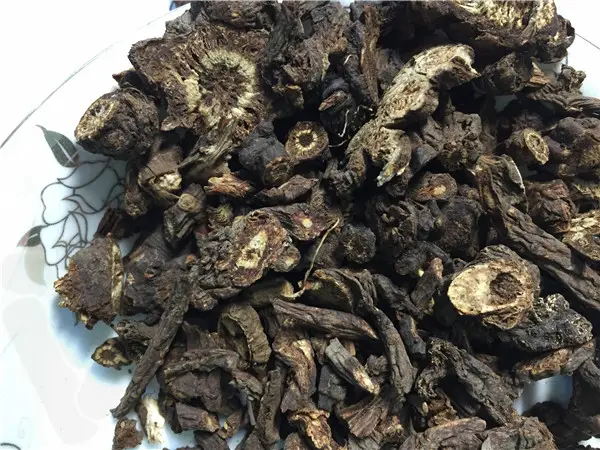
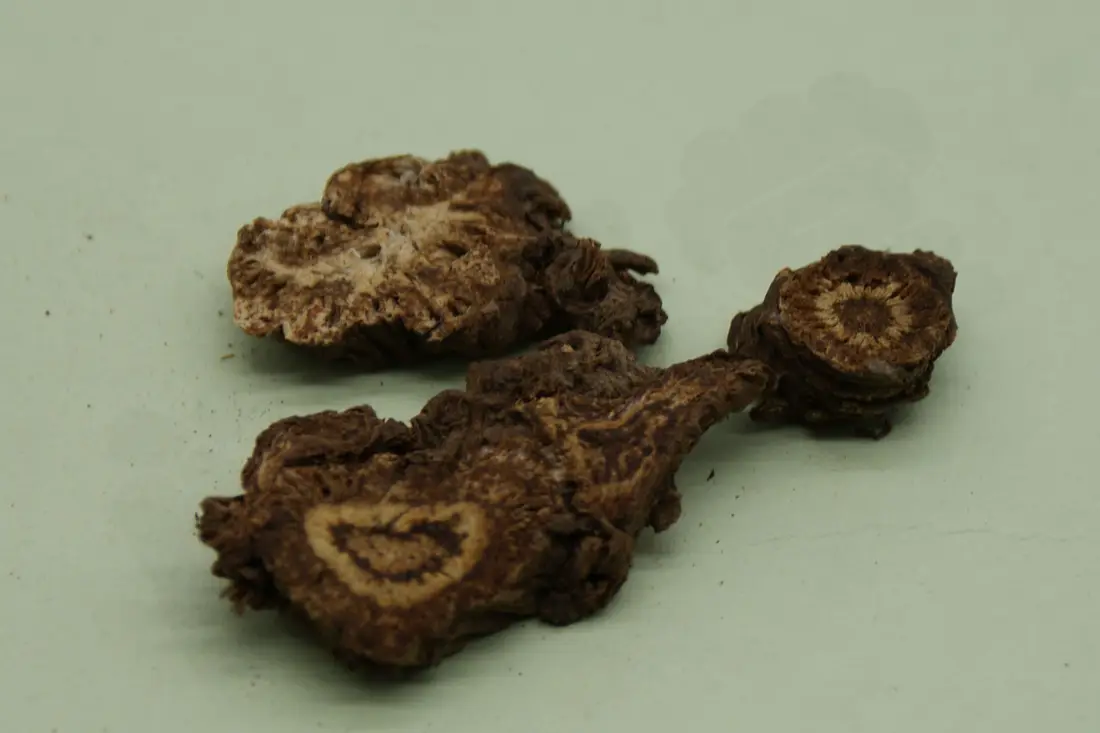
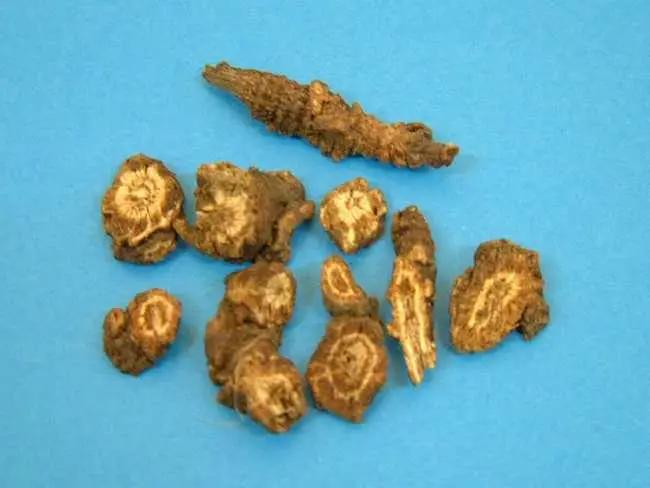
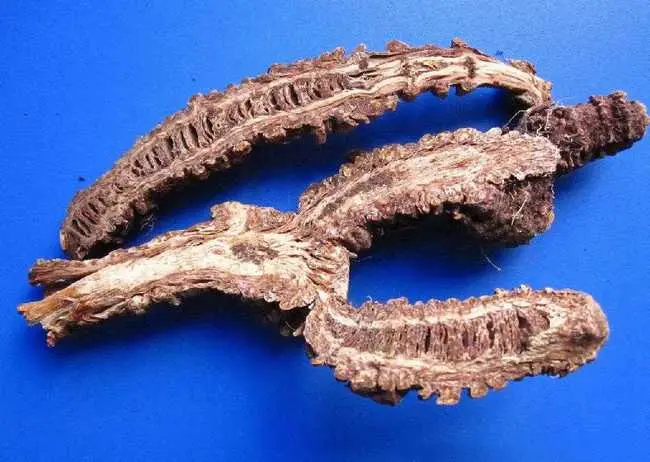
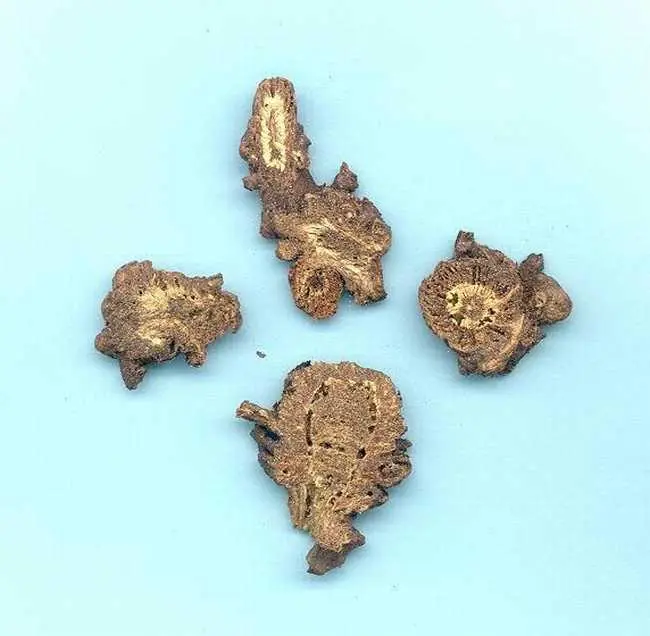
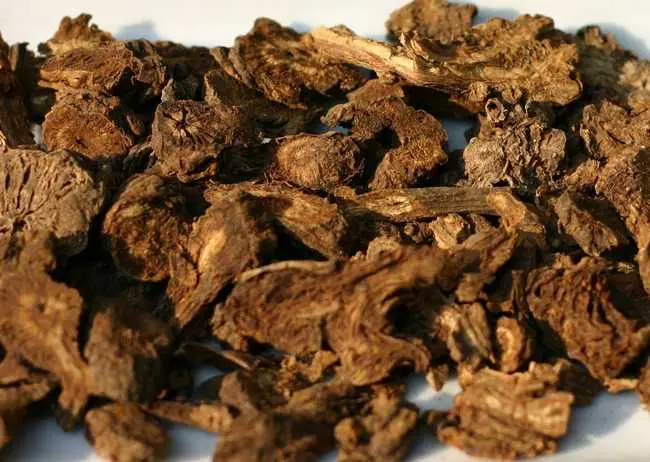
Cylindrical, slightly curved rhizome, 4–13 cm long, 0.6–2.5 cm in diameter, with stem scars at the apex. Surface brownish-brown to blackish-brown, yellow where the outer bark has fallen off. Internodes shortened, forming closely raised rings like a silkworm, commonly called 'silkworm Qiang Huo'; or internodes elongated, like bamboo joints, commonly called 'bamboo-joint Qiang Huo'. Nodes bear numerous dot-like or wart-like root scars and brown broken scales. Light, brittle, easily broken; fracture uneven with many clefts; bark yellowish-brown to dark brown, oily, with brown oil dots; wood yellowish-white with distinct rays; pith yellow to yellowish-brown. Fragrant; taste slightly bitter and pungent.
Properties and actions性味与功效
ActionsRelease the exterior and dissipate cold · Dispel wind and drain dampness · Relieve pain
IndicationsUsed for common cold of the wind-cold type, headache with stiff neck, wind-dampness bi syndrome, and aching shoulders and back.
CautionUse with caution in cases of yin deficiency with dryness-heat or blood deficiency; avoid excessive use in patients with deficiency of the spleen and stomach.
Processing炮制
RawRemove impurities, wash, moisten thoroughly, cut into thick slices, and dry in the sun.
Modern research现代药理
Antipyretic, analgesic and anti-inflammatory effectsThe volatile oil of Qiang Huo has antipyretic, analgesic and anti-inflammatory effects.
Antiallergic effectThe volatile oil has an antiallergic effect and inhibits delayed-type hypersensitivity induced by DNCB in mice.
Antiarrhythmic effectThe water-soluble fraction shortens the duration of arrhythmia in rabbits and delays aconitine-induced arrhythmia in mice; the effect tends to increase with dose, but decreases at 12 g/kg.
Anti-myocardial ischemic effectThe volatile oil counteracts acute myocardial ischemia induced by pituitrin and significantly increases myocardial nutritional blood flow.
Anti-shock effectQiang Huo has a certain anti-shock effect, but it is effective only when given in small doses repeatedly; a single large dose does not improve anti-shock capacity in animals.
Antithrombotic effectQiang Huo has an antithrombotic effect.
Antibacterial effectIn vitro, the oil, volatile oil and water decoction inhibit various bacilli and Staphylococcus aureus.
Anti-lipid peroxidation effectQiang Huo has an anti-lipid peroxidation effect.
Antiepileptic and cervical cancer cell inhibitory effectsQiang Huo also has an antiepileptic effect and a certain inhibitory effect on cervical cancer cells.
Classical records历代本草
The Bencao Mengquan notes that Qiang Huo is pungent, bitter and sweet, light in odor, ascending and yang in nature; it enters the foot taiyang and also the foot shaoyin and jueyin meridians, and is described as a strong herb that disperses wind pathogens from the flesh and skin and relieves pain throughout the body. The Yaoxing Fu summarizes five uses: dispersing wind pathogens from the body surface, relieving pain in all joints, expelling putrefying flesh from abscesses, eliminating wind-dampness, and serving as a guiding herb for the hand and foot taiyang meridians.《本草蒙筌》:味苦、甘、辛,气平、微温。气味俱轻,升也,阳也。无毒。羌活则气雄,独活则香细。气雄者入足太阳,香细者入足少阴。足知羌活本手足太阴表里引经之药,而又入足少阴厥阴二经。名列君部之中,非此柔懦之主。此诚拨乱反正,大有作为者也。故小无不入,大无不通。能散肌表入风之邪,善利周身百节之痛。排阳肉腐之疽,除新旧风湿之证。须去黑皮腐烂,煎服方有神功。如若加入川芎,立止本经头痛。独活主治较羌稍殊,乃足少阴表里引经。专治痛风与少阴经伏风,而不治太阳经也。故两足湿痹不能动履,非此莫痊,风毒齿痛头眩目晕,有此堪治。虽治伏风,又资燥湿。经云:风能胜湿故也。
《汤液本草》:气微温,味苦甘平。苦辛,气味俱轻,阳也,无毒。
《药性论》:君,味苦,辛,无毒。能治贼风,失音不语,多痒血癞,手足不遂,口面歪斜,遍身痹。
《神农本草经读》:羌活气平,秉金气而入肺;味苦甘无毒,得火味而入心;得土味而入脾。
其主风寒所击者,入心以扶心火之衰,所以主之。
痫痉者,木动则生风,风动则挟木势而害土,土病则聚液而成痰,痰进入心,则为痫为痉。此物秉金气以制风,得土味而补脾,得火味而宁心,所以主之。
女子疝瘕,多经行后,血假风湿而成,此物入肝以平风,入脾以胜湿,入心而主宰血脉之流行,所以主之。
《药性赋》:味苦、甘,平,气微温,无毒。升也,阴中之阳也。其用有五:散肌表八风之邪,利周身百节之痛,排巨阳肉腐之疽,除新旧风湿之证,乃手足太阳表里引经之药也。
Folklore本草传说
In ancient Dangchang, the Qiang people lived in harsh conditions. A tribal leader named Zama found a strange green herb; those who ate it recovered from injuries and illness. The people called it 'the herb that lets the Qiang live', which later was shortened to 'Qiang Huo'.
Culinary use民间药膳
White-flowered snake wine1 white-flowered snake, Qiang Huo 60 g, Angelica sinensis root 60 g, Gastrodia elata 60 g, Gentiana macrophylla 60 g, Acanthopanax gracilistylus 60 g, Saposhnikovia divaricata 30 g, glutinous rice wine 4000 ml.
Wash the snake with wine, moisten thoroughly, remove bones and spines, and take the meat; chop the other herbs, put them in a silk bag, place in a wine jar, put the jar in a large pot, boil in water for one day, then bury in a cool place for seven days and take out. Drink 1–2 cups (30–60 ml) each time. The residue is dried in the sun, ground into powder, made into pills with wine paste the size of paulownia seeds; take 50 pills (9 g) each time with warmed wine.
Dispel wind and drain dampness, unblock collaterals and relieve pain, strengthen sinews and bones.
Cultivation and authentication栽培与鉴别
4 cultivation notes and 5 authentication articles exist for this herb. They are long-form field material and are published in Chinese only.
Read them in Chinese →