Processed Ginger (Pao Jiang)
Pao Jiang
ZINGIBERIS RHIZOMA PRAEPARATUMRhizoma Zingiberis Preparata
Nature and flavorPungent, hot; enters the spleen, stomach, and kidney meridians.
Meridians enteredSpleen, stomach, kidney
Dosage3–9 g
Reference market price¥15 / kgBozhou market · spec 粉姜 · 贵州 · snapshot 2026-11-21
Pao Jiang is the processed form of dried ginger, used in traditional Chinese medicine to stop bleeding and warm the middle.
Source药物来源
This product is the processed form of dried ginger.
Identification性状特征
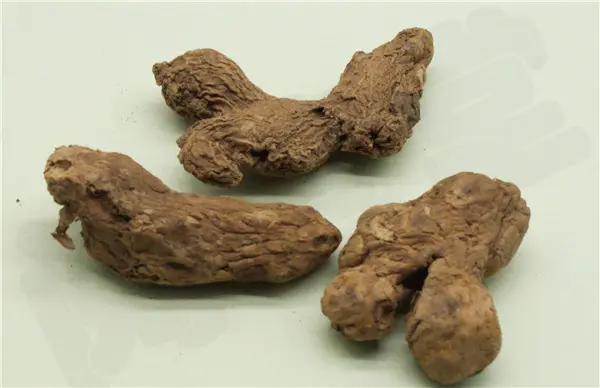
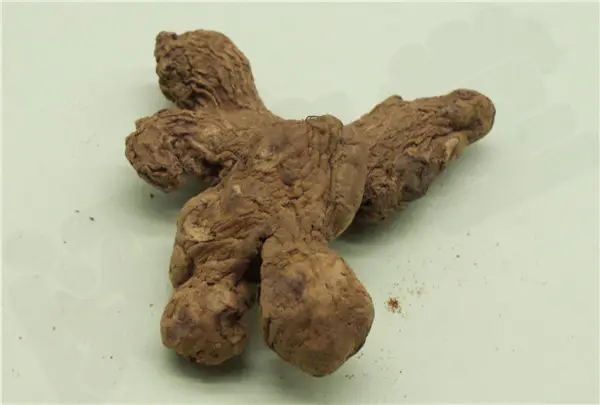
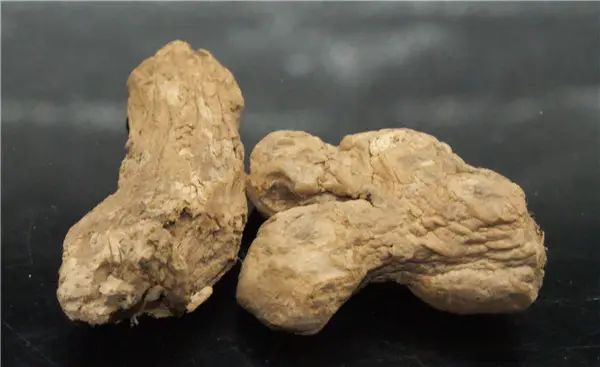
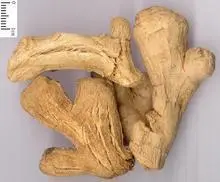
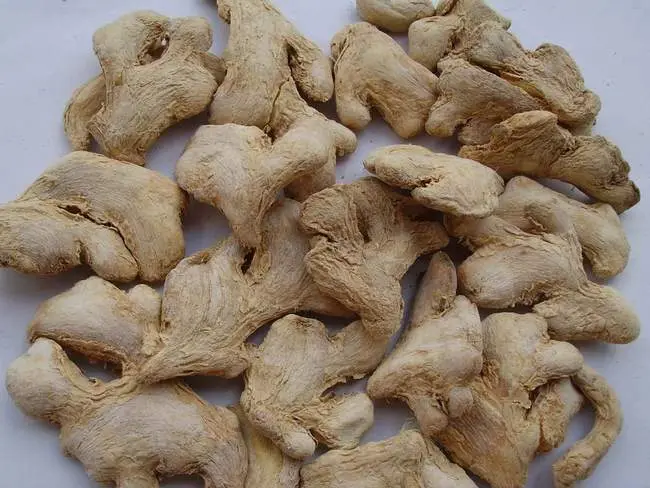
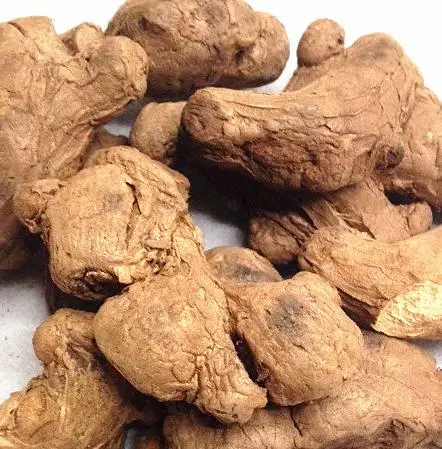
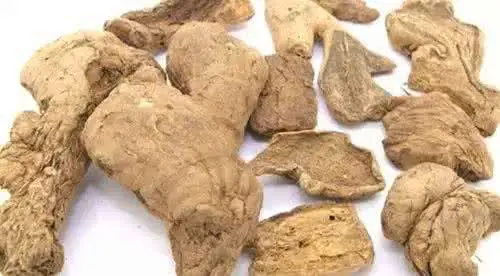
Irregularly swollen blocks with finger-like branches. The surface is brownish-black or brown. Light and spongy, the fracture edge is brownish-black with a brownish-yellow center, fine granular, vascular bundles scattered. Fragrant, characteristic odor; taste slightly pungent and spicy.
Properties and actions性味与功效
Actions
Warm the meridians and stop bleeding · Warm the middle and relieve pain
Indications
Used for bleeding due to yang deficiency, hematemesis, epistaxis, flooding and spotting, deficiency-cold of the spleen and stomach, abdominal pain, vomiting, and diarrhea.
Dosage
3–9 g.
Caution
Use with caution in cases of yin deficiency with heat or in patients with deficiency-cold of the spleen and stomach; consult a healthcare professional before use.
Processing炮制
Stir-fried
Take clean dried ginger, stir-fry until puffed, with a slightly black exterior and brownish-yellow interior, remove and cool; or stir-fry with sand until puffed and the exterior is slightly black, remove, sieve out the sand, and cool.
Modern research现代药理
Anti-ulcer effect
Pao Jiang has an anti-ulcer effect.
Hemostatic effect
Pao Jiang also has a hemostatic effect.
Classical records历代本草
In classical texts such as Bencao Mengquan and Bencao Xinbian, Pao Jiang is described as warming the middle and stopping bleeding, while dried ginger disperses exterior pathogens. It is used for chronic cold, cholera, abdominal pain, and vomiting.
《本草蒙筌》:调理痼冷沉寒,霍乱腹痛吐泻。
《本草新编》:干姜味辛,炮姜味苦,皆气温大热,半浮半沉,阳中阴也。解散风寒湿痹、鼻塞头痛、发热之邪者,干姜也;调理痼冷沉寒、霍乱腹痛吐泻之痰者,炮姜也。盖干姜治表,而炮姜温中。其所以治表者,干姜走而不收,能散邪于外也;其所以温中者,炮姜止而不动,能固正于内也。虽然姜性大热而辛散,俱能散邪补正,安在炮制而异宜。干姜散邪之中,未尝无温中之益;炮姜固正之内,未尝无治表之功。但干姜散多于温,而炮姜固多于散耳。
或问干姜用之于理中汤中,佐附子以成功,岂有妙义乎?曰:无妙义,仲景夫子不用之矣。理中汤,理中焦也。虽有白术是理中焦之药,然气味与附子温热之性尚不相同,故入用干姜之辛热,与附子同性,专顾中焦,则附子亦顾恋同气而不上越,共逐中焦之寒,以成其健脾还阳之功也。
或问伤寒门中有姜附汤,其用干姜之义,想亦与理中汤同意?曰:姜附汤中用人参,似与理中汤相同,而孰知别有意义。理中汤,理中焦;姜附汤,治下焦也。附子领人参直入于至阴之中,专祛腹中之寒,而躯外皮肤之寒邪,则未遑驱逐。加干姜走而不守,如大热亲捣巢穴,而偏裨旁惊于外,自然内外肃清,远近安奠也。倘止用附子、人参,未尝不可奏功,然而攻彼失此,仲景夫子所以必加入干姜,使同队而并逐也。
或问四逆汤亦用干姜,其义岂有异乎?夫四逆汤之用干姜,又非前二条之意。四逆汤,乃救逆也。救气之逆,必须同群共济,故用附子、肉桂为君,必用干姜为副,否则,气逆而不能遽转矣。
或问干姜用之白通汤中以通脉,吾惧其散气,则脉随气而散矣,又何以通脉哉?嗟乎。脉非气通,又用何物以通之。干姜原非通脉之药,正取其通气耳,气通则脉通矣。夫脉之不通者,乃寒凝而不通,非气绝而不通也。用干姜以散寒,寒气散,脉气有不通乎。
或问干姜既能通气,用干姜足矣,何以又用葱耶?曰:葱性亦散气者也。单用干姜,恐通气有余而通脉则不足,单用葱,恐通脉有余,而通气又不足。合而用之,气通又不伤脉,脉通又不伤气,而相济而成功,何伤气之足忧乎。
或问干姜炒熟入于健脾药中,谓能补脾以生气,然乎?曰:干姜温热,原有益于脾气,何在炒熟始能补土以生气。但干姜性走,脾气不独受其惠。一经炮制,则干姜守而不走,独留于脾中,诸经不得而夺之,自然较生用更效也。
《本草分经》:辛、苦,大热。除胃冷而守中,兼补心气,祛脏腑沉寒痼冷,去恶生新,能回脉绝无阳,又引血药入肝而生血退热,引以黑附则入肾祛寒湿。
Audio and video语音与视频
Narration · Chinese · 7:34
Latin name · pronunciation
Photographs药材图片
Cultivation and authentication栽培与鉴别
0 cultivation notes and 2 authentication articles exist for this herb. They are long-form field material and are published in Chinese only.
Compiled from public Chinese materia medica sources for study and reference. Not medical advice.
Chinese version · All herbs
Chinese version · All herbs