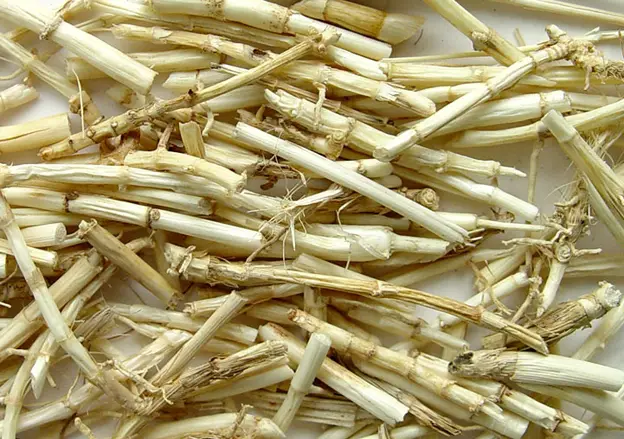
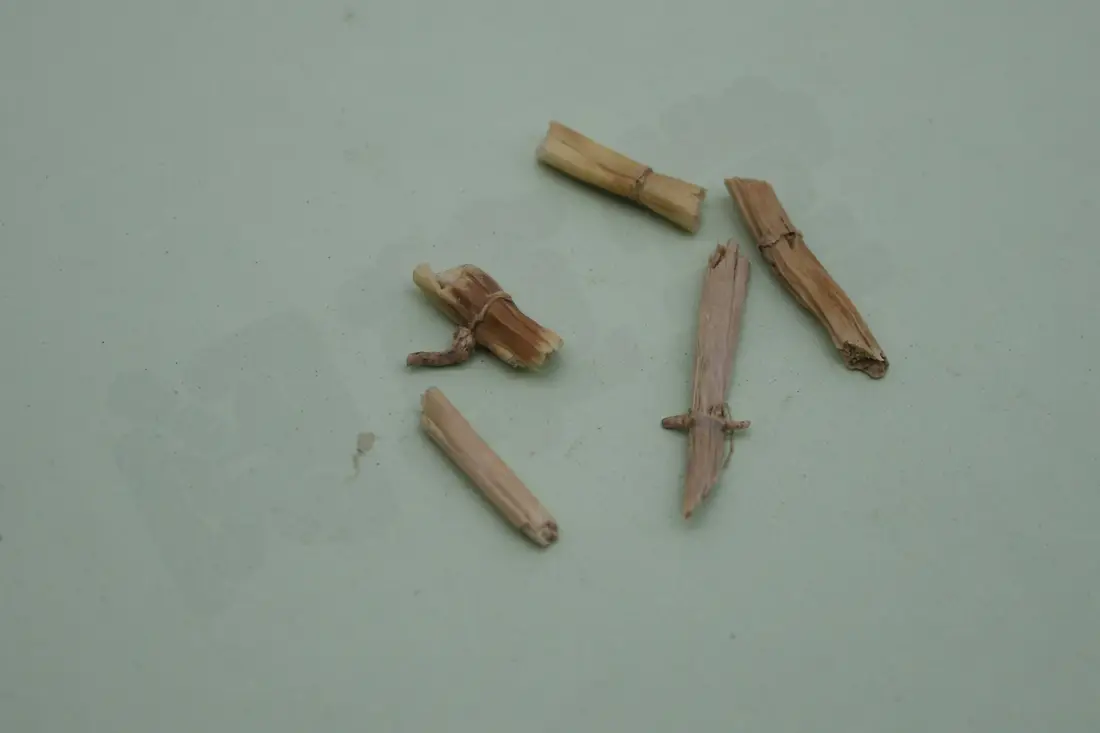
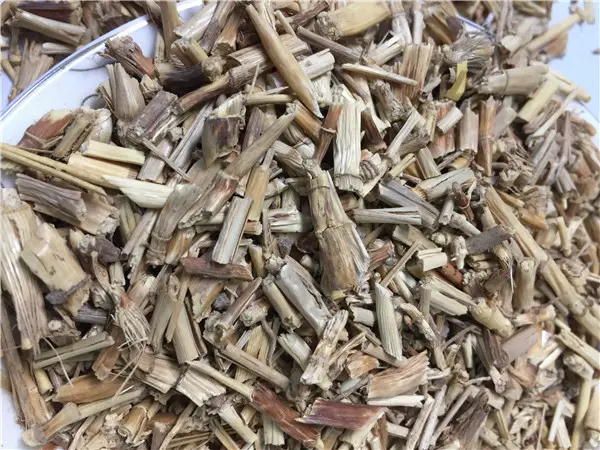
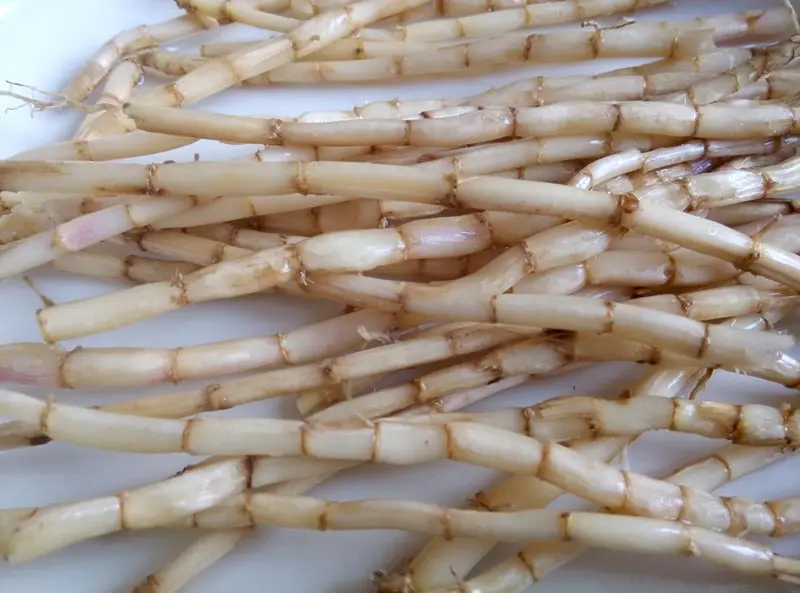
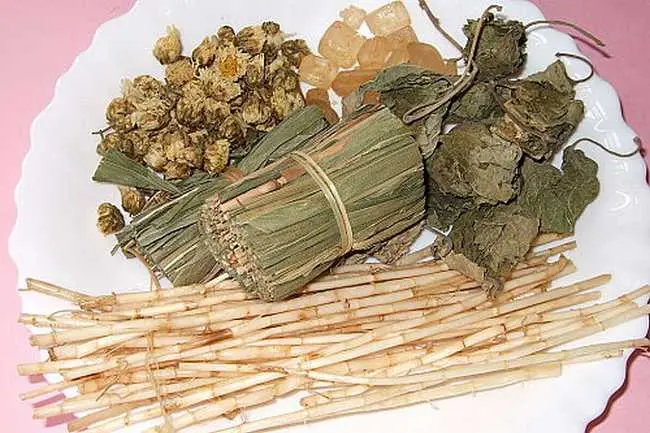
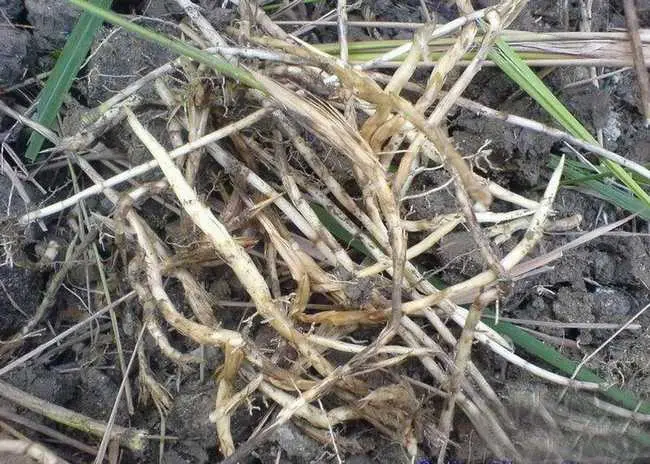
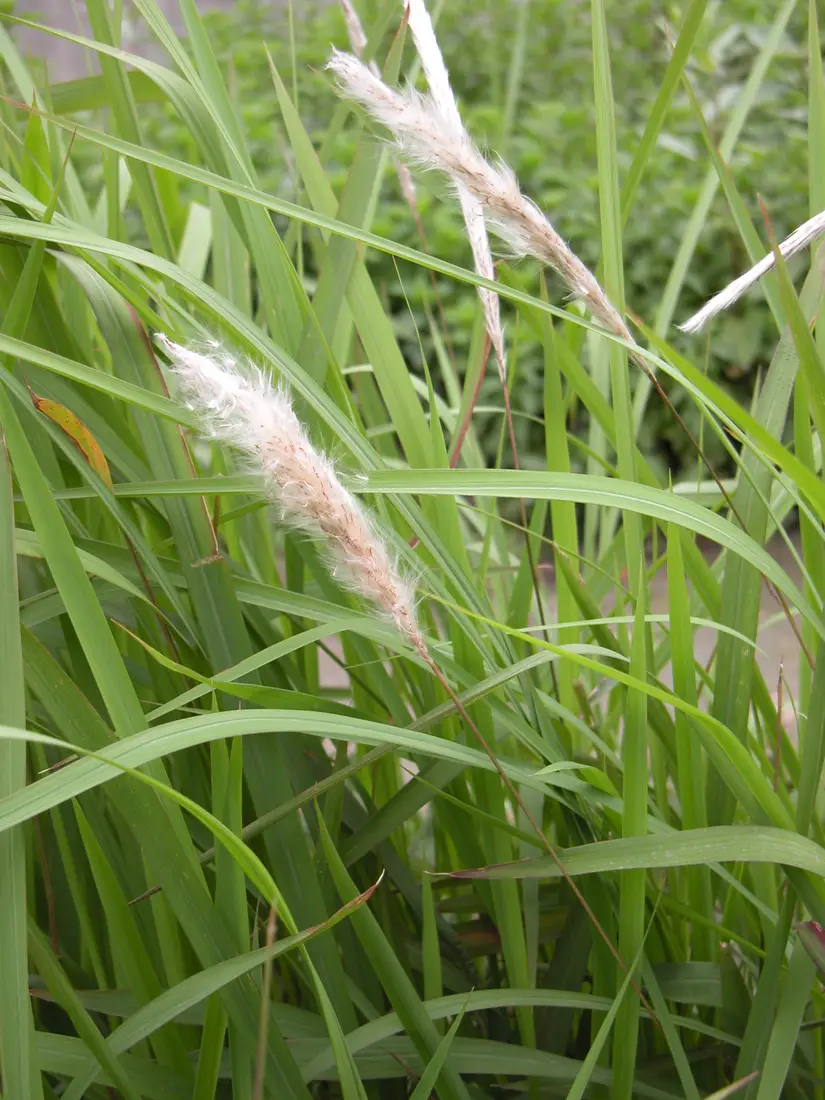
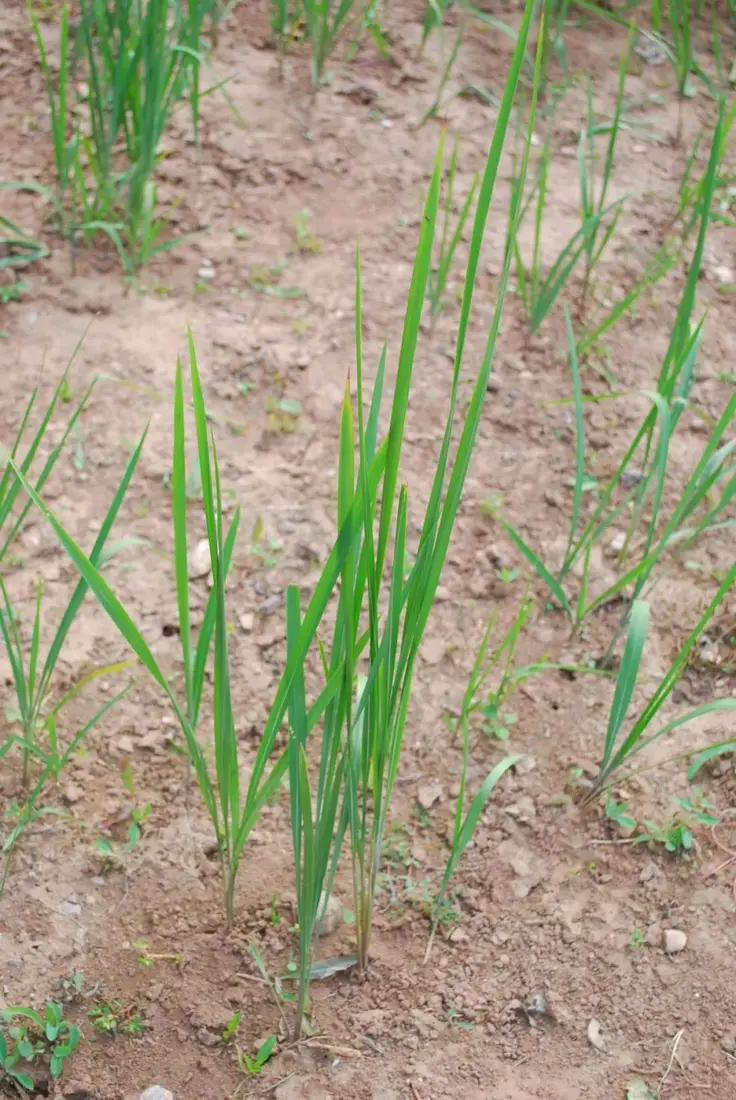
Eclipta and Rice PorridgeEclipta herb 10 g, Bai Mao Gen 15 g, japonica rice 60 g.
Decoct Eclipta and Bai Mao Gen in water to obtain about 400 ml of medicinal liquid; let settle in a bowl. Wash rice, place in pot, add the clear supernatant and appropriate water, bring to a boil over high heat, then simmer until rice is cooked into porridge.
Cools blood and stops bleeding, nourishes yin and benefits the kidney.
Bai Mao Gen and Plantain DrinkBai Mao Gen 50 g, Plantago seeds (wrapped in cloth) 50 g, white sugar 25 g.
Place Bai Mao Gen, Plantago seeds, and water in a clay pot; decoct for 20 minutes; add sugar. Drink frequently as tea.
Cools blood, stops bleeding, promotes urination, and treats strangury. Suitable for heat in the lower jiao damaging vessels, with hematuria, dark urine, difficult urination, and painful heat strangury; also for edema and jaundice.
Bai Mao Gen, Radish, and Arborvitae SoupFresh Bai Mao Gen 60 g, white radish 1, arborvitae leaves 60 g, cabbage root heads 2.
Wash radish, peel and slice; wash and chop Bai Mao Gen and arborvitae leaves; wash cabbage roots; place all in a clay pot, add water, and simmer for about 1 hour.
Clears heat, cools blood, resolves toxicity, resolves phlegm, and suppresses cough.
Sophora and Bai Mao DrinkSophora flower buds (Huai Mi) 10–15 g, Bai Mao Gen 10–15 g.
Decoct Sophora flower buds and Bai Mao Gen in water for 30 minutes; drink as tea.
Clears heat, cools blood, and stops bleeding; useful for preventing and treating bloody stool, hematuria, and hemorrhoidal bleeding.
Bai Mao Gen, Sugarcane, and Carrot TeaFresh Bai Mao Gen 50 g, sugarcane 500 g, carrot 1.
Take fresh Bai Mao Gen 50 g, sugarcane 500 g (cut into sections), carrot 1 (peeled, cut into small pieces). Bring 1000 ml cold water to a boil, add the three ingredients, boil over high heat for 20 minutes, then simmer for 1–2 hours; remove residue and drink. 200 ml per dose, 2–3 times daily.
Clears heat, resolves toxicity, generates fluid, quenches thirst, drains fire, and moistens the lungs; especially suitable for young adults and children.
Bai Mao Gen and Water Chestnut TeaWater chestnut 50 g, fresh Bai Mao Gen 50 g.
Wash and chop 50 g water chestnut; take 50 g fresh Bai Mao Gen; put both into 500 ml boiling water, cook for 20 minutes, remove residue, add appropriate amount of white sugar. One dose daily, divided into 2 servings.
Clears heat, resolves phlegm, generates fluid, quenches thirst, suppresses yang, and promotes urination; effective for dizziness, cough, thirst, and yellow urine due to excessive internal heat.
Bai Mao Gen and Lotus Root Node TeaFresh Bai Mao Gen 30 g, lotus root node 15 g.
Take fresh Bai Mao Gen 30 g and lotus root node 15 g, put into a pot, add 500 ml cold water, bring to a boil, remove residue, and drink as tea regularly.
Clears heat, cools blood, and stops bleeding; prevents and treats nosebleeds due to excessive internal heat.
Bai Mao Gen and Moutan Bark TeaFresh Bai Mao Gen 30 g, Moutan bark 10 g, Saposhnikovia root 10 g.
Take fresh Bai Mao Gen 30 g, Moutan bark and Saposhnikovia root 10 g each, put into a pot, add 500 ml cold water, boil, remove residue. One dose daily, drink separately before breakfast and dinner.
Clears heat, cools blood, enhances body resistance, and prevents wind-heat common cold.
Bai Mao Gen and Honeysuckle TeaFresh Bai Mao Gen 40 g, Japanese honeysuckle flower 20 g.
Add 1000 ml cold water to a pot, add the two herbs, boil, remove residue, add 20 g rock sugar to taste. One dose daily, drink frequently.
Clears heat, resolves toxicity, soothes the throat, and is effective for viral colds, acute and chronic tonsillitis, and periodontitis.
Bai Mao Gen, Snow Pear, and Pig Lung SoupFresh Bai Mao Gen 200 g, snow pear 2, pig lung 1 set, tangerine peel 5 g.
(1) Wash pig lung, cut into pieces, blanch in boiling water for 5 minutes, remove and rinse. (2) Cut snow pear into pieces, remove core and seeds; cut Bai Mao Gen into short sections. (3) Soak tangerine peel in water until soft; simmer together with pig lung, snow pear, and Bai Mao Gen over low heat for 2 hours.
Clears heat, moistens the lungs, resolves phlegm, stops cough, cools blood, and aids digestion. For autumn heat with nosebleed, cough, or dry cough without phlegm, or blood-tinged phlegm, thick yellow phlegm, sore throat, hoarseness, dry lips and tongue, and constipation. Also suitable for patients with hepatitis, cirrhosis, bronchitis, and pneumonia.