Agrimony (Xian He Cao)Materia Medica

Agrimony (Xian He Cao)

Xian He Cao
AGRIMONIAE HERBA
Nature and flavorBitter, astringent, neutral; enters the Heart and Liver meridians.
Meridians enteredHeart, Liver
Dosage6–12 g; appropriate amount for external use.
Reference market price¥7.8 / kgBozhou market · spec common grade · 安徽 · snapshot 2026-11-21

Agrimony is a hemostatic herb used to stop bleeding, treat malaria and dysentery, and resolve toxicity.

Source药物来源

The dried aerial parts of Agrimonia pilosa Ledeb. (Rosaceae).

Identification性状特征

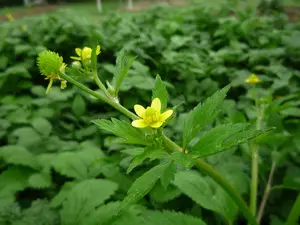
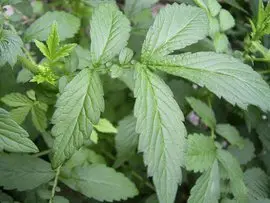
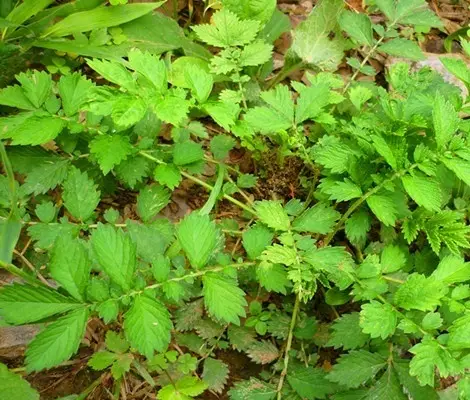
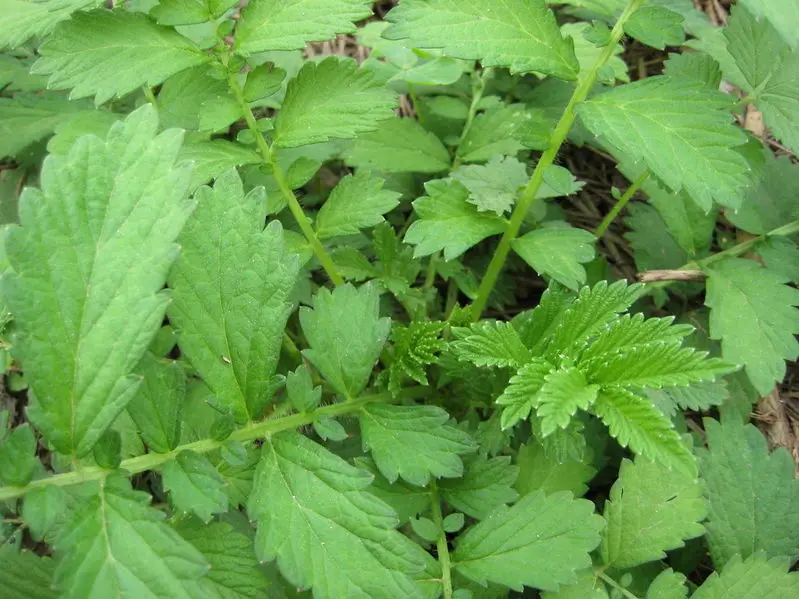
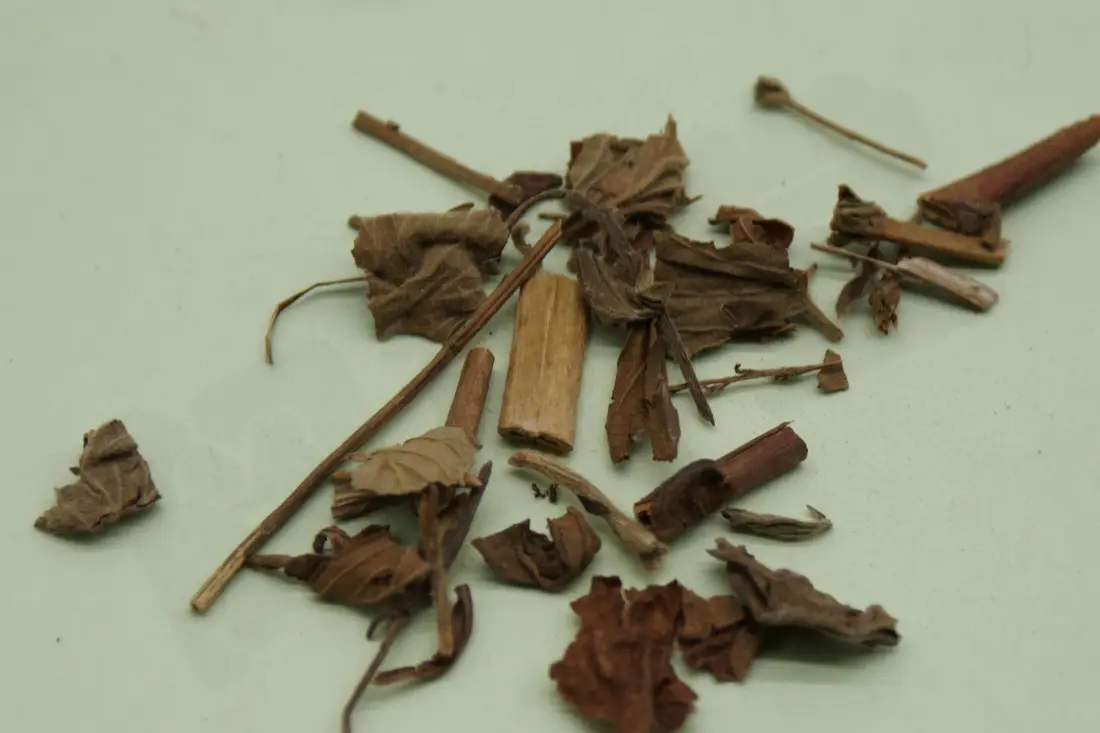
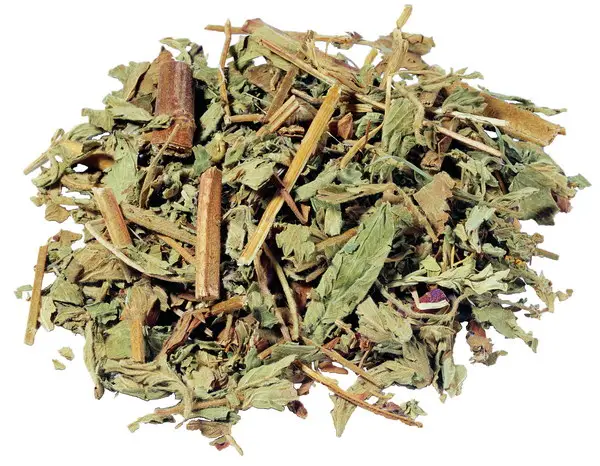
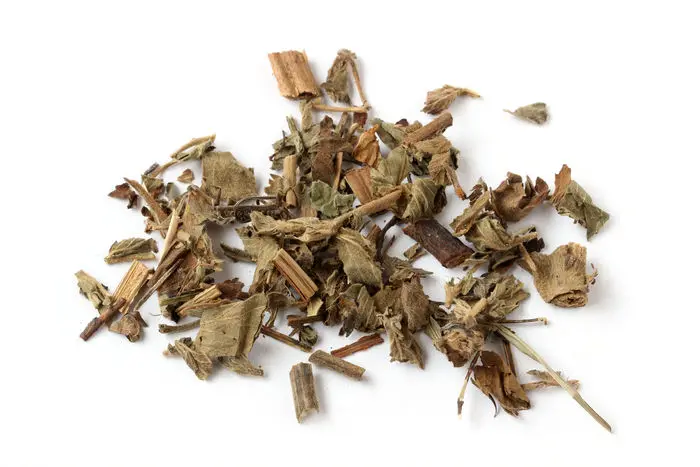
The herb is 50–100 cm long, covered with white soft hairs. The lower stem is cylindrical, 4–6 mm in diameter, reddish-brown; the upper stem is square, slightly concave on four sides, greenish-brown, with longitudinal grooves and ridges, and nodes. Light in weight, hard, easily broken, hollow in cross-section. Pinnately compound leaves alternate, dark green, wrinkled and curled; brittle and easily fragmented. Leaves of two sizes alternate on the rachis; terminal leaflets larger, ovate or long-elliptic when flattened, apex acute, base cuneate, margin serrate; stipules 2, clasping the stem, obliquely ovate. Raceme slender; calyx tube cylindrical below, upper part with hooked prickles, apex 5-lobed; petals yellow. Slight odor, slightly bitter taste.

Properties and actions性味与功效
Actions
Astringent and stop bleeding · Treat malaria · Stop dysentery · Resolve toxicity · Tonify deficiency
Indications
Used for hemoptysis, hematemesis, metrorrhagia and metrostaxis, malaria, bloody dysentery, carbuncles, swellings, boils and sores, vulvar itching and leukorrhea, and fatigue from overexertion.
Dosage
6–12 g. Appropriate amount for external use.
Caution
Use with caution in patients with deficiency-cold of the spleen and stomach.
Processing炮制
Raw Agrimony
Remove residual roots and impurities, wash clean, moisten slightly, cut into sections, and dry.
Modern research现代药理
Chemical constituents
Contains agrimophol, agrimonolide.
Classical records历代本草
Classical texts record Xian He Cao for stopping bleeding and treating dysentery, as summarized in works such as the *Materia Medica of the National Pharmacopoeia*.
仙鹤叶散剂,仙鹤草膏。
Folklore本草传说

Long ago, two scholars were traveling to the capital for the imperial examination. In the scorching summer heat, one of them suffered a nosebleed. They tried to stop it with soil and paper, but in vain. Just then, a crane flew overhead with a blade of grass in its beak. Startled by their shouts, the crane dropped the grass. The scholar chewed the grass, and soon his nosebleed stopped. Later, both scholars passed the exam and became officials. They sent people to find that wild grass, and physicians confirmed its hemostatic effect. To commemorate the crane, they named it 'Xian He Cao' (Crane Grass).
Culinary use民间药膳
Agrimony and Chrysanthemum Tea
Agrimony 30 g, chrysanthemum 15 g, Japanese honeysuckle flower 15 g, licorice 6 g, quartz 24 g, white sugar 30 g.
1. Wash all ingredients and place in an aluminum pot. 2. Add appropriate amount of water, bring to a boil over high heat, then simmer for 20 minutes. Strain and discard residue, add white sugar and stir well.
Two-Herb Congee
Rice 100 g, Agrimony 60 g, Patrinia 80 g, white sugar 20 g.
1. Wash Agrimony and Patrinia, place in a pot. 2. Add water, boil for 25 minutes, strain and keep the liquid. 3. Wash rice and place in the pot with the decoction. 4. Bring to a boil over high heat, then simmer for 30 minutes, add sugar to taste.
Agrimony and Notoginseng Wine
Agrimony 30 g, Notoginseng 10 g, appropriate amount of white liquor.
Soak Agrimony 30 g and Notoginseng 10 g in appropriate amount of white liquor for 1 week. Strain and take 50 ml each time.
Take 3 times daily; also apply appropriate amount externally to affected area to invigorate blood and resolve stasis, reduce swelling and relieve pain.
Agrimony and Jujube Decoction
Agrimony 30 g, jujube 5 pieces.
Decoct Agrimony 30 g and jujube 5 pieces in water, strain and take the liquid.
One dose daily; strengthens the spleen and replenishes qi.
Agrimony Congee
Agrimony 20 g, rice 100 g, appropriate amount of white sugar.
Wash Agrimony, place in a pot, add water, decoct and strain. Add rice to the decoction and cook into congee. When nearly done, add white sugar and bring to a boil once or twice.
One dose daily; astringent and stops bleeding.
Sleep-Promoting and Nourishing Soup
Silkie chicken and duck meat 500 g each, Spatholobus stem 20 g, Agrimony 20 g, Polygonum multiflorum stem 20 g, Cibotium rhizome 12 g, Dodder seed 12 g, Eclipta 12 g, Mulberry mistletoe 12 g, Ligustrum 12 g, Atractylodes 8 g, Albizia bark 8 g, Rehmannia 8 g, prepared Rehmannia 8 g, Dipsacus 8 g, ginseng 5 g, MSG 2 g, salt 4 g, ginger and scallion 10 g each.
Wash the 14 herbs, decoct in water, strain and keep the liquid. Clean the chicken and duck, blanch in boiling water, cut into uniform pieces. Add water to a pot, bring chicken and duck to a boil. Add scallion sections, ginger slices and the herbal liquid. Simmer for 2 hours, remove ginger and scallion, add MSG and salt to taste.
Calms the spirit, tonifies qi, strengthens bones and muscles; suitable for patients with dual deficiency of qi and blood, frequent insomnia, and malnutrition.
Audio and video语音与视频
Narration · Chinese · 7:34
Latin name · pronunciation
Narration and video are shared by all language versions and are in Chinese; the images and footage themselves are language-independent.
Photographs药材图片
Agrimony (Xian He Cao)
Cultivation and authentication栽培与鉴别

8 cultivation notes and 1 authentication articles exist for this herb. They are long-form field material and are published in Chinese only.

Read them in Chinese →

Compiled from public Chinese materia medica sources for study and reference. Not medical advice.
Chinese version · All herbs