Rangoon creeper fruit (Shi Jun Zi)
Shi Jun Zi
QUISQUALIS FRUCTUS
Nature and flavorSweet, warm; enters the Spleen and Stomach meridians.
Meridians enteredSpleen, Stomach
Dosage9-12 g (crushed, decocted); kernel 6-9 g in pills or powder.
Reference market price¥13.8 / kgBozhou market · spec common grade · 四川 · snapshot 2026-11-21
Rangoon creeper fruit is a sweet, warm antiparasitic herb used for ascariasis, enterobiasis, and pediatric malnutrition with abdominal pain.
Source药物来源
The dried ripe fruit of Quisqualis indica L. (Combretaceae).
Identification性状特征
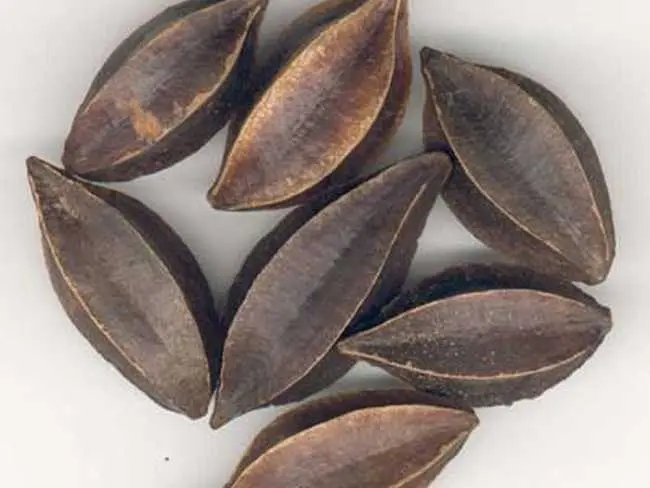
Oval or ovoid, with 5 longitudinal ridges (rarely 4-9), 2.5-4 cm long, about 2 cm in diameter. Surface blackish-brown to purple-black, smooth, slightly glossy. Apex narrowly pointed, base obtuse-rounded, with a distinct circular pedicel scar. Hard; cross-section often star-shaped with a rounded cavity. Seed elongated-oval or spindle-shaped, about 2 cm long, 1 cm in diameter; surface brownish or blackish-brown with longitudinal wrinkles; seed coat thin, easily peeled; cotyledons 2, yellowish-white, oily, with fissures in cross-section. Slight fragrance; taste slightly sweet.
Properties and actions性味与功效
ActionsClear parasites · Resolve accumulation
IndicationsUsed for ascariasis, enterobiasis, abdominal pain due to parasitic accumulation, and pediatric malnutrition.
Dosage9-12 g of the fruit, crushed and decocted; 6-9 g of the kernel, often in pills or powder, taken in 1-2 divided doses. For children, 1-1.5 kernels per year of age, stir-fried until fragrant and chewed, total daily dose not exceeding 20 kernels.
CautionCaution in cases of deficiency-cold of the spleen and stomach; avoid hot tea. Overdose may cause hiccups or vomiting.
Processing炮制
Shi Jun Zi (whole fruit)Remove impurities. Crush before use.
Shi Jun Zi Ren (kernel)Remove the shell from the clean fruit.
Chao Shi Jun Zi Ren (stir-fried kernel)Stir-fry the kernel until fragrant (simple stir-frying).
Modern research现代药理
Antiparasitic effectsShi Jun Zi has actions against Ascaris and Enterobius.
Activity against EchinococcusThe extract has a killing effect on protoscoleces of Echinococcus granulosus.
Antifungal effectShi Jun Zi exhibits antifungal activity.
Classical records历代本草
The Bencao Gangmu notes that Shi Jun Zi is sweet and parasiticidal, beneficial to the spleen and stomach, and a key pediatric remedy. The Bencao Mengquan and Bencao Jing Shu also record its use for pediatric malnutrition and parasites.《本草纲目》:凡杀虫药多是苦辛,惟使君、榧子甘而杀虫,亦异也。凡大人、小儿有虫病,但每月上旬侵晨空腹食使君数枚,或以壳煎汤咽下,次日虫皆死而出也。或云:七生七煨食亦良,忌饮热茶,犯之即泻。此物味甘气温,既能杀虫,又益脾胃,所以能敛虚热,而止泻痢,为小儿诸病要药。俗医乃谓杀虫至尽,无以消食,鄙里之言也。树有蠹,屋有蚁,国有盗,福耶?祸耶?修养者先去三尸,可类推矣。
健脾胃,除虚热,治小儿百病疮癣。
《本草蒙筌》:味甘,气温。无毒。或和诸药,凭作散丸。去白浊,除五疳,杀蛔虫,上学一道是。因郭使君原用以治小儿,后人竟之曰使君子也。
《开宝本草》:味甘,温,无毒。主小儿五疳,小便白浊,杀虫,疗泻痢。
《本草经疏》:使君子得土之冲气,而兼感乎季春之令以生,故其味甘,其气温,其性无毒。甘入脾,故入足太阴、阳明。为补脾健胃之要药。小儿五疳、便浊、泻利、及腹虫,莫不皆由脾虚胃弱,因而乳食停滞,湿热瘀塞而成。脾健胃开,则乳饮自消,湿热自散,水道自利,而前证俱除矣。不苦不辛而能杀疳蛔,此所以为小儿上药也。
简误:小儿泄痢有赤积,是暑气所伤,禁与肉豆蔻、诃子等涩药同用。亦忌食热物,及饮热茶,犯之即泄。
《药性解》:味甘,性温,无毒,入脾、胃二经。治小儿五疳,利小便,止白浊,除泻痢,杀诸虫。连壳用。
按:使君子甘温,宜主脾胃,然多食令人发呃,伤胃故也。
Folklore本草传说
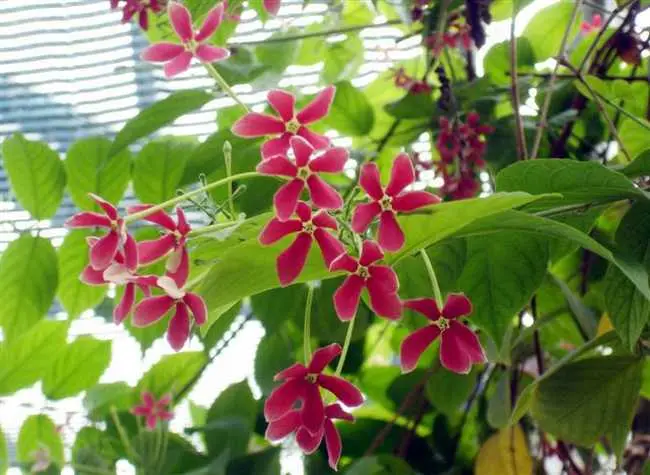
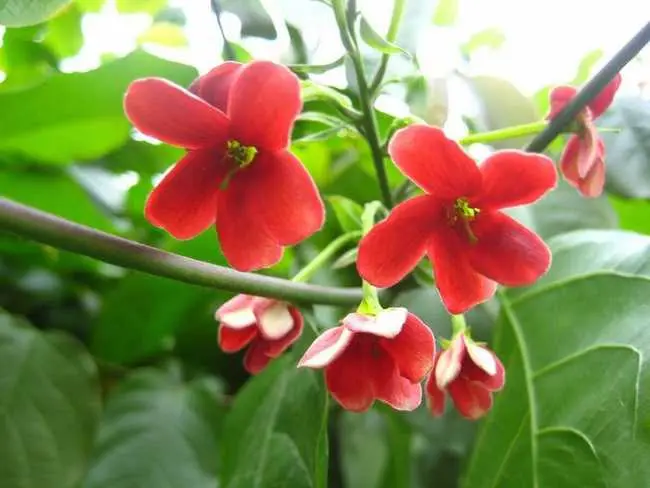
During the Northern Song Dynasty, a man named Guo Shijun from Panzhou (modern Songpan, Sichuan) gathered herbs in the mountains. He found a plant with unusual flowers and learned from locals that its fruit was called Liuzi. He took some home and roasted them to prevent mold; the aroma attracted his five-year-old child, who ate a few. The next day, the child passed several roundworms and had a good appetite. Guo gave more, but the child hiccuped and vomited, which he treated with tangerine peel and ginger. Repeating the treatment, the child passed more worms. Guo successfully used this remedy for many children with ascariasis and became known as a renowned pediatrician. The fruit was later called Shi Jun Zi after him.
Cultivation and authentication栽培与鉴别
6 cultivation notes and 3 authentication articles exist for this herb. They are long-form field material and are published in Chinese only.
Read them in Chinese →